
Pea thrips
Kakothrips
Description
How to identify
Pea thrips (Kakothrips pisivorus) is a small insect belonging to the order Thysanoptera. It is a specialized pest that primarily targets leguminous crops during their reproductive stages.
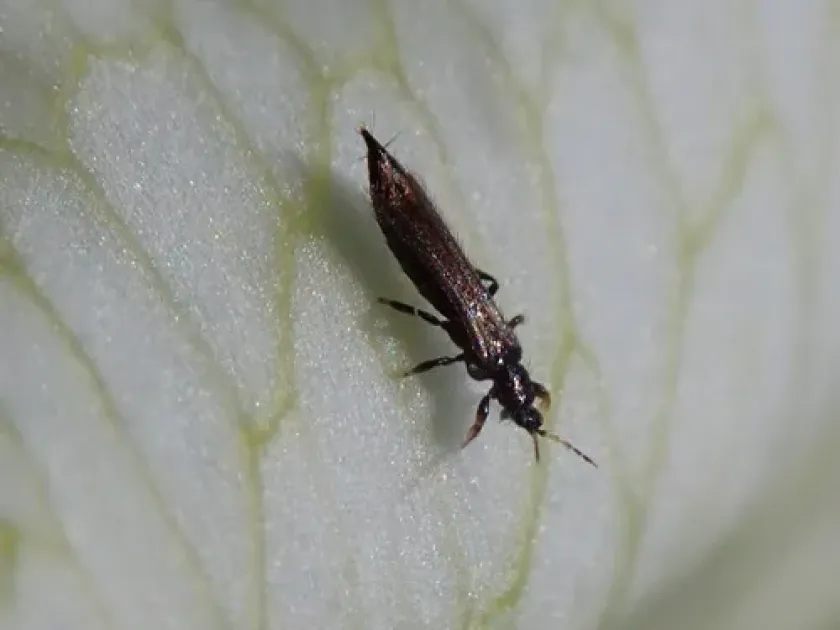
Adult thrips are small, slender insects measuring about 1.5–2 mm in length. Their bodies are typically dark brown or black, featuring narrow, fringed wings that are characteristic of the species.
The larvae are distinct from the adults due to their bright yellow or orange coloration, making them easily visible when they congregate within the pea blossoms or on young pods.
The species overwinters as mature larvae deep in the soil (15–20 cm) inside protective earthen chambers. As soil temperatures rise in the spring, they pupate and emerge as adults.
The lifecycle is tightly synchronized with the pea growing season, typically completing one generation per year, which coincides with the flowering period of the host plant.
What it damages
The primary host for this pest is the field pea (Pisum sativum). Under high population pressure, it can also impact related legumes such as lentils, vetch, and grass pea.
Both adult insects and larvae feed by piercing the plant tissues and sucking out the sap from leaves, stems, flowers, and developing pods.
Feeding on reproductive structures is the most damaging. It often leads to flower abortion, preventing pod set entirely or significantly reducing the number of seeds per pod.
When infestation occurs during the pod development stage, the pods become distorted, stunted, and exhibit localized necrotic spots where feeding has occurred.
The overall impact is a significant reduction in yield and a decline in seed quality, making the produce less suitable for processing or as viable seed stock.
Signs of infestation
Early symptoms include premature fading and wilting of flowers, which are often shed before they can successfully produce pods, leading to poor pod set.
Silvering or whitening of the leaves and stems is a classic sign of thrips activity, caused by the destruction of epidermal cells during the sap-feeding process.
Pod deformation is a key visual indicator. Look for pods that are twisted, curled, or covered in dark, unsightly brown blemishes, which indicate heavy larval feeding.
Stunted plant growth and irregular ripening of the crop across the field can also signal a large-scale thrips infestation that has stressed the plants significantly.
A simple field test involves tapping flowers or young pods over a sheet of white paper; the presence of small, active yellow larvae confirms an active infestation.
Control measures
Agronomic practices are the first line of defense. Proper crop rotation, keeping at least a 3–4 year gap between pea crops, significantly reduces local population carry-over.
Spatial isolation of new pea fields from the previous year's infested sites helps prevent the migration of adult thrips during the critical spring emergence period.
Post-harvest deep tillage (plowing) is effective in disrupting the overwintering sites of the larvae in the soil, exposing them to unfavorable conditions and natural enemies.
Chemical control should be implemented at the early bud stage before flowers open. Systemic insecticides are preferred to reach larvae hidden within the plant tissues.
Application must be timed carefully to minimize impact on pollinators. Choosing selective products and applying them during early morning or late evening is highly recommended.
Taxonomy
- Latin name
- Kakothrips
- Order
- Thrips
- Family
- Thripidae
- EPPO code
- KAKOSP
Discussion
No discussions yet — be the first.