
Japyx solifugus
Japyx solifugus
Description
How to identify
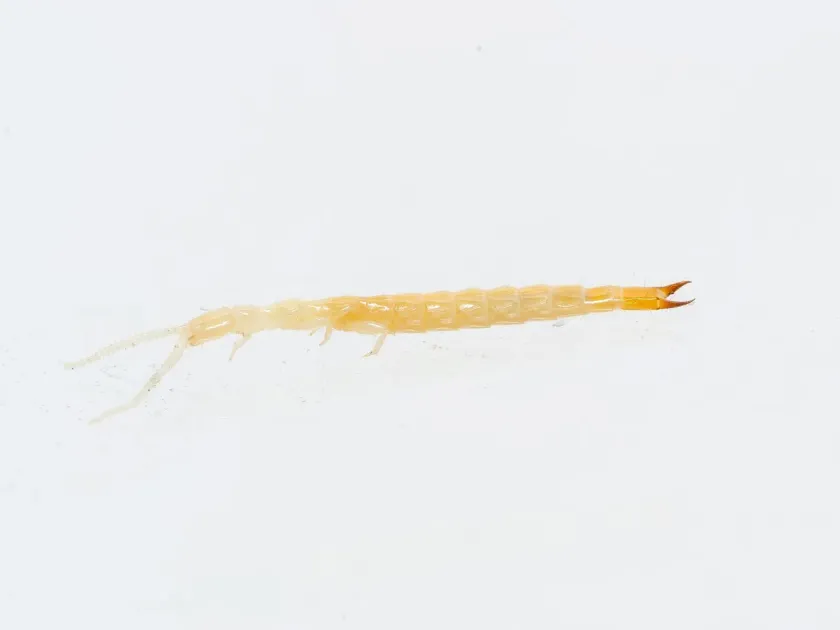
Japyx solifugus is a species of dipluran in the family Japygidae. These small, wingless arthropods are typically 20–50 mm long and possess an elongated, pale body that is highly adapted for life within the soil profile.
The most defining feature of this species is the pair of large, sclerotized cerci at the tip of the abdomen, which resemble pincers. These structures are used both for capturing prey and for defense against other soil-dwelling organisms.
Lacking eyes, the Japyx solifugus relies on its long, thread-like antennae to navigate its dark environment. These antennae are highly sensitive, allowing the organism to detect chemical cues and vibrations in the soil.
The organism has a streamlined body shape, lacking pigmentation, which allows it to move rapidly through soil pores and leaf litter. They thrive in damp, undisturbed soil environments where they can remain protected from desiccation.
Life cycle development involves a hemimetabolous process where nymphs resemble miniature adults. Throughout their growth, they undergo several molts, increasing in size and cuticle thickness at each stage.
What it damages
While primarily predatory, feeding on mites, nematodes, and other small soil fauna, Japyx solifugus can exhibit phytophagous behavior under conditions of high population density or food scarcity. They are known to feed on roots and tubers.
The damage is most significant for vegetable crops, seedlings, and nursery stock. Feeding damage consists of irregular chewing and surface lesions on root systems, which directly impairs the plant's nutrient and water uptake.
Young plants are particularly vulnerable, as even minor root damage can stunt growth or lead to plant death during the sensitive establishment phase. Damaged roots are also more prone to environmental stress and nutrient deficiency.
The wounds created by their pincer-like mouthparts provide entry points for soil-borne pathogens. This often leads to the development of root rots and bacterial infections that destroy the root system further.
Economic damage is most frequently reported in greenhouses, glasshouses, and moist garden beds. In these controlled environments, the lack of natural predators and constant humidity allow their populations to proliferate.
When it appears
The seasonal activity of Japyx solifugus is closely linked to soil moisture and temperature. They are most active during the spring and early summer months when soil moisture levels are optimal for their movement.
During dry and hot summer spells, these organisms retreat into deeper soil horizons, following the moisture gradient. Consequently, surface-level root damage may decrease as they avoid the desiccated upper soil layer.
Increased activity is typically observed following heavy rainfall or irrigation. As the upper soil profiles become saturated, the Japyx solifugus moves upward, putting them in direct contact with the root zones of agricultural crops.
As temperatures drop in the autumn, their metabolic rate decreases. They typically hibernate within deeper soil chambers, where the temperature remains relatively constant throughout the colder winter months.
In greenhouses and indoor growing systems, they can remain active throughout the year. As long as moisture and temperature parameters are maintained for crop growth, these conditions are also ideal for the pest.
Signs of infestation
The presence of Japyx solifugus is often difficult to confirm due to their subterranean lifestyle. The first indication is usually unexplained wilting or sudden decline of young plants despite adequate irrigation.
Upon inspecting the root zone, one might notice irregular nibbling or severed roots. The damage is often concentrated on the tender root hairs or near the base of the stem, where the soil is slightly more stable.
One may find small, intricate burrows or tunnels in the soil near the root system. These tunnels are a strong indicator that soil-dwelling organisms are present and active in the rhizosphere.
Monitoring can be achieved through soil excavation or the use of moist soil traps. Placing damp organic matter in the soil and checking it periodically can help attract and identify the presence of these pests.
Another sign is the appearance of stunted plant patches within a field. If secondary infections like fungal rots appear, they often mask the primary damage caused by the initial chewing of the root tissue.
Control measures
Effective management begins with mechanical soil disturbance. Regular tilling or deep plowing disrupts the soil environment, destroys existing tunnels, and increases the mortality of the population by exposing them to the surface.
Proper water management is essential; avoiding over-irrigation or waterlogged soil conditions will limit the habitat availability for these pests. Improving soil drainage can also significantly reduce their population density.
Soil amendments, such as liming in acidic soils, can make the environment less hospitable to this species. A balanced soil pH is beneficial for both crop growth and preventing the buildup of certain soil-dwelling pests.
When chemical control is necessary, granular soil-applied insecticides can be used. These must be applied according to local agricultural regulations and are most effective when incorporated into the soil during planting.
- Deep cultivation and plowing;
- Optimizing soil drainage and irrigation;
- Maintaining balanced soil pH through liming;
- Using soil-applied insecticides as a last resort;
- Removing crop residues to minimize hiding spots.
Taxonomy
- Latin name
- Japyx solifugus
- Family
- Japygidae
- EPPO code
- JAPYSO
Discussion
No discussions yet — be the first.