
Citrus leafroller
Isotenes miserana
Description
How to identify
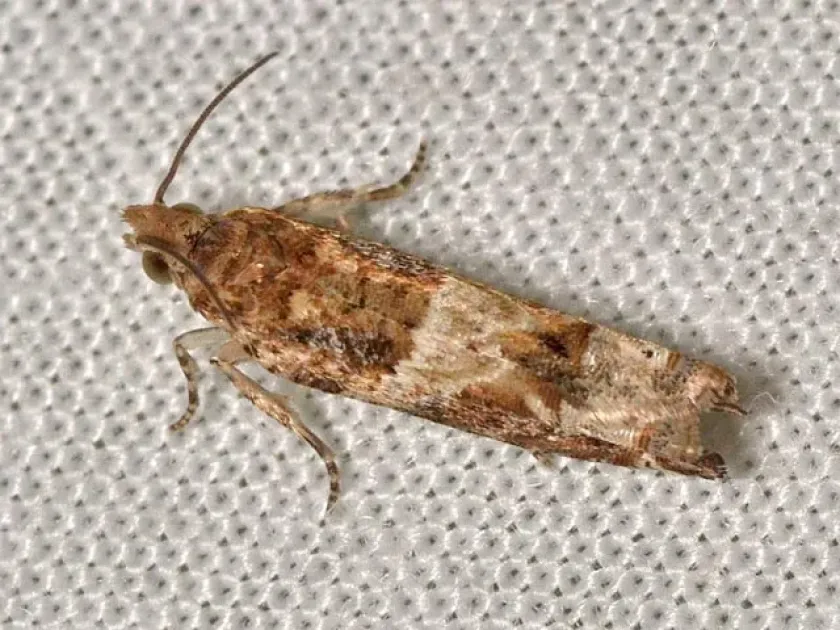
The citrus leafroller (Isotenes miserana) belongs to the order Lepidoptera and the family Tortricidae. Adult moths are relatively small, with a wingspan of approximately 15–20 mm, featuring mottled brown or ochre patterns that provide excellent camouflage on tree bark.
The larval stage consists of several instars, with caterpillars progressing from a pale cream color to a dull olive-green. The head capsule remains dark throughout their development, which is a key diagnostic feature for field identification.
The life cycle involves egg, larva, pupa, and adult stages. Females typically deposit eggs in batches on the underside of leaves or near the fruit stalks, protecting them with a specialized secretion that solidifies into a protective shield.
Pupation generally occurs within the feeding area, often inside leaves that have been rolled and tied together with silken threads. This provides the pupae with essential protection against environmental stressors and natural predators.
This species is recognized for its high adaptability and is considered a quarantine pest in many citrus-growing regions. Its dispersal is largely facilitated by the movement of infested nursery stock and fruit trade.
What it damages
Isotenes miserana is highly polyphagous, primarily attacking plants within the Rutaceae family. Common hosts include lemons, oranges, mandarins, and grapefruits, though it can exploit other fruit crops if its primary hosts are unavailable.
Larvae cause damage by feeding on both vegetative and reproductive plant parts. Early instars typically skeletonize the leaves, while later instars move to buds, blossoms, and developing fruit, causing significant growth disruption.
The most severe damage occurs on the fruit surface. Larvae chew into the peel of ripening citrus, creating unsightly cavities and scars. This damage not only degrades fruit quality but also serves as an entry point for secondary fungal infections.
Secondary infections often lead to premature fruit drop or rot during post-harvest storage. As a result, even moderate infestations can lead to substantial financial losses for commercial citrus growers.
In addition to direct fruit loss, heavy infestations can lead to defoliation, which weakens the trees over time. This reduces the tree's overall vigor and can affect production yields in subsequent growing seasons.
Signs of infestation
The most visible sign of infestation is the presence of leaves rolled or tied together with silken webbing. These structures act as shelters for the caterpillars, and their presence is a clear indicator of active feeding in the canopy.
Surface damage on fruit is a hallmark of this pest. It appears as irregular, necrotic, or corky patches on the rind. In some cases, the tissue may exude sap or gum as a localized plant defense response to the wounding.
Silken threads spanning across fruits or from leaves to fruit are indicative of larval movement. These pathways are frequently found in the shaded, protected areas of the tree canopy where the caterpillars feel secure.
Premature fruit drop of young, small fruit is a classic symptom. Careful inspection of these fallen fruits often reveals microscopic entry holes near the stem or side, confirming the presence of an internal-feeding larva.
Monitoring the adult population using pheromone traps or light traps provides early warning signs. A spike in moth captures usually precedes a surge in larval activity, allowing for timely intervention before severe damage occurs.
Control measures
Cultural control practices, such as rigorous pruning, are essential for managing the citrus leafroller. By opening up the canopy and removing infested leaves and fruit, growers can significantly reduce the local population.
Pheromone-based monitoring and disruption are highly effective strategies. By installing dispensers that release synthetic pheromones, growers can confuse males and prevent mating, thereby suppressing the population cycle.
Biological control plays a significant role in integrated pest management. Encouraging or releasing natural enemies such as parasitoid wasps (e.g., Trichogramma species) or predaceous bugs can effectively limit caterpillar density.
Chemical control should be applied judiciously, relying on soft or selective insecticides that target the larvae while preserving beneficial insects. Proper timing, based on monitoring data, is crucial for maximum efficacy.
Maintaining a healthy orchard environment through balanced nutrition and effective weed management reduces the attractiveness of the site to the pest. An integrated approach ensures sustainable production and minimizes chemical footprint.
Taxonomy
- Latin name
- Isotenes miserana
- Order
- Lepidoptera (butterflies)
- Family
- Tortricidae
- EPPO code
- ISOTMI
Discussion
No discussions yet — be the first.