
Southern brown bandicoot
Isoodon obesulus
Description
How to identify
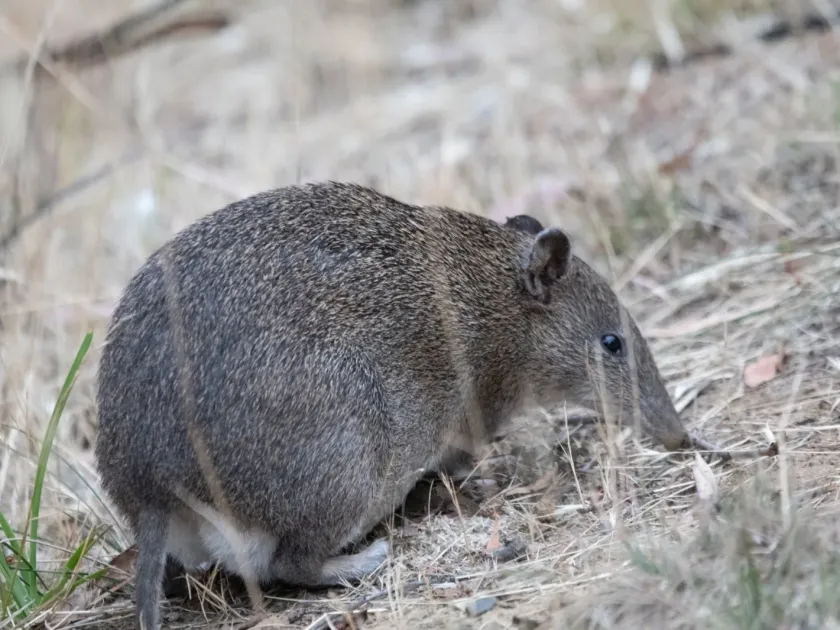
The Southern brown bandicoot (Isoodon obesulus) belongs to the Peramelemorphia order and the Peramelidae family. This small marsupial is known for its distinctive pointed snout and robust body.
Adult individuals typically weigh around one kilogram and have coarse, grey-brown fur. They possess strong foreclaws specifically adapted for intensive digging in soil.
This species is primarily nocturnal, using its keen sense of smell to locate invertebrates, tubers, and roots beneath the surface of the ground.
Bandicoots are prolific breeders and can maintain high population densities if their habitat provides enough shelter and food resources.
Due to their highly active nature and need for constant foraging, they often venture into agricultural areas, inadvertently becoming significant pests.
What it damages
The primary damage caused by Southern brown bandicoots relates to their foraging habits. By digging conical holes throughout garden beds, they disrupt soil structure and plant root systems.
Vegetable crops are particularly vulnerable, as bandicoots often uproot young seedlings or expose roots to the air, causing the plants to wither and die.
Lawns and decorative flower beds are frequently riddled with small holes, which necessitates constant labor for repairs and replanting in domestic gardens.
They can also damage mulch layers, spreading debris across clean garden paths and exposing the soil to rapid moisture evaporation.
In some agricultural settings, their presence can lead to a decline in crop health and an increase in susceptibility to soil-borne diseases due to disrupted soil equilibrium.
Signs of infestation
The most telltale sign of bandicoot activity is the presence of numerous conical holes, typically 5 to 10 centimeters deep, scattered across the garden soil.
Observation of distinct runways or paths, usually obscured by vegetation, leading toward the garden area, indicates a frequent visit from these animals.
Plants that appear freshly disturbed or show exposed roots despite having been planted firmly are classic indicators of bandicoot foraging.
Nocturnal sightings are rare, but motion-activated cameras can confirm the presence of these marsupials if there is doubt regarding the cause of damage.
Scattered soil around the base of vegetable plants and small bite marks on root vegetables provide definitive evidence of bandicoot involvement.
Control measures
The most effective strategy for managing bandicoot damage is the use of physical barriers, such as underground wire mesh fencing, which prevents them from entering specific garden zones.
Managing the habitat by clearing excess undergrowth and debris around the property reduces the availability of hiding spots, discouraging them from staying near the garden.
While deterrents like ultrasound or strobe lights may offer temporary relief, they are generally less effective than permanent structural exclusion methods.
Keeping compost bins and food sources strictly contained is essential to ensure you are not creating an artificial attraction for the animals.
In cases of severe infestation or persistent damage, it is recommended to contact local wildlife management authorities for professional and humane relocation options.
Taxonomy
- Latin name
- Isoodon obesulus
- Family
- Peramelidae
- EPPO code
- ISODOB
Discussion
No discussions yet — be the first.