
Pine stenographer
Ips proximus
Description
How to identify
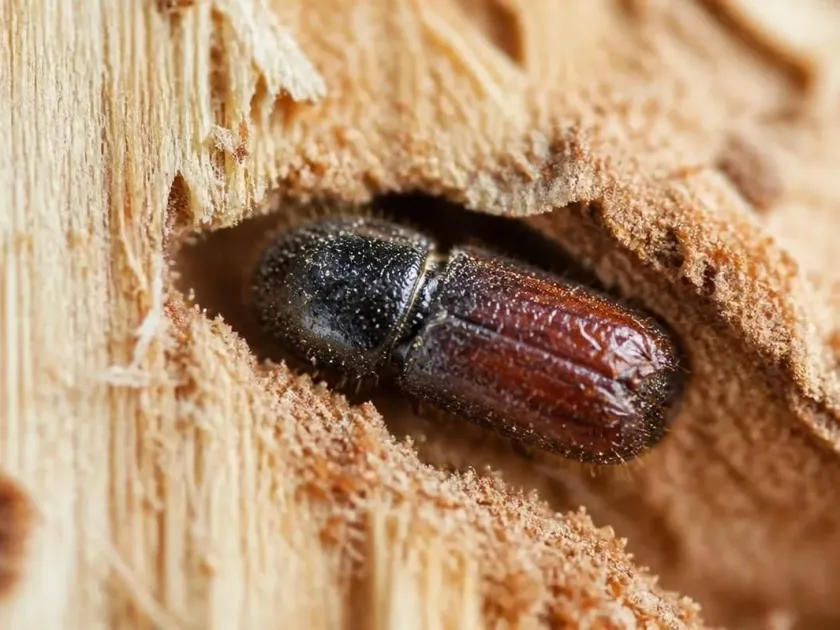
The pine stenographer (Ips proximus) is a destructive species of bark beetle belonging to the Curculionidae family. Adult beetles are typically 3.5 to 5 mm long, exhibiting a cylindrical, dark brown to black body shape.
This species is characterized by the structure of its elytral declivity, which features distinct teeth. These structures are essential for the beetle as they push out boring dust from the tunnels it excavates beneath the bark.
The larvae are white, legless, and possess a distinct brown head capsule. They remain beneath the bark throughout their development, feeding on the phloem layer, which eventually causes the tree's vascular system to fail.
Pupation occurs within the bark or the outermost layer of the wood. The pupae are creamy white and gradually transition into the mature adult form before emerging to find new hosts.
Identifying this pest requires keen observation, as the beetle's activities are hidden from plain sight until the tree begins to show irreversible symptoms of decline.
What it damages
The primary host of the pine stenographer is the Scots pine (Pinus sylvestris). However, it may attack other pine species, especially those suffering from environmental stress like drought or recent fire damage.
The beetle targets the inner bark (phloem). When the larvae feed, they create branching galleries that girdle the tree, effectively cutting off the flow of sap and water from the roots to the needles.
Once the sap flow is interrupted, the tree’s defenses weaken, making it vulnerable to secondary colonization by fungi or other wood-boring insects, which accelerates the mortality process.
Large-scale infestations often result in the rapid drying out of entire pine stands, causing significant economic losses to the forestry industry and altering the local ecosystem.
Trees that appear healthy can sometimes be overcome if the beetle population density is high enough, as the sheer number of attack points exhausts the tree’s resin production capacity.
When it appears
Adult beetles emerge from their wintering sites in early spring as temperatures consistently reach +15°C to +18°C. This onset of activity triggers the search for suitable host trees.
The colonization process involves the male creating a nuptial chamber, after which females enter to construct egg-laying galleries. The lifecycle duration depends heavily on the ambient temperature and the health of the host tree.
In many regions, the pine stenographer is capable of producing two generations per year. The second generation typically appears during mid-summer, significantly increasing the pressure on the forest stand.
As autumn approaches and temperatures drop, the adults prepare for overwintering. They seek refuge in the forest litter, root collars, or in the thick bark of the lower trunk to survive the winter frost.
The transition into diapause is synchronized with the decrease in day length, ensuring that the beetles are safely hidden before the onset of extreme winter weather.
Signs of infestation
The most reliable sign of an infestation is the presence of "frass" or boring dust, which resembles sawdust and accumulates in crevices of the bark or at the base of the tree trunk.
Small, round entry holes are visible on the surface of the bark where the beetles have penetrated. In resistant trees, small resin blobs may form around these holes as the tree attempts to push the beetle out.
The foliage begins to fade, turning from a healthy green to a light yellowish hue, and eventually becoming reddish-brown. This color change is a clear indicator of systemic failure in the tree.
Peeling away a portion of the bark reveals the intricate galleries etched into the wood. These galleries are the definitive evidence of larval and adult activity within the host.
Increased woodpecker activity on a specific tree is a major clue that the tree is infested with beetle larvae, as the birds actively hunt these insects under the bark.
Control measures
Sanitary logging remains the primary method of control. Removing infested trees before the next generation of beetles emerges is crucial for containing the outbreak within a forest area.
Trap trees are widely used in forestry management. Freshly felled trunks are strategically placed to lure adult beetles, after which the infested logs are destroyed before the brood develops.
Pheromone traps are employed for monitoring population levels and for mass trapping, which can help reduce the number of attacking beetles in threatened forest zones.
Maintaining high forest hygiene, such as promptly removing slash and deadwood, limits the breeding sites available for Ips proximus, preventing a build-up of the population.
In some cases, the application of biological agents, such as entomopathogenic fungi, is researched as an alternative to chemicals, offering a more environmentally friendly approach to managing beetle outbreaks.
Taxonomy
- Latin name
- Ips proximus
- Order
- Coleoptera (beetles)
- Family
- Curculionidae
- EPPO code
- IPSXPR
Discussion
No discussions yet — be the first.