
Pine engraver beetle
Ips pini
Description
How to identify
The pine engraver beetle, scientifically known as Ips pini, is a small member of the Curculionidae family and the Scolytinae subfamily. Adults typically measure between 3.5 and 4.5 mm in length and possess a cylindrical, dark brown to black body.
A key diagnostic feature of this species is the structure of the rear slope of the elytra. It features a set of distinct teeth, typically four on each side, which serves as a reliable morphological marker for identification by forest entomologists.
The adults are strong fliers and capable of traveling considerable distances to locate suitable host trees. Males typically initiate the colonization process by boring into the bark and creating a nuptial chamber to attract females.
The larvae are white, legless, and possess a distinct brown head. They develop exclusively within the phloem layer, creating individual galleries that widen as they grow, eventually girdling the tree if the infestation is severe.
Pupation occurs in small chambers constructed at the ends of the larval galleries. Once the beetle completes its metamorphosis, it exits the tree through a small, circular emergence hole, leaving the bark surface marked.
What it damages
The pine engraver primarily infests various species of pine, including Scotch pine and Eastern white pine. It favors trees that are already stressed by drought, wildfire, windthrow, or mechanical injury.
When populations reach high levels, they can successfully attack and kill healthy, vigorous trees. This is often observed in areas where large quantities of infested slash or logging debris have been left behind.
The damage caused by these beetles disrupts the transport of nutrients and water throughout the tree, leading to rapid decline. Infested trees typically show signs of mortality within one to two seasons depending on the severity of the attack.
These beetles also act as vectors for various pathogenic fungi, including blue-stain fungi. These fungi colonize the tree’s vascular system, further weakening the tree and accelerating its death while reducing the timber's quality.
In nurseries and forest plantations, the impact of Ips pini can be catastrophic for young stands. Even a minor infestation can result in significant economic loss for forest managers and nursery owners.
When it appears
The flight activity of the pine engraver beetle begins early in the spring, once temperatures consistently exceed 15 degrees Celsius. Overwintered adults emerge to seek out new host trees for reproduction.
The species is multivoltine, meaning it can produce between one and three generations per year, depending on the local climate. Peak flight periods occur in late spring and mid-summer, representing the most dangerous times for new infestations.
The complete life cycle takes approximately 45 to 60 days. Warmer, drier conditions significantly shorten this cycle, leading to faster development and potentially larger population surges throughout the growing season.
Adult beetles overwinter in various locations, including the thick bark of living trees, forest litter, or within the galleries of trees they have colonized. They remain in a state of diapause until environmental conditions trigger their emergence.
Management strategies must be timed according to these seasonal trends. Regular forest inspections are critical to detect signs of infestation before the subsequent generation of beetles completes its development and disperses.
Signs of infestation
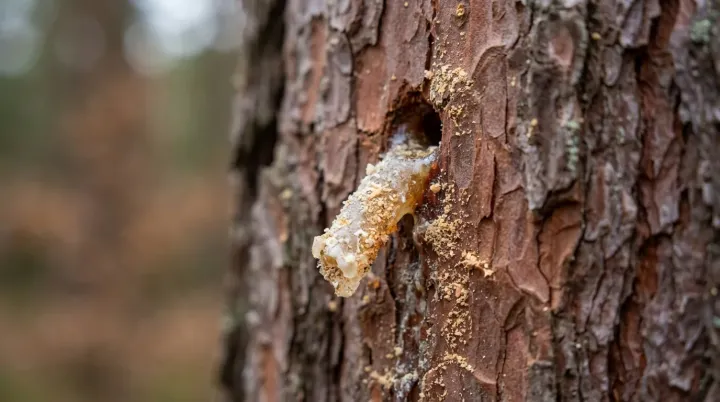
The most immediate sign of an infestation is the presence of boring dust—fine, sawdust-like material—lodged in bark crevices or accumulating at the base of the tree. This indicates active tunneling.
Resin exudation, or "pitch tubes," may appear on the bark surface as the tree attempts to push the beetles out. While a strong tree may successfully pitch out individual beetles, heavy attacks will overcome these defenses.
As the tree's vascular system fails, the crown foliage will begin to change color. Initially appearing a pale green, the needles will eventually turn yellow and then reddish-brown, signaling that the tree is dying or dead.
Bark inspection reveals the characteristic nuptial and larval gallery pattern, which often resembles a star or "Y" shape. The inner bark will show these distinct tunnels carved into the phloem and cambium layer.
- Sawdust at the base of the tree
- Pitch tubes on the trunk surface
- Discoloration of the crown (fading/yellowing)
- Small, round emergence holes in the bark
Control measures
Sanitation is the most effective control method. Removing and destroying infested trees before the new generation emerges helps to drastically reduce the beetle population within a forest stand.
Pheromone traps are highly effective tools for monitoring beetle activity and population density. They can also be used as a management tool to attract beetles away from high-value areas or healthy stands.
In high-value nurseries or urban settings, systemic or contact insecticides may be applied to the trunk during the peak flight period to prevent colonization. Proper timing of these applications is essential for success.
Forest management should prioritize tree health to prevent stress. Ensuring adequate spacing and moisture levels helps trees remain resilient, making them less attractive to bark beetle attacks.
All logging slash and wood debris should be processed or disposed of promptly. Leaving infested debris on-site provides an ideal breeding environment, leading to a localized outbreak that could threaten surrounding trees.
Taxonomy
- Latin name
- Ips pini
- Order
- Coleoptera (beetles)
- Family
- Curculionidae
- EPPO code
- IPSXPI
Discussion
No discussions yet — be the first.