
Emarginate bark beetle
Ips emarginatus
Description
How to identify
The emarginate bark beetle, Ips emarginatus, is a member of the Curculionidae family and the Scolytinae subfamily. It is a relatively large beetle, typically ranging from 4 to 6 millimeters in length.
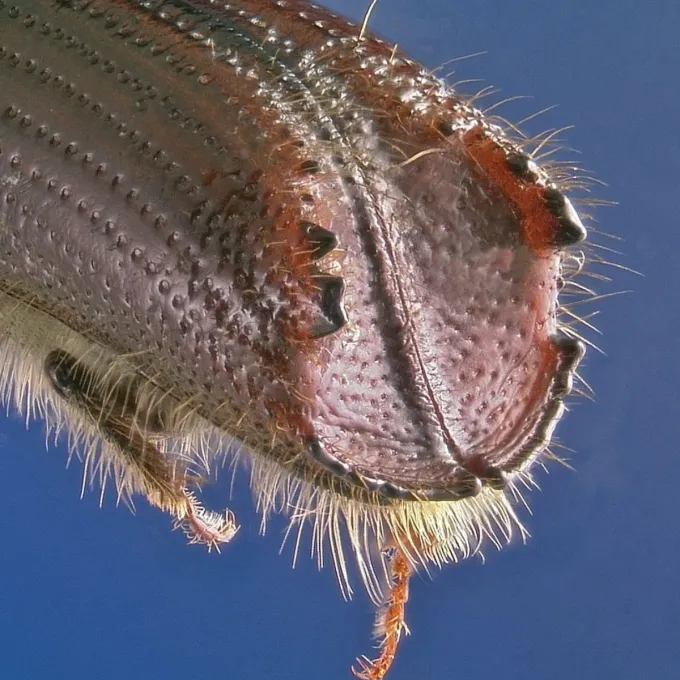
Its morphology is characterized by a distinctive concave structure on the elytra, known as the declivity, which is bordered by several sharp teeth, aiding the beetle in debris removal.
The coloration of the adult beetle is generally dark brown to almost black. The body is cylindrical, designed for efficient movement within the narrow galleries under the tree bark.
Larvae are white, legless, and C-shaped with a sclerotized brown head capsule. They feed exclusively in the phloem and cambium layers of the host tree during their developmental stage.
Pupation occurs in specialized chambers created under the bark, where the insect remains protected from external predators and weather conditions during its transformation.
What it damages
This species primarily targets various conifer trees, with a strong preference for members of the Pinus genus, causing severe structural and physiological damage.
Both adults and larvae contribute to the destruction of the tree's inner bark, which effectively girdles the tree and disrupts the flow of water and nutrients between roots and needles.
During periods of drought or forest stress, this beetle can become highly aggressive, attacking even vigorous trees and causing rapid mass mortality within forest stands.
Beyond direct feeding damage, the beetles are known vectors for various fungi, including bluestain fungi, which degrade the timber quality and accelerate the tree's demise.
Once a stand is infested, the ecological impact is significant, leading to extensive forest patches of dead, brown standing timber that increase fire risk.
When it appears
Adult flight activity typically initiates in the spring once air temperatures become consistently warm, often aligning with the onset of the tree's growth season.
The life cycle duration is highly dependent on regional temperatures; in warmer climates, the species may complete two full generations within a single summer.
Mass dispersal events occur during peak spring and early summer, as newly emerged adults seek out fresh host trees to establish their breeding galleries.
As autumn approaches, the beetles prepare for winter by moving into protected areas, such as the thicker bark at the base of the tree or directly into the leaf litter.
Monitoring for the start of the seasonal activity is critical for foresters to implement trapping or removal measures before the beetle population reaches uncontrollable levels.
Signs of infestation
The most visible sign of infestation is the accumulation of boring dust, a fine, reddish-brown sawdust left behind by the beetles as they tunnel through the bark.
Resin pitch tubes on the outer bark surface are common symptoms of an attack, indicating the tree's attempt to defend itself by pushing out the invading beetles.
Needle discoloration is a late-stage sign, where the foliage transitions from a healthy green to yellow, then brown, indicating that the tree can no longer sustain itself.
Under the bark, the galleries follow a specific pattern, usually featuring long, vertical maternal tunnels that distinguish this species from other bark beetle types.
The shedding of bark in patches and the presence of exit holes are clear indicators that the beetle brood has matured and emerged from the tree.
Control measures
Sanitation cutting and the immediate removal of infested trees from the forest stand are the most effective methods to prevent the population from spreading.
Proper management of logging debris and freshly cut timber is essential, as these materials provide optimal breeding grounds for the beetles if left in the forest.
Pheromone-baited traps are widely used for monitoring population trends and can be utilized as a suppressive measure to reduce the number of attacking adults.
Promoting forest health through selective thinning and ensuring species diversity increases the overall resistance of the stand to beetle outbreaks.
Biological control, including the protection of woodpeckers and natural parasitic wasps, plays an important role in long-term ecosystem stability and pest population regulation.
Taxonomy
- Latin name
- Ips emarginatus
- Order
- Coleoptera (beetles)
- Family
- Curculionidae
- EPPO code
- IPSXEM
Discussion
No discussions yet — be the first.