
Larch bark beetle
Ips cembrae
Description
How to identify
The Larch bark beetle (Ips cembrae) is a bark beetle species belonging to the Scolytinae subfamily, primarily known for its impact on larch and other coniferous trees.
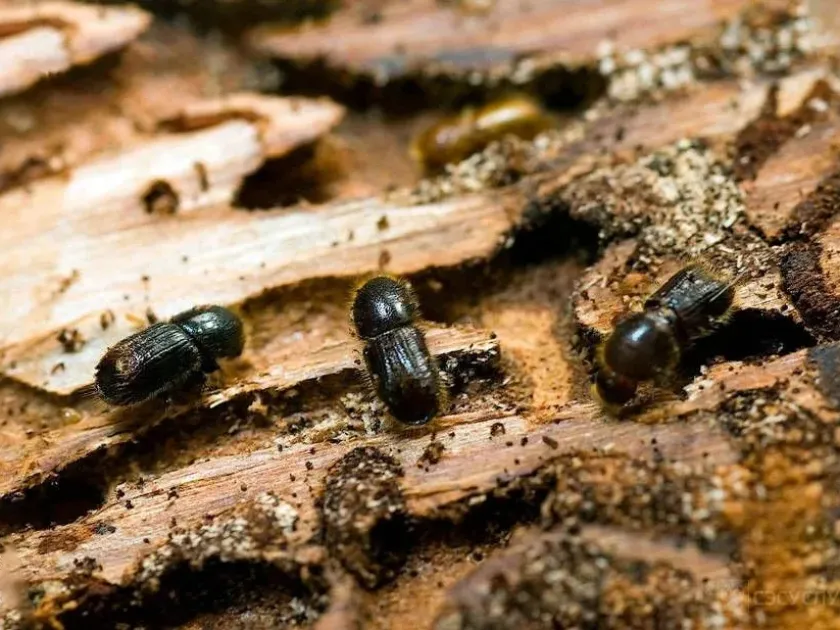
Adult beetles are small, measuring approximately 4.5 to 6.5 mm in length, and are characterized by a dark brown to black cylindrical body.
They are easily distinguished from other related species by the specific structure of the posterior slope of the elytra, which features prominent teeth or hooks.
The larvae are legless, white, and possess a distinct dark head capsule, typical for the Curculionidae family, growing inside the cambium layer.
The insects are highly adapted to life under bark, where they create complex gallery systems essential for their reproduction and development.
What it damages
Larch (Larix spp.) is the primary host for this beetle, although it frequently attacks pines, spruces, and cedars in disturbed forest environments.
The beetles burrow into the bark to reach the phloem and cambium, where they feed and lay eggs, effectively severing the tree's nutrient transport system.
This feeding activity causes rapid wilting and eventual death of the host tree, especially if the tree is already stressed by drought or disease.
In cases of high infestation, the beetle can kill mature, healthy trees, leading to significant economic losses in commercial forests and ecological damage.
The insect also serves as a vector for various wood-staining fungi, which further degrade the quality of the timber and compromise the tree's structure.
When it appears
The Larch bark beetle typically completes one generation per year, though warmer climates may allow for a second generation under favorable conditions.
Spring activity begins when temperatures rise, prompting adult beetles to emerge from hibernation sites to seek suitable host trees for colonization.
The males initiate the colonization process by boring into the bark to create a mating chamber, releasing pheromones to attract females.
Larval development takes place during the summer months, with pupation occurring in small chambers constructed beneath the bark surface.
As autumn approaches, the newly emerged adults seek protection, overwintering in the soil, leaf litter, or at the base of the trees they infested.
Signs of infestation
The presence of boring dust, resembling fine sawdust, on the bark surface or around the tree base is the most common early sign of an infestation.
Yellowing or reddening of the tree's needles indicates that the nutrient supply has been cut off and the tree is dying or severely stressed.
Bark peeling often reveals the characteristic 'gallery' patterns, where the beetle has tunneled through the inner bark to lay eggs.
- Small entry holes visible on the outer bark.
- Accumulation of frass (boring dust) near the tree base.
- Premature needle drop and crown discoloration.
- Increased bird activity, specifically woodpeckers feeding on the larvae.
Sticky resin exuding from the trunk is a common sign of a tree's attempt to defend itself against the beetle's entry.
Control measures
Sanitation cutting and the rapid removal of infested trees from the forest are critical to stopping the spread of the bark beetle population.
Pheromone traps are widely used to monitor beetle activity, detect new outbreaks early, and capture adults before they can colonize new hosts.
Maintaining forest health through proper silvicultural practices, such as thinning and maintaining tree diversity, reduces the vulnerability to attacks.
Biological control agents, including parasitic wasps and predatory beetles, play a natural role in regulating the population size of the pest.
Chemical treatments or protective trunk spraying may be considered in high-value ornamental settings or small areas to prevent infestation during the flight period.
Taxonomy
- Latin name
- Ips cembrae
- Order
- Coleoptera (beetles)
- Family
- Curculionidae
- EPPO code
- IPSXCE
Discussion
No discussions yet — be the first.