
Ips calligraphus
Ips calligraphus
Description
How to identify
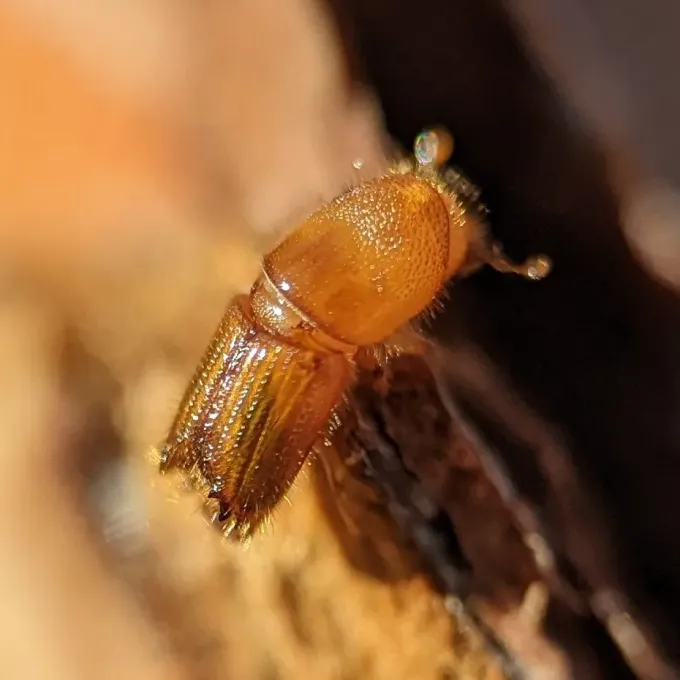
Ips calligraphus, commonly known as the six-spined engraver beetle, is a species of bark beetle belonging to the family Curculionidae. These insects are small, cylindrical beetles, typically measuring between 3.5 and 6.5 mm in length, with a dark brown or blackish color.
The defining feature of this species is the six spines on the rear declivity of its elytra. The third pair of these spines is noticeably enlarged, serving as a primary identifier for forestry experts during field inspections.
The beetle's biology is intrinsically linked to the phloem and cambium layers of pine trees. The adults are highly efficient at detecting stressed or weakened trees through chemical signals released by the host plant.
Larvae are legless, white grubs with amber-colored head capsules. They undergo several molts while consuming the inner bark, which effectively disrupts the tree's vascular system, leading to rapid decline.
Pupation occurs within small chambers, known as pupal cells, which are excavated by the adult females at the terminus of the egg galleries. The entire developmental process is temperature-dependent and relatively rapid during the summer.
What it damages
Ips calligraphus primarily attacks various species of pine trees (Pinus). It is considered a secondary pest that frequently targets trees stressed by drought, fire, mechanical injury, or root pathogens.
The beetle causes damage by boring through the outer bark and constructing elaborate egg galleries in the cambium. This feeding behavior effectively girdles the tree, preventing the transport of nutrients and water from the roots to the canopy.
Heavy infestations can result in the rapid death of healthy trees if the beetle population reaches a threshold where the collective mass attack overwhelms the tree's natural resin defense mechanism.
In addition to physical destruction, the beetles are known to introduce blue-stain fungi into the tree's sapwood. This fungus further clogs the vascular system and significantly degrades the quality and value of the timber.
In nursery environments, even minor infestations can lead to the total loss of saplings, representing a substantial financial impact on reforestation efforts and forest management projects.
When it appears
The seasonal activity of the six-spined engraver beetle begins in the spring when temperatures consistently rise above 15–18 degrees Celsius. This initiates the emergence of overwintering adults.
Depending on the climatic zone, Ips calligraphus can complete multiple generations per year, often ranging from two to four. This high reproductive capacity allows populations to expand rapidly during a single season.
The peak of adult flight activity typically occurs during the warmest summer months. High humidity and favorable thermal conditions during this period facilitate the colonization of new host trees.
As autumn approaches, adult beetles gradually reduce their activity in search of suitable hibernation sites. They often seek refuge under thick bark or within the protective layer of the forest floor.
Integrated pest management programs utilize pheromone-baited traps to monitor flight patterns. These data are critical for timing preventative measures and determining the need for chemical or silvicultural interventions.
Signs of infestation
The most reliable sign of an Ips calligraphus infestation is the presence of boring dust, which resembles reddish-brown sawdust, visible in bark crevices or at the base of the infected tree.
Small, round entry holes on the bark surface indicate where the beetles have successfully penetrated. In some instances, resin flow (pitch tubes) may be observed as the tree attempts to expel the invaders.
A distinctive gallery pattern is revealed when the bark is removed. The maternal gallery typically follows the grain of the wood, with smaller larval galleries branching off at right angles, creating a specific, clear pattern.
Crown discoloration is a secondary symptom. The needles transition from a healthy green to pale green, then yellow, and finally a brick-red or brown color as the tree's vascular system fails completely.
Bark sloughing or peeling in the lower and mid-trunk sections is a sign that the infestation is well-established and that the beetles have likely completed their development and are preparing to exit.
Control measures
Sanitation cutting is the primary method for controlling Ips calligraphus. Removing and destroying infested trees before the new brood emerges is essential to break the life cycle and reduce future populations.
The use of trap trees is a highly effective silvicultural practice. By felling a small number of trees, foresters can attract beetles to a designated location, after which the infested logs can be processed or debarked.
Chemical control, involving the application of registered insecticides to the trunk, is a specialized measure used in high-value areas. It must be applied precisely before the beetles have fully entered the bark to be effective.
Encouraging biological control agents, such as woodpeckers and specialized predatory insects, is a sustainable approach. These natural predators feed on the beetle larvae, helping to keep populations in check.
Maintaining optimal forest health through thinning, clearing debris, and ensuring proper spacing reduces the susceptibility of a stand to attack, effectively preventing large-scale outbreaks before they begin.
Taxonomy
- Latin name
- Ips calligraphus
- Order
- Coleoptera (beetles)
- Family
- Curculionidae
- EPPO code
- IPSXCA
Discussion
No discussions yet — be the first.