
Idotea granulosa
Idotea granulosa
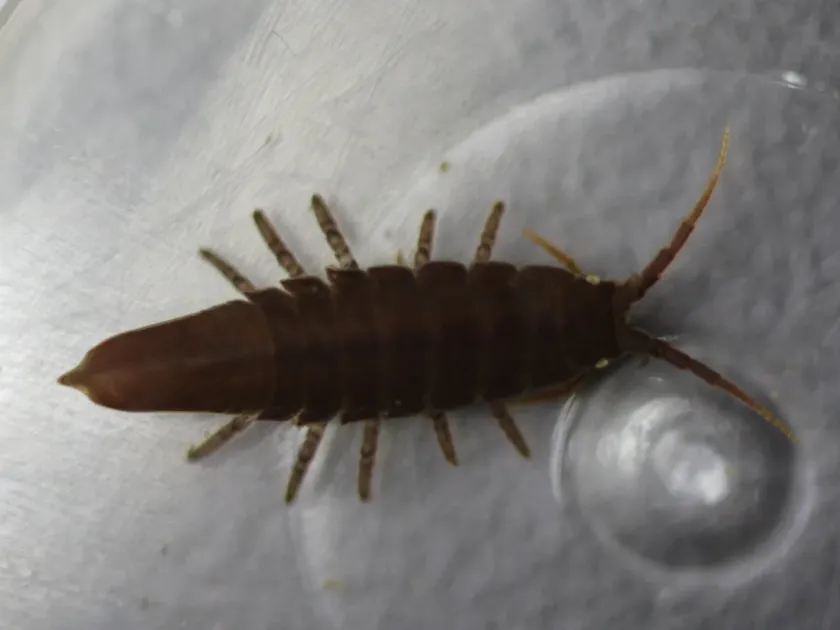
Description
How to identify
Idotea granulosa is a species of isopod crustacean belonging to the family Idoteidae. Its body is elongated and dorsoventrally flattened, protected by a hard exoskeleton. The coloration typically ranges from olive-green to brown, allowing the creature to camouflage effectively among marine vegetation.
Adult individuals can reach lengths between 10 and 25 millimeters. The primary morphological characteristic distinguishing this species is the finely granulated texture of its carapace, which is visible upon close inspection. The eyes are positioned laterally, and the body exhibits clear segmentation typical of the Isopoda order.
This species is a benthic inhabitant of coastal zones, preferring environments rich in macroalgae and seagrasses. They are highly mobile, utilizing seven pairs of thoracic limbs to navigate across substrates and cling to plant structures during turbulent water conditions.
The reproductive strategy involves the female carrying fertilized eggs in a brood pouch (marsupium) located on the ventral side. Upon hatching, the offspring emerge as miniature versions of the adults, immediately capable of independent feeding and movement.
Growth is facilitated by periodic molting, where the exoskeleton is shed. During these intervals, the individuals are particularly vulnerable, leading them to retreat into the denser clusters of aquatic plants, which serves as a critical observation point for identifying infestations.
What it damages
Idotea granulosa is known to cause significant damage to seaweed and seagrass crops, making it a pest of concern in coastal aquaculture. As dedicated phytophagous organisms, they feed directly on the healthy tissues of cultivated marine plants.
Large populations of these isopods can consume substantial portions of plant biomass, which reduces the overall yield and photosynthetic capacity of the seaweed crops. The resulting damage can lead to a significant decline in the commercial quality of the product.
The feeding process creates irregular lacerations and holes, which weaken the structural integrity of the plant. This mechanical stress makes the seaweed prone to breakage and increases its susceptibility to secondary infections by pathogens, such as bacteria and fungi.
In high-density colonies, the cumulative feeding activity can lead to the localized destruction of entire plant patches. This degradation of the habitat negatively impacts the ecological balance within the cultivation area, often leading to stunted growth across the farm.
Furthermore, the accumulation of waste products and debris caused by intense feeding can alter the local hydrochemical environment, potentially leading to increased nitrogen levels that further stress the cultivated species.
Signs of infestation
The earliest sign of an infestation is the appearance of jagged, irregular feeding marks along the edges and surfaces of the seaweed thalli. These injuries often present as small holes or eroded sections that compromise the plant's appearance.
Finding large numbers of discarded exuviae (molted shells) among the seaweed crops is a strong diagnostic indicator of high population density. These shells are often found in areas where the isopods have been hiding.
Reduced density of the plant bed, accompanied by patches of necrotic tissue, suggests that Idotea granulosa is actively feeding in the vicinity. Persistent observation during nighttime may reveal the isopods crawling across the vegetation.
A change in color of the plant tissue, turning pale or necrotic around the feeding areas, indicates a prolonged period of grazing. This discoloration is often followed by the eventual decay of the affected seaweed segments.
The presence of fine, granular feces on the surface of the seaweed indicates high metabolic activity and confirms that the plant is being utilized as a food source, warranting immediate management action.
Control measures
The cornerstone of managing Idotea granulosa is regular population monitoring to prevent outbreaks. If population density exceeds established thresholds, mechanical methods such as intensive washing or agitation of the cultivation substrates are employed.
Agricultural control involves optimizing the harvesting schedule to minimize the time that plants remain in the water, thereby reducing the window for pest colonization. Maintaining proper plant density is also essential to prevent providing excessive shelter for the isopods.
Biological control strategies may involve the introduction of native predators, such as specific fish species that naturally feed on isopods. This helps maintain a balance within the aquaculture ecosystem without the need for synthetic inputs.
Strict biosecurity measures are required when introducing new planting material to avoid the transfer of adult isopods or juveniles. Inspecting materials before introduction is a critical step in preventing farm-wide infestations.
- Installation of mesh barriers to exclude large crustaceans.
- Regular cleaning of culture nets and structures to remove debris.
- Monitoring water flow patterns to identify areas prone to pest accumulation.
Taxonomy
- Latin name
- Idotea granulosa
- Family
- Idoteidae
- EPPO code
- IDOTGR
Discussion
No discussions yet — be the first.