
Idotea
Idotea
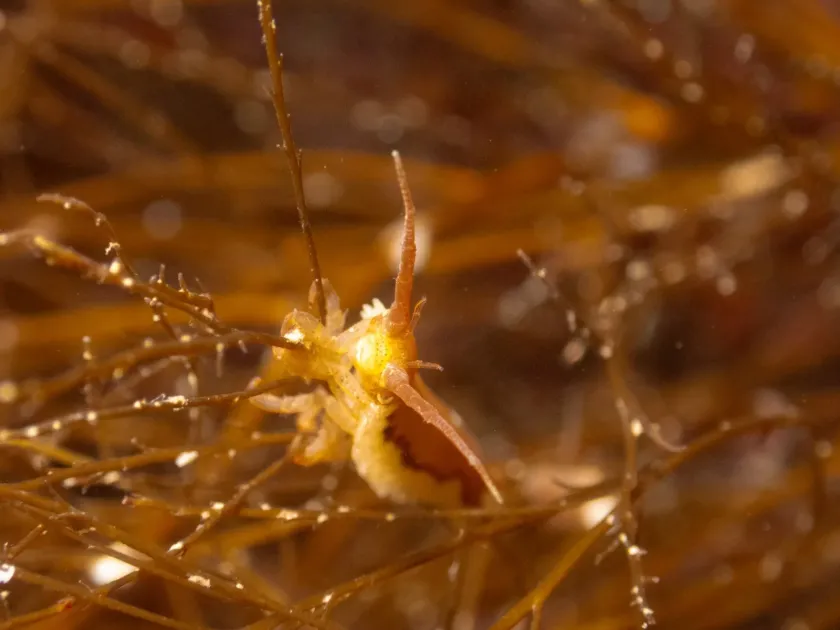
Description
How to identify
Idotea is a genus of marine isopods within the family Idoteidae. These crustaceans are characterized by an elongated, dorsoventrally flattened body and are often referred to as sea slaters due to their resemblance to common terrestrial woodlice.
The body structure consists of seven thoracic segments and fused abdominal segments, with size ranging typically from 20 to 40 mm. They exhibit remarkable color polymorphism, adapting their hues to match the surrounding vegetation or substrate.
They are primarily found in coastal marine environments, inhabiting areas with abundant seaweed and seagrass beds. While they play a vital ecological role, they can reach pest levels in aquaculture settings.
The biology of Idotea is distinct due to its direct development pattern. Females carry eggs in a ventral brood pouch, and the hatchlings emerge as miniature versions of the adults, immediately capable of independent feeding and movement.
These organisms are highly resilient to fluctuations in salinity and temperature, which contributes to their ability to colonize and thrive in various marine environments used for commercial algae cultivation.
What it damages
The economic impact of Idotea is primarily observed in seaweed and kelp farming. Large populations can inflict severe damage by consuming the blades and fronds of cultivated aquatic plants.
As they feed, they rasp away the soft tissue of the plants, leaving behind only the tougher midribs and veins, which significantly degrades the commercial quality and nutritional value of the harvest.
Feeding wounds create entry points for opportunistic pathogens, including bacteria and fungi, which can exacerbate the tissue decay and lead to the collapse of individual plant segments.
In high-density cultivation areas, uncontrolled Idotea populations can lead to widespread biomass loss, causing significant disruption to the productivity of marine farms.
The physical destruction of the plant structure reduces the photosynthetic efficiency of the seaweed, further stunting growth and decreasing the overall yield of the crop cycle.
Signs of infestation
A primary indicator of an Idotea infestation is the skeletonization of seaweed blades, where the internal soft matter is removed, leaving only a net-like structure of veins.
Direct observation of the plants will often reveal the presence of these crustaceans, especially in the crevices of the fronds or near the holdfasts where they seek protection from currents.
An increased presence of fragmented plant debris accumulating near the bottom of the culture site is a strong sign of active feeding by a large population of Idotea.
Discoloration or necrotic lesions appearing on the edges of the seaweed blades are common symptoms, indicating that the feeding activity is facilitating secondary infections.
If the cultivation ropes or substrates are lifted from the water, the rapid scattering of these crustaceans along the surface is an immediate confirmation of a high population density.
Control measures
Management strategies for Idotea revolve around preventive measures. Site selection is critical to avoid areas known for high natural densities of these isopods.
Regular maintenance of the culture ropes, including cleaning or shaking off detritus, can help physically remove individuals and disrupt their breeding cycle within the farm.
Biological control, by maintaining a healthy population of predatory fish species that naturally feed on these crustaceans, has proven effective in balancing the ecosystem within the farm.
Adjusting the depth of the submerged lines can sometimes reduce the attractiveness of the plants to the pests, as Idotea distribution often correlates with specific water horizons.
Maintaining a clean farming environment by minimizing excess organic debris helps prevent the accumulation of food sources and hiding spots that would otherwise encourage population explosions.
Taxonomy
- Latin name
- Idotea
- Family
- Idoteidae
- EPPO code
- IDOTSP
Discussion
No discussions yet — be the first.