
Purslane weevil
Hypurus bertrandi
Description
How to identify
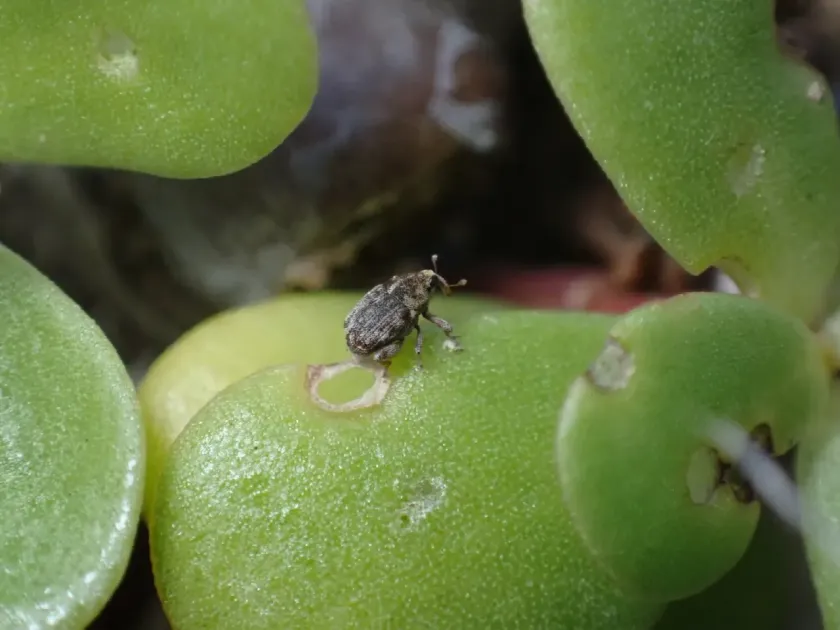
The purslane weevil (Hypurus bertrandi) is a small beetle belonging to the Curculionidae family, order Coleoptera. These insects are typically 2–3 mm long and possess the elongated snout (rostrum) characteristic of all weevils.
The adults are usually dark brown or black, sometimes covered with fine pale scales, which helps them blend into their host plant environment. The larvae are legless, C-shaped, and usually creamy-white, hidden within the plant tissues.
Beetles are cryptic and often stay inactive during the day or drop to the ground when threatened. They are specifically associated with Portulaca species, where they complete their entire life cycle.
Females lay their eggs into the stems or petioles of the purslane plant. This behavior ensures that the emerging larvae have immediate access to food sources without needing to travel through the environment.
Depending on the climate, the species can produce multiple generations per year. Pupation commonly occurs inside the host plant's stem or in the upper layers of the soil near the base of the plant.
What it damages
The primary host for Hypurus bertrandi is common purslane (Portulaca oleracea). While often viewed as a weed, purslane can also be cultivated as an edible or ornamental plant.
Adult beetles feed on leaves, creating small holes known as shot-holes. They also scrape the surface of the stems, leading to minor aesthetic and physiological damage to the host plant.
Larval activity is significantly more destructive. The larvae bore into the stems, creating tunnels that disrupt the vascular system, preventing water and nutrients from reaching the upper parts of the plant.
As a result of this internal damage, the plant may exhibit stunted growth, yellowing, and eventually wilting. Severe infestations often cause the death of individual branches or the entire plant.
Agricultural experts sometimes study this weevil as a potential biocontrol agent for managing invasive purslane populations in crops where it competes with agricultural produce.
Signs of infestation
Small, pin-prick holes in the leaves are the first indicators of adult beetle feeding activity.
Stem deformation, including swellings or premature bending, indicates the presence of larvae tunneling inside the stem tissue.
Yellowing of the foliage and sudden wilting of stems despite adequate watering suggest that the vascular system has been compromised by larval feeding.
Darkened or necrotic spots on the stems are signs of damage where larvae have exited or where pathogens have entered the plant tissue through the beetle's entry wounds.
Visible presence of small, dark, hard-shelled beetles on the foliage, especially during early morning hours, confirms the active population.
Control measures
The most effective strategy starts with regular monitoring of plant health and the removal of heavily infested individuals to curb population growth.
Cultural practices, such as deep tilling of the soil after the growing season, are essential for destroying overwintering pupae and reducing the carry-over of the pest to the next cycle.
For chemical control, systemic insecticides are generally required to reach the larvae hidden inside the stems. These products are taken up by the plant tissue and provide a consistent defense.
- Rotate crops to minimize the build-up of specialized pests.
- Use yellow sticky traps to monitor adult beetle activity.
- Integrate biological control methods, such as encouraging local predators.
When applying control measures on edible purslane, always check the label for safety intervals and consider using organic or bio-based insecticidal products to ensure consumer safety.
Taxonomy
- Latin name
- Hypurus bertrandi
- Order
- Coleoptera (beetles)
- Family
- Curculionidae
- EPPO code
- HYPUBE
Discussion
No discussions yet — be the first.