
Tropical coffee borer
Hypothenemus obscurus
Description
How to identify
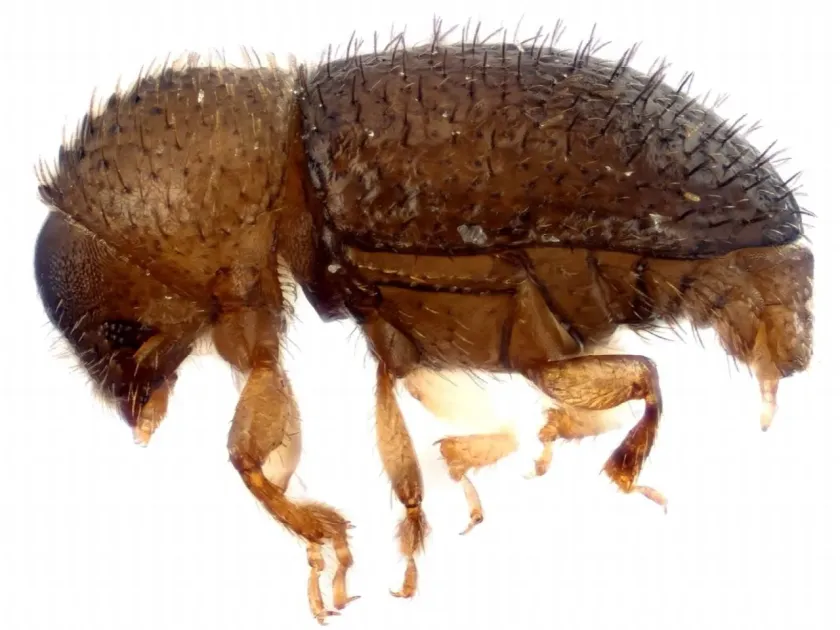
The tropical coffee borer Hypothenemus obscurus is a member of the weevil family, specifically the subfamily Scolytinae (bark beetles). It is a tiny insect, with adults measuring only 1.2 to 1.8 mm in length.
The beetle is typically dark brown or black in color. Its body is covered in fine hairs, giving it a somewhat matte appearance that helps distinguish it from other related beetle species.
The entire life cycle of the beetle takes place inside the coffee bean. It passes through four stages: egg, larva, pupa, and adult, all contained within the fruit, which protects it from external environments.
Females are larger than males and possess the ability to fly, allowing them to migrate between coffee berries and infest new areas of the plantation during the growing season.
Males are flightless and spend their entire lives inside the coffee bean where they were born, mating with females to ensure the continuation of the generation within the same fruit.
What it damages
The primary host for Hypothenemus obscurus is the coffee fruit. The adult female bores into the berry to reach the endosperm (the bean), which serves as the primary food source for the developing larvae.
While coffee is the main target, the beetle can also infest other tropical crops, including cocoa seeds and various legumes, making it a threat to diverse agricultural systems.
The damage caused by the borer significantly reduces the quality of the coffee. Infested beans lose weight, density, and flavor, leading to substantial economic losses for producers.
Boreholes create entry points for secondary pathogens, such as fungi and molds. This often leads to rot, which can destroy the entire interior of the bean if left untreated.
In cases of heavy infestation, the beetle causes premature fruit drop. This directly reduces the total yield and can severely impact the profitability of the coffee farm.
Signs of infestation
The most common sign of infestation is the presence of small entrance holes, typically found near the central disc of the coffee berry.
A tell-tale sign of active infestation is the presence of "boring dust" — tiny particles of bean material pushed out of the hole by the beetles as they tunnel inside.
If an infested bean is cracked open, it will contain adult beetles, larvae, and tunnel pathways filled with frass, indicating that the bean is structurally compromised.
Early-stage infestations are often difficult to spot externally. However, as the infestation progresses, the infected beans may appear shriveled or discolored.
Stunted growth or early yellowing of the berries can also indicate that the borer has compromised the vascular connection between the fruit and the branch.
Control measures
Sanitation is the most important management tool. Regularly collecting and disposing of fallen berries removes the breeding grounds and reduces the population for the next season.
Using pheromone traps is an effective way to monitor pest activity and suppress local populations without relying on heavy chemical interventions.
Proper pruning and plantation maintenance help improve airflow and light penetration in the canopy, reducing the humidity levels that favor beetle reproduction.
Chemical control should be applied judiciously, focusing on the periods when adult beetles are migrating between berries to minimize the risk to non-target organisms.
Biological control using entomopathogenic fungi, specifically Beauveria bassiana, has shown great promise in controlling populations in an eco-friendly manner.
Taxonomy
- Latin name
- Hypothenemus obscurus
- Order
- Coleoptera (beetles)
- Family
- Curculionidae
- EPPO code
- HYOTOB
Discussion
No discussions yet — be the first.