
Areca coffee beetle
Hypothenemus areccae
Description
How to identify
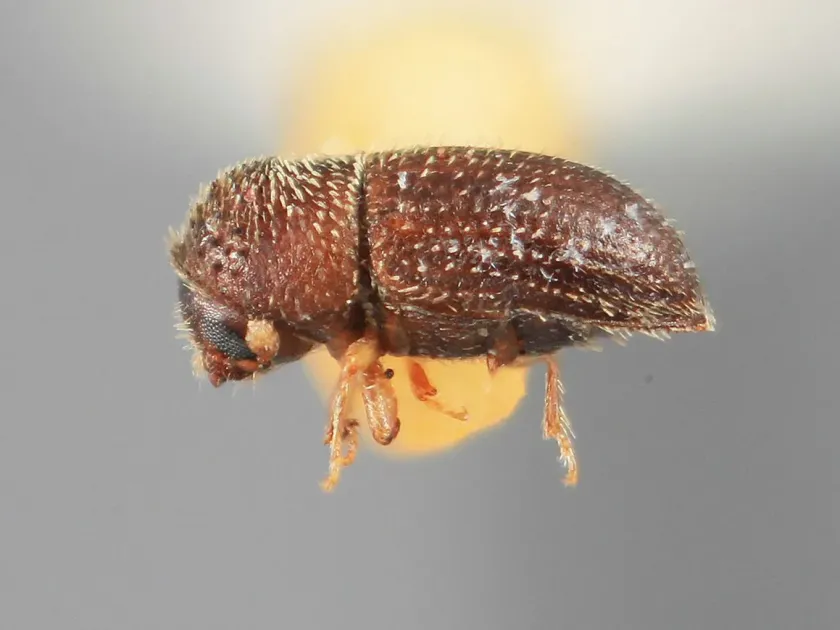
The Areca coffee beetle (Hypothenemus areccae) is a member of the Curculionidae family, subfamily Scolytinae. This is a minute beetle, with adults typically measuring between 1.5 and 2 mm in length.
The body of the adult beetle is cylindrical and dark brown or black. The elytra are covered with fine, dense hairs, which serves as a primary characteristic for identifying this specific species.
Larvae are small, white, legless grubs with a C-shaped body and a yellowish head capsule. Their entire development takes place inside the seeds or fruits of host plants, keeping them hidden.
The beetle's life cycle is heavily dictated by environmental factors. Tropical climates with high humidity and temperatures ranging from 25°C to 30°C provide the optimal environment for rapid reproduction.
Female beetles bore entry holes into fruits to deposit their eggs. Mating often occurs inside the fruit, allowing the population to expand rapidly within a single host.
What it damages
This pest targets a variety of crops, most notably coffee berries, areca nuts, cocoa beans, and several types of legumes, causing significant agricultural losses.
The beetle attacks both developing fruit on trees and harvested produce in storage. It tunnels into the pulp and seeds, compromising the nutritional and market value of the commodity.
Areca coffee beetles pose a severe threat to post-harvest storage facilities. Their ability to survive on dry seeds allows them to thrive in warehouses for extended periods.
The pest's feeding activity often introduces secondary fungal infections. These fungi cause rapid decay and spoilage of the seeds, often leading to total loss of the batch.
The economic impact involves both physical loss of weight and the total rejection of coffee batches by processors due to quality degradation caused by insect infestation.
Signs of infestation
The most common sign of infestation is the presence of tiny, circular holes on the surface of the berries or seeds, representing the entry points created by the females.
Opening an infested berry reveals winding tunnels created by the larvae. Inside these galleries, one can usually find "frass" or boring dust, which consists of insect waste and plant particles.
Premature fruit drop is a strong indicator of heavy infestation. Affected fruits typically turn dark and brittle, breaking apart easily under pressure.
In storage areas, the presence of adult beetles on the exterior of shipping bags or a noticeable musty smell indicates that the commodity inside is infested.
Reduced germination rates in seeds are a critical red flag for nurseries, as the beetle destroys the embryo within the seed during its feeding process.
Control measures
Good sanitation practices are the cornerstone of management. Removing and destroying fallen or damaged fruit on the plantation prevents the beetle from finding suitable breeding sites.
Pheromone traps are essential tools for monitoring beetle populations. By tracking their numbers, growers can determine the optimal timing for intervention.
Chemical control involves the application of insecticides during peak flight periods. However, because the insects spend most of their lives inside the fruit, coverage is often challenging.
Post-harvest protection relies on fumigation in airtight chambers and maintaining low humidity levels in warehouses, which slows down the reproductive rate of the pest.
- Regular sanitation and disposal of crop residues.
- Using pest-free, certified seeds for new plantings.
- Monitoring pest activity with pheromone-based lures.
- Maintaining proper moisture levels in storage facilities.
- Isolating and destroying infected batches immediately upon discovery.
Taxonomy
- Latin name
- Hypothenemus areccae
- Order
- Coleoptera (beetles)
- Family
- Curculionidae
- EPPO code
- HYOTSU
Discussion
No discussions yet — be the first.