
Green leaf weevil
Hypomeces squamosus
Description
How to identify
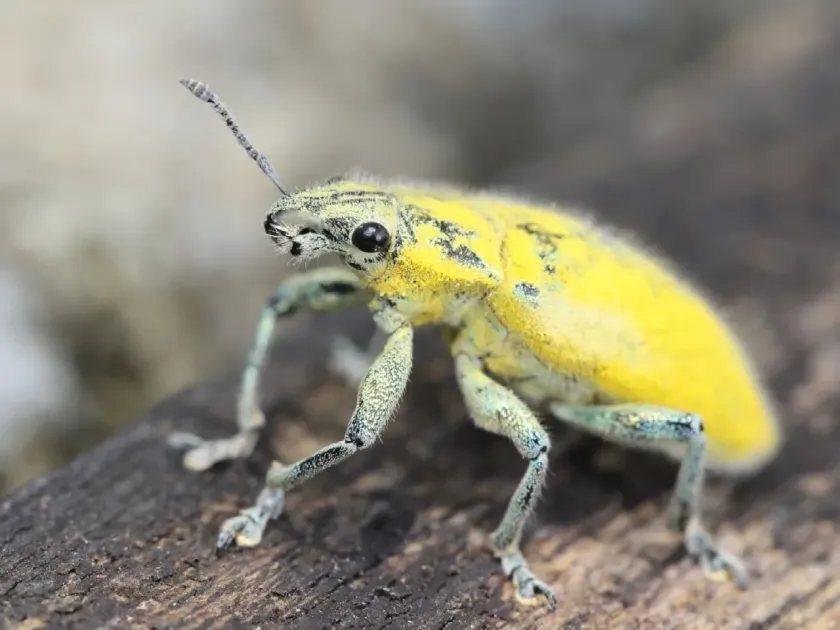
The green leaf weevil (Hypomeces squamosus) is a member of the Curculionidae family. It is easily recognized by its vibrant green or metallic gold-green coloration, created by a dense layer of tiny scales on its elytra.
Adult beetles typically measure between 10 and 15 mm in length. They feature a robust, short rostrum, which differentiates them from some other weevil species that possess significantly longer snouts.
Larvae are cream-colored, legless, and C-shaped, living primarily within the soil. They possess a hardened head capsule, which is an adaptation for movement through soil and decomposing organic matter.
These insects are highly adaptable, thriving particularly in warm and humid climates where they can complete their life cycles efficiently throughout the year.
The life cycle encompasses four distinct stages: egg, larva, pupa, and adult, with each stage requiring specific environmental conditions for optimal survival and development.
What it damages
This species is a generalist feeder (polyphagous), capable of causing significant damage to a wide array of agricultural, horticultural, and ornamental plants.
Common host plants include various citrus species, tea shrubs, cotton, soybean, and a range of legumes. It is frequently reported as a pest in tropical plantation crops.
Adult weevils consume leaf tissues, often starting from the margins and working inward. In cases of severe infestations, they can skeletonize the foliage, leaving only the primary veins intact.
While adults feed on foliage, the larvae live in the soil and can feed on the root systems of young plants, causing stunted growth and making the plant more vulnerable to secondary fungal infections.
The cumulative damage leads to a loss of photosynthetic capacity, which directly results in reduced yields, stunted plant development, and diminished market value for ornamental foliage.
Signs of infestation
The most prominent sign of an infestation is the presence of characteristic notched or irregular patterns along the edges of the leaves, which differ from the smooth edges left by other insects.
During the daytime, the beetles are often found resting on the undersides of leaves, effectively camouflaged by their bright green color, which matches the foliage.
A classic sign of their presence is the "death feigning" behavior; when disturbed, the beetles quickly drop to the ground and remain motionless, making them difficult to spot on the soil surface.
Small, dark fecal pellets left on the leaf surface indicate that the beetles have been actively feeding in that area during the night or early morning hours.
Wilting of young plants without clear signs of stem damage may indicate subterranean larval feeding, which disrupts the plant's nutrient and water uptake processes.
Control measures
Effective management of the green leaf weevil requires an integrated pest management (IPM) approach that combines cultural, biological, and chemical control measures.
Chemical control usually involves the application of registered insecticides during the peak activity periods of the adults, typically performed in the early evening to ensure higher efficacy.
Mechanical control, such as hand-picking the beetles from plants in small gardens, can be effective if performed regularly, especially during the cool early morning hours when insects are lethargic.
Cultural practices, such as maintaining weed-free fields and performing deep soil cultivation, help to disrupt the development of larvae and pupae within the soil profile.
- Regular monitoring of foliage for notched leaf margins.
- Application of contact or systemic insecticides during peak infestations.
- Tilling the soil to expose larvae and pupae to predators.
- Encouraging natural enemies such as birds and predatory insects.
Taxonomy
- Latin name
- Hypomeces squamosus
- Order
- Coleoptera (beetles)
- Family
- Curculionidae
- EPPO code
- HYMSSQ
Discussion
No discussions yet — be the first.