
Green weevil
Hypomeces inflatus
Description
How to identify
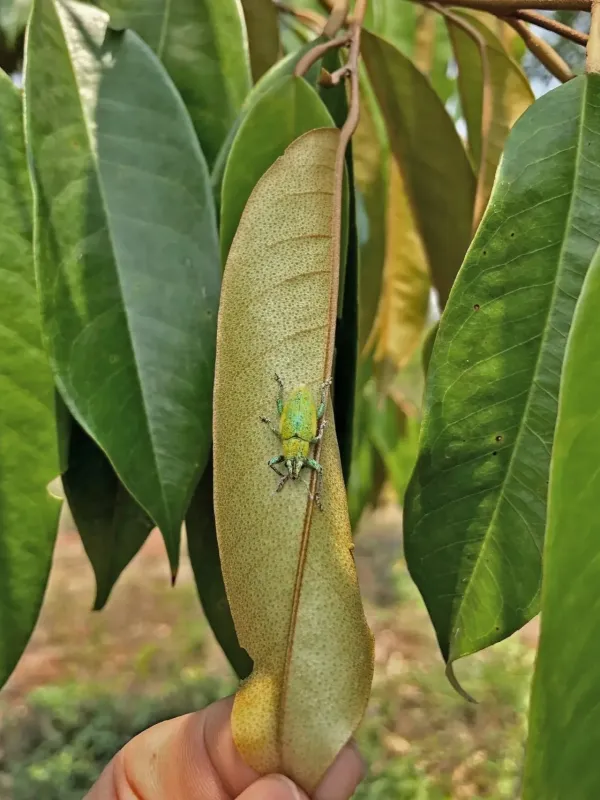
The green weevil (Hypomeces inflatus) is a beetle species belonging to the family Curculionidae (order Coleoptera). Adults are characterized by their brilliant green color, which serves as effective camouflage against lush foliage.
The body is oval-shaped and covered in fine, dense scales. They possess a prominent snout, typical of broad-nosed weevils, which they use to feed on plant tissue. The species is primarily distributed in tropical and subtropical regions.
Larvae of this species are legless, white-colored grubs with a distinct brown head. They are primarily soil-dwelling, feeding on roots and organic matter, which makes them difficult to monitor during early development stages.
The life cycle encompasses a complete metamorphosis, moving through egg, larval, pupal, and adult stages. Favorable warm and humid conditions accelerate their development, leading to several generations per season.
Adult beetles are diurnal, actively feeding on foliage during the day. They are agile flyers and can disperse across plantations to locate host plants, contributing to the rapid expansion of infested areas.
What it damages
This species is a generalist feeder (polyphagous), attacking a wide range of host plants including fruit trees, leguminous crops, and various ornamental species. It causes significant losses in agricultural and horticultural settings.
Adult weevils feed by chewing the edges of leaves, leaving characteristic irregular holes or notches. In cases of high infestation, they can cause severe defoliation, which severely limits the plant's photosynthetic capacity.
Young plants and seedlings are particularly vulnerable to green weevil activity. Heavy feeding can stunt growth, reduce vigor, and potentially lead to the death of the plant if not managed in time.
Soil-dwelling larvae target the root system, causing subterranean damage. By feeding on fine roots, they disrupt nutrient and water uptake, resulting in weakened plant health and increased susceptibility to environmental stress.
Economic damage includes reduced yield, loss of plant quality, and increased expenditure on pest management interventions, making this beetle a serious concern for commercial growers.
Signs of infestation
The most visible indicator of an infestation is the presence of characteristic leaf notches on the foliage. These marks are distinct and often appear in clusters, indicating a high concentration of feeding adults.
The presence of adult beetles, which often fall from branches when disturbed, is a primary indicator. Searching for them on the underside of leaves during morning hours can confirm the severity of the infestation.
Wilting of foliage, especially during the peak heat of the day, may signal root damage caused by larvae. Such symptoms are often confused with drought, but careful inspection of the soil can reveal the cause.
Frass (excrement) found on the leaves and soil surface beneath the plant canopy serves as a clear sign of recent and ongoing feeding activity by the adult population.
Stunted growth, lack of new shoot development, and poor fruit yield in established trees are long-term indicators of a chronic infestation that has likely been present for some time.
Control measures
Chemical control involving systemic or contact-action insecticides is effective during the adult activity phase. Timing is critical to ensure coverage when the beetles are most actively feeding on the foliage.
Cultural management practices such as tilling the soil around the base of trees can disrupt the life cycle of larvae and pupae. This mechanical disturbance exposes them to predators and desiccation.
Hand-picking or shaking beetles onto protective sheets in the early morning can be a viable strategy for small gardens or high-value crops, significantly reducing local population density without chemicals.
Biological control options, including the application of beneficial nematodes or entomopathogenic fungi to the soil, provide a targeted way to suppress larval populations without leaving toxic residues.
Maintaining a clean cultivation area by removing host weeds and managing surrounding vegetation helps limit the pest's access to food sources, serving as a proactive step in an integrated pest management program.
Taxonomy
- Latin name
- Hypomeces inflatus
- Order
- Coleoptera (beetles)
- Family
- Curculionidae
- EPPO code
- HYMSIN
Discussion
No discussions yet — be the first.