
Hypomeces
Hypomeces
Description
How to identify
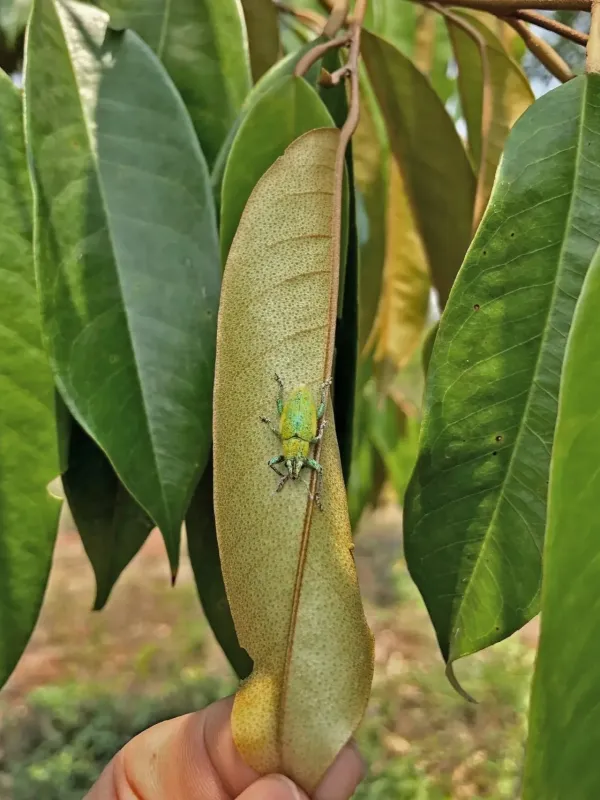
Hypomeces (Hypomeces squamosus), commonly known as a green weevil, belongs to the Curculionidae family within the order Coleoptera. Adult beetles are typically 10-15 mm long and possess a body covered in specialized scales, which provide a greenish or yellowish hue.
The morphology of the insect includes a prominent snout (rostrum), which is characteristic of the weevil group. The larvae are soil-dwelling, pale in color, and legless, with a C-shaped body posture that allows them to move efficiently through the root zone.
The life cycle undergoes complete metamorphosis, consisting of egg, larva, pupa, and adult stages. Females lay eggs in the soil or at the base of plants, ensuring that the emerging larvae find immediate food sources among the roots.
Adult activity is primarily diurnal, and these beetles are most visible on foliage during the morning or late afternoon. Their coloration acts as an excellent camouflage against the host plant leaves, making them difficult to detect.
To identify the pest accurately, look for the adult beetles on the underside of leaves or observe the roots of stunted plants for the presence of larvae in the surrounding soil layers.
What it damages
The Hypomeces weevil is a significant polyphagous pest that affects a diverse range of agricultural crops, particularly in tropical regions. Both the adult stage and the larval stage contribute to the overall damage caused to the plants.
The primary hosts include citrus trees, coffee, tea, rubber plants, and various leguminous crops. The feeding habits of this pest can lead to both leaf tissue depletion and root structure degradation.
Adult beetles feed on leaves, creating distinct notched or ragged edges. In cases of high infestation, this damage can lead to severe defoliation, which negatively impacts the plant's photosynthesis and overall vigor.
Larvae feed on roots, causing significant harm to young seedlings in nurseries or plantation fields. Root damage reduces the plant's ability to uptake water and nutrients, resulting in stunted growth and eventual death of the plant.
Economic damage is manifested through decreased yield quality and quantity, making management critical for large-scale production. Persistent infestation can lead to long-term decline in orchard health.
Control measures
Integrated Pest Management (IPM) is essential for controlling Hypomeces populations. A combination of cultural, chemical, and biological measures provides the most effective long-term results for plantation owners.
Chemical control is often necessary during peak outbreaks. Foliar applications of contact insecticides, such as pyrethroids, effectively reduce adult populations. Applications are most successful when performed at dawn or dusk.
To control larval populations, soil-applied granular insecticides are highly recommended, especially when establishing new saplings in an area prone to infestation. This targets the hidden, underground stages of the lifecycle.
Cultural practices, such as maintaining field hygiene and removing alternative host weeds, help break the breeding cycles of the beetle. Regular soil cultivation can also expose pupae to predators and environmental stress.
- Regular monitoring using light traps to track population spikes.
- Use of entomopathogenic nematodes as a biological control agent.
- Manual collection and destruction of adults during the initial phases of infestation.
- Application of systemic insecticides to provide lasting protection to vulnerable crops.
Taxonomy
- Latin name
- Hypomeces
- Order
- Coleoptera (beetles)
- Family
- Curculionidae
- EPPO code
- HYMSSP
Discussion
No discussions yet — be the first.