
Beet stem weevil
Hypolixus truncatulus
Description
How to identify
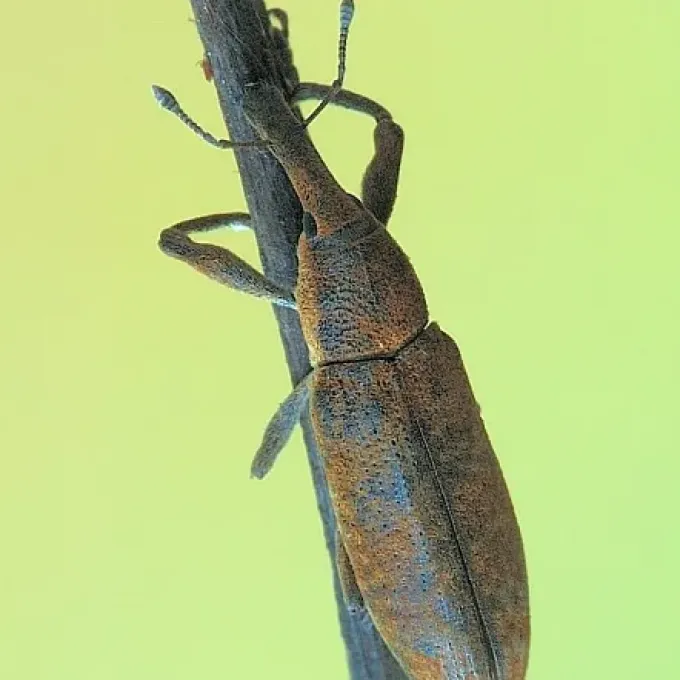
The beet stem weevil (Hypolixus truncatulus) is a member of the Curculionidae family within the order Coleoptera. Adult beetles measure between 8 and 12 mm in length and possess an elongated body with greyish-brown coloration.
The insect features a long, curved rostrum (snout) which is specifically adapted for boring into plant tissues. This mouthpart is essential for both feeding and the process of oviposition within the stems of host plants.
The larvae are typically legless and have a C-shaped, creamy-white body with a prominent brown head capsule. They are exclusively endophagous, meaning they complete their entire development inside the plant stems.
The life cycle involves complete metamorphosis, consisting of the egg, larva, pupa, and adult stages. Overwintering occurs primarily in the adult stage, sheltered within the soil or debris at the base of host plants.
This pest is known for its ability to thrive in various environmental conditions, making it a persistent threat to beet production in endemic regions where it can significantly affect crop quality.
What it damages
The beet stem weevil primarily attacks various types of beets, including sugar beet, red (table) beet, and mangelwurzel. It also frequently infests wild species within the Amaranthaceae family, such as Chenopodium album (lamb's quarters).
Larval feeding activity occurs internally, as they create extensive tunnels within the stems, leaf petioles, and flower stalks. This damage disrupts the plant's vascular tissue, hindering the flow of water and nutrients.
The weakening of the stem structure often leads to mechanical damage, causing the plants to lodge or break during high winds. This is particularly destructive for seed-producing crops, leading to significant yield losses.
In addition to structural damage, the infested plants exhibit reduced vigor and stunted growth. Because the damage is internal, it often remains undetected until the plant shows signs of severe stress, such as wilting or chlorosis.
While the larvae cause the primary internal destruction, adult weevils also feed externally on leaves and petioles, leaving small pits, though this usually causes less economic impact compared to larval infestation.
When it appears
Adult weevils typically emerge from their overwintering sites in the spring as temperatures rise, usually coinciding with the onset of favorable weather for host plant germination and early growth.
The egg-laying period is extended, generally occurring as the beet stems develop during late spring and early summer. Females carefully select suitable stems for oviposition, placing eggs individually into bored cavities.
Larval development takes approximately one to two months, depending on ambient temperatures. During this stage, the insects are well-protected inside the host plant, making them difficult to target with conventional contact-based pesticides.
Pupation takes place within the stem tunnel. Once the adult insects emerge, they go through a period of feeding on vegetation before seeking out suitable sites to enter diapause for the upcoming winter.
Tracking the activity of the adult population is crucial for determining the correct timing of insecticidal applications, as targeting the beetles before egg-laying is the most effective management approach.
Signs of infestation
The presence of the weevil is often first indicated by small, circular entry holes found on the stems and leaf stalks, which are created by females during the oviposition process.
Visual indicators of infestation include darkened or necrotic spots on the stems, which are a reaction of the plant tissues to the internal larval boring activity.
In the case of severe infestation, the stems may appear distorted, swollen, or brittle. In seed crops, broken flower stalks are a classic sign of internal destruction caused by the larval tunnels.
Confirming the pest's presence can be done by splitting a suspect stem; the discovery of tunnel structures filled with larval frass and the presence of the white, curved larvae provides definitive evidence.
Farmers should also watch for the presence of adult beetles on the foliage, as these are often visible during sunny, warm periods when the weevils are moving to feed or find mates.
Control measures
Managing the beet stem weevil requires an integrated approach because the pest's internal life cycle limits the efficacy of many traditional pesticide treatments.
- Implementing crop rotation to prevent the buildup of pest populations in fields where beets have been grown recently.
- Deep autumn plowing to disturb the soil and destroy the overwintering sites of adult beetles.
- Targeted use of systemic insecticides during the peak activity of adult weevils, specifically before they commence egg-laying.
- Strict control of wild amaranthaceous weeds in and around fields to remove alternative breeding grounds.
- Monitoring adult population levels using traps to determine the economic threshold for intervention.
Taxonomy
- Latin name
- Hypolixus truncatulus
- Order
- Coleoptera (beetles)
- Family
- Curculionidae
- EPPO code
- LIXUTR
Discussion
No discussions yet — be the first.