
Hyperodes anthracinus
Hyperodes anthracinus
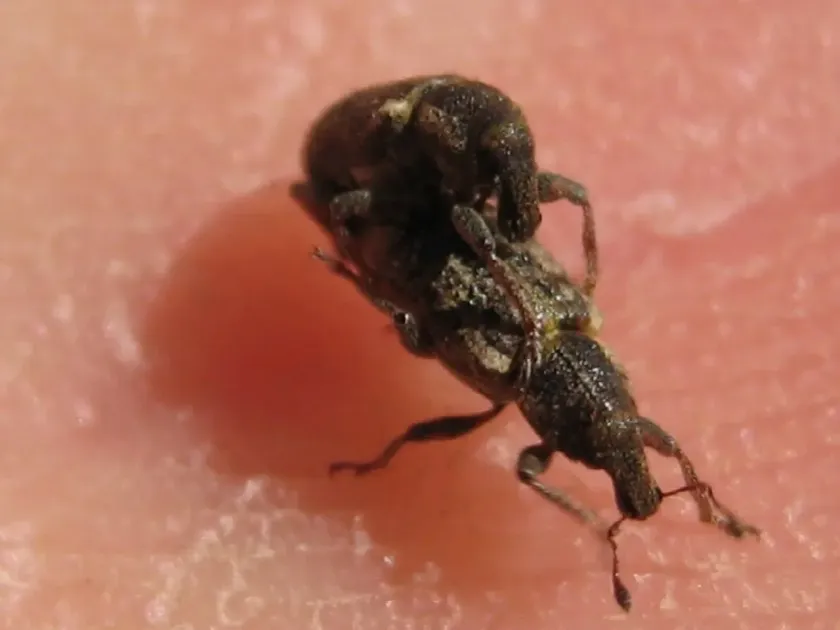
Description
How to identify
Hyperodes anthracinus is a beetle species belonging to the family Curculionidae, commonly known as weevils. The adult insect is characterized by its dark, anthracite-colored body, which provides excellent camouflage in field conditions.
The morphology includes a typical snout (rostrum) used for feeding and oviposition. Despite their relatively small size, these beetles are capable of causing significant agricultural damage when populations reach high densities.
The larvae are legless, with a curved, pale body and a well-developed head capsule. They are strictly endophytophagous, meaning they complete their development inside the plant tissues, which hides them from predators and surface-applied pesticides.
The life cycle encompasses four distinct stages: egg, larva, pupa, and adult. This complete metamorphosis allows the insect to adapt to various environmental stresses and ensures the continuity of the generation.
Entomologists often categorize this species as a specialized pest that thrives in areas with consistent moisture, often associated with perennial or wild grasses that serve as primary hosts.
What it damages
The primary hosts of Hyperodes anthracinus are various cereal crops, including wheat and barley. Both adults and larvae contribute to the negative impact on crop productivity.
While adult beetles feed on leaf tissues, causing characteristic scarring, the most severe damage is inflicted by the larvae. By tunneling into the stems, they disrupt the vascular system of the plant.
This internal tunneling causes the stem to weaken or die, often leading to lodging. In many cases, the affected tillers fail to produce grain, resulting in substantial yield losses during the harvest period.
Besides physical destruction, the damage caused by the larvae creates entry points for secondary fungal and bacterial pathogens, leading to further decay of the crop tissue.
The cumulative effect of these injuries ranges from local patch damage in fields to widespread infestation, depending on the climatic conditions of the growing season.
When it appears
Adult beetles typically emerge from overwintering sites in early spring. The timing of this emergence is highly correlated with rising soil and air temperatures that signal the start of the vegetative season.
The oviposition phase usually coincides with the early growth stages of cereal crops. Females select suitable host stems, depositing eggs in positions that allow larvae to easily enter the plant tissue upon hatching.
The larval stage, which is the most destructive, occurs throughout the period of intense vegetative growth, specifically during the tillering and jointing stages of the cereals.
Pupation takes place either within the damaged stem or in the soil near the host plant, depending on species-specific environmental triggers and the moisture content of the soil.
New adults emerge in mid-summer. After a period of supplemental feeding, they transition to a diapause-like state to survive the winter, often hiding in crop residues or nearby hedgerows.
Signs of infestation
Early warning signs of an infestation include small, ragged feeding scars on the leaves, which indicate the presence of adult beetles in the field during the seedling stage.
A classic symptom of larval damage is the flagging or yellowing of the central leaf of a tiller, which signals that the internal vascular tissues have been compromised.
By splitting the stems of stunted or yellowing plants, agronomists can observe larval galleries filled with frass, which is definitive proof of the pest's activity.
In mature plants, the absence of a head or the formation of shriveled, empty grains is a late-stage indicator that the plant's nutrient transport was blocked by larval feeding.
Field patches that show uneven growth or increased lodging are often primary locations to inspect for the presence of this specific weevil species.
Control measures
Effective cultural control begins with deep autumn plowing (tillage), which helps expose overwintering adults and pupae to extreme weather and natural predators, reducing the population for the next season.
Crop rotation is a vital strategy. By alternating cereal crops with non-host broadleaf crops, the life cycle of the pest is interrupted, preventing the build-up of damaging populations.
Sanitation practices, specifically the removal of wild grass hosts and weeds around field margins, reduce the number of alternative food sources available to the beetles.
Chemical control is implemented based on scouting results and economic threshold levels. Systemic insecticides are generally preferred as they can reach the larvae hidden inside the stems.
Timing the insecticide application is crucial; it must be performed before the larvae have fully entered the stem to ensure maximum contact and efficacy of the treatment.
Taxonomy
- Latin name
- Hyperodes anthracinus
- Order
- Coleoptera (beetles)
- Family
- Curculionidae
- EPPO code
- HYROAN
Discussion
No discussions yet — be the first.