
Stem weevil
Hyperodes
Description
How to identify
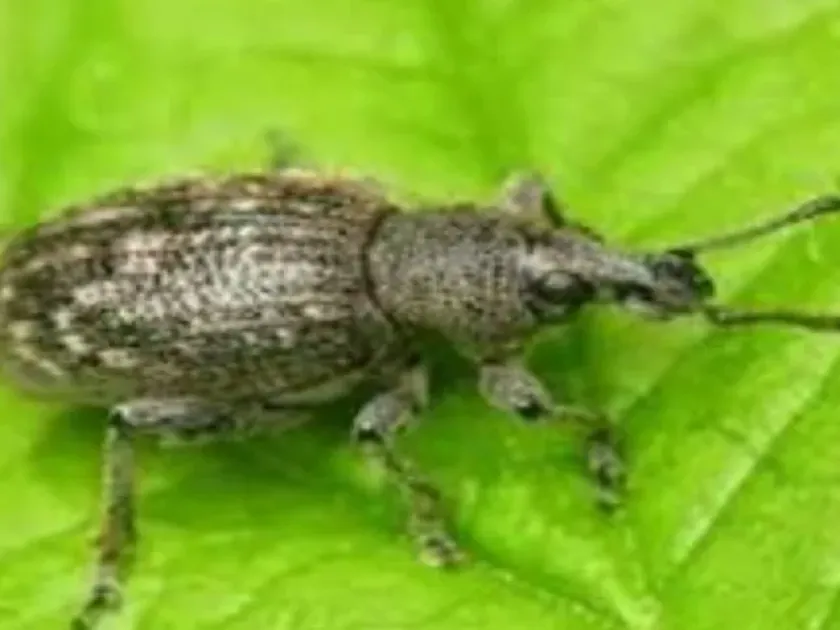
The stem weevil (Hyperodes spp., commonly associated with Listronotus bonariensis) is a member of the Curculionidae family, order Coleoptera. These beetles are characterized by their elongated snout, a typical feature of weevils.
Adult beetles are small, usually measuring between 3 and 4 mm in length. Their color ranges from dark brown to grayish-black, allowing them to blend in perfectly with soil, leaf litter, and crop debris, making them difficult to spot.
Larvae are legless, C-shaped, and creamy-white with a distinct brown head. They live and feed internally within the stems of host plants, which makes direct control methods very challenging once the larvae have entered the plant tissue.
Females lay eggs in small punctures made in the plant tissue. Depending on the species and environmental conditions, pupation occurs either within the plant stem or in the surrounding soil layers.
Correct identification is often based on crop damage symptoms rather than direct observation of the beetles, as they are primarily nocturnal or cryptic in their behavior during the day.
What it damages
Stem weevils primarily target cereal crops, including wheat, barley, and rye, as well as various grass species. The damage is caused by both adults feeding on leaves and, more significantly, larvae feeding inside the stems.
Larval feeding destroys the vascular tissue of the stem. This interrupts nutrient transport, leading to the yellowing and wilting of the central leaf or the entire spike, a condition often referred to as "whiteheads."
In young crops, high infestation levels can cause plant death, leading to thinning of the stand and significant yield losses. The loss of tillering capacity in damaged plants further exacerbates the reduction in productivity.
Beyond direct damage, the entry points created by the larvae provide easy access for secondary pathogens, such as fungi and bacteria, which can cause further rot and plant tissue degradation.
Yield loss is highly dependent on the timing of the infestation; early-stage attacks are generally the most destructive as the crop has less capacity to compensate for the lost tillers.
When it appears
Adult weevils overwinter in sheltered areas, such as field borders, grassy areas, or within the top layer of soil. They emerge in the spring as temperatures rise, typically coinciding with the early growth stages of cereals.
The breeding cycle is influenced by temperature and humidity. Prolonged warm and moist conditions favor rapid population growth and extended egg-laying periods, leading to overlapping generations of larvae.
A second generation can develop during the summer months, which poses a specific threat to later-sown crops. This generation is often responsible for the damage observed during the late vegetative and reproductive phases.
As temperatures drop in the autumn, adults move toward their overwintering sites. Ensuring that these sites are managed can significantly reduce the potential infestation pressure for the following season.
Understanding the life cycle is vital for timing insecticide applications, as treatments are most effective against adult beetles before they start laying eggs inside the plants.
Signs of infestation
The earliest signs of infestation are small "window-pane" feeding marks on the leaves caused by adult beetles. These small holes are a clear indicator that the population is present and active.
The most diagnostic symptom of larval presence is the yellowing or sudden wilting of the central shoot. Close inspection of the stem base usually reveals a small entry hole chewed by the larva.
Opening the stem often reveals internal tunneling filled with larval frass. In severe cases, the stem loses its structural integrity and can be easily pulled from the soil or broken by wind.
- Yellowing and drying of the central shoot (whiteheads).
- Visible entrance holes at the base of the stem.
- Stunted plant growth and failure to develop productive tillers.
- Patchy appearance of the field.
- Premature ripening and shriveled grains.
Routine scouting is essential; once whiteheads are visible, the damage to the internal structure of the stem is already irreversible, making proactive monitoring crucial.
Control measures
Cultural management is the first line of defense. Proper crop rotation helps disrupt the life cycle of the weevil by removing its preferred host plants from the field in consecutive seasons.
Deep plowing after harvest can destroy overwintering sites, reducing the number of adults that survive until the next spring. Keeping field borders free of weeds and tall grasses also limits habitats for the pests.
Chemical control should focus on the adult stage. Applying systemic insecticides before egg-laying occurs is the most effective way to prevent larval damage inside the plant stems.
Seed treatments with systemic insecticides provide essential early-season protection, safeguarding the crop during the most vulnerable period of germination and initial growth.
Integrated pest management (IPM) practices, including the use of monitoring traps, allow farmers to assess pest density and make informed decisions on when to initiate chemical interventions.
Taxonomy
- Latin name
- Hyperodes
- Order
- Coleoptera (beetles)
- Family
- Curculionidae
- EPPO code
- HYROSP
Discussion
No discussions yet — be the first.