
Alfalfa weevil
Hypera zoilus
Description
How to identify
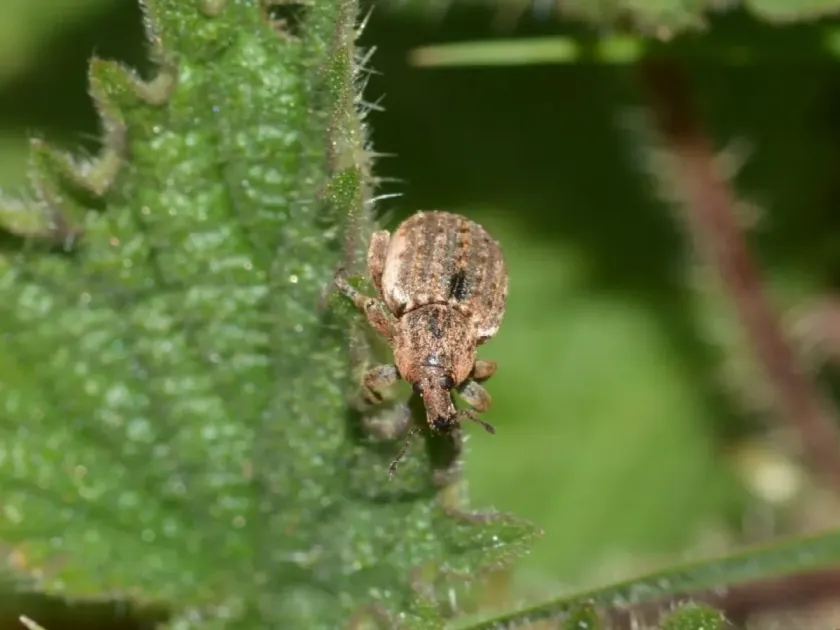
The alfalfa weevil Hypera zoilus is a member of the Curculionidae family. Adult beetles measure approximately 6–8 mm in length and possess a characteristic brown-spotted pattern on their elytra.
The larva is legless, growing up to 10 mm long, and displays a distinct yellowish-green body with a white stripe running along its dorsal side.
The eggs are small, oval-shaped, and typically deposited in clusters within the stems or leaf axils of the host plant, hidden from predators.
Pupation occurs within a lacy, spherical cocoon that is easily visible when attached to the foliage or stems of the alfalfa plants.
The adult beetle has a curved snout, which is a diagnostic feature used in entomological identification to distinguish it from similar species.
What it damages
This pest primarily attacks forage legumes, with alfalfa, clover, and vetch being the most common hosts for its development.
Adult weevils cause damage by feeding on young leaves, creating small, irregular holes that reduce the plant's photosynthetic efficiency.
Larvae are responsible for the most severe damage, as they consume both the leaves and terminal buds of the plants, leading to significant biomass loss.
In cases of heavy infestation, the entire field can appear gray and skeletonized, as the larvae strip the plant of all its soft tissue, leaving only veins.
Beyond direct biomass reduction, the feeding activity predisposes plants to secondary infections and reduces their nutritional quality for livestock feed.
When it appears
The life cycle of Hypera zoilus is closely linked to the seasonal growth of legumes. Adults overwinter in soil debris or protected areas.
Emergence occurs in the early spring as temperatures rise above 10°C, with adults migrating to alfalfa fields to feed and mate.
Egg-laying begins shortly after the first spring growth, and larvae are usually present and active throughout the mid-spring months.
Pupation takes place toward the end of spring, and the new generation of adults typically emerges by early summer.
The beetles then enter a summer diapause to avoid high temperatures before resuming limited activity in the autumn.
Signs of infestation
The earliest signs of infestation are small pin-hole sized feeding marks on the undersides of the newest, most apical leaves.
As larvae grow, the feeding becomes more aggressive, leading to skeletonized leaves that appear as translucent or lacy structures on the plant.
The presence of lacy cocoons attached to the plants is a clear indicator that the pest population has reached an advanced developmental stage.
Stunted growth of the forage crop, despite adequate water and fertilizer, often indicates that larvae are feeding within the plant canopy.
Visible presence of adult beetles on the foliage, especially during cool morning hours, confirms the need for immediate field assessment.
Control measures
Cultural control is the first line of defense; maintaining healthy stands and practicing timely harvesting can interrupt the life cycle of the weevil.
Harvesting alfalfa during the peak larval stage can effectively remove a large percentage of the population, preventing them from completing their development.
Chemical control is required when the infestation levels exceed the economic threshold, necessitating the application of selective insecticides.
Biological control agents, including specific parasitoid wasps and entomopathogenic fungi, play a significant role in suppressing populations naturally.
Monitoring the fields with sweep nets is essential to time insecticide applications accurately and minimize damage to beneficial insect populations.
Taxonomy
- Latin name
- Hypera zoilus
- Order
- Coleoptera (beetles)
- Family
- Curculionidae
- EPPO code
- HYPRZO
Discussion
No discussions yet — be the first.