
Alfalfa weevil
Hypera ruschianae
Description
How to identify
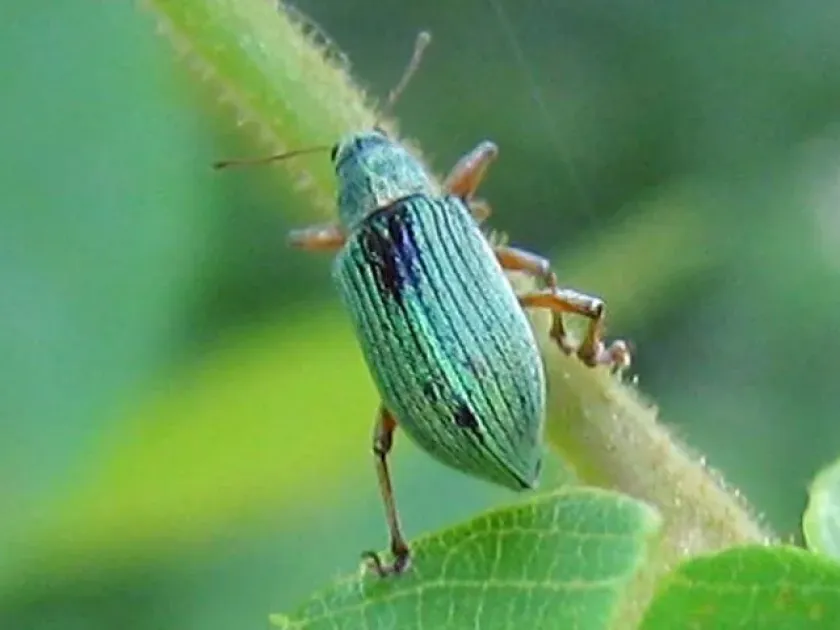
The alfalfa weevil (Hypera ruschianae) is a small beetle belonging to the Curculionidae family. Adults are typically about 4–5 mm long, with a distinct elongated snout typical of weevils.
The body of the adult beetle is covered with dense scales, giving it a mottled brownish or grayish appearance. This camouflage allows them to hide effectively on alfalfa stems and foliage.
Larvae are legless, C-shaped, and creamy white or yellowish with a dark head. They prefer living in protected areas such as curled leaves or terminal buds of the plant.
The life cycle involves complete metamorphosis: egg, larva, pupa, and adult. The insect typically spends the winter in the adult stage, hiding in crop debris or the upper soil layer.
Females lay eggs inside plant stems by puncturing the tissue. The timing of egg-laying and larval emergence is highly dependent on spring temperatures and soil conditions.
What it damages
This pest primarily attacks alfalfa and other leguminous forage crops. Both adults and larvae feed on the plants, causing significant defoliation and reduction in yield.
Larvae feed on the leaf tissue, creating small punctures that eventually expand into large, irregular holes. This damage reduces the photosynthetic capacity of the plant.
Adult feeding causes the leaves to have a ragged edge or a "shot-hole" appearance. Severe infestations can result in the stripping of leaf tissue, leaving only the veins.
Stunted growth is a common consequence of alfalfa weevil feeding. The plant may fail to reach its full height, and the quality of the harvested hay is significantly degraded.
In cases of heavy pressure, the stand can be so severely weakened that it becomes more susceptible to environmental stress and other plant diseases throughout the season.
When it appears
Adult weevils emerge from hibernation during the early spring as temperatures rise. They immediately begin feeding on the first regrowth of alfalfa before depositing their eggs.
Larval activity peaks later in the spring, typically coinciding with the rapid growth of the alfalfa crop before the first harvest. This is the period when scouting is most critical.
Summer heat often triggers a dormant phase for the adults. They move to the soil surface or deeper into the canopy to find cooler, more humid microclimates.
In some regions, activity may increase again in the autumn if moisture and temperature conditions are favorable for the development of the next generation or the activity of hibernating adults.
Winter dormancy is essential for their survival. They successfully endure cold months by seeking shelter in dense vegetation or protected soil pockets, awaiting the return of spring.
Signs of infestation
The first sign of infestation is small, pinhead-sized white spots on the leaves. As the larvae grow, these spots develop into larger, irregular holes in the leaf surface.
Terminal buds that are curled or twisted often contain larvae. These hidden larvae are protected from environmental factors and contact insecticides by the plant tissue.
Plants affected by the pest may appear stunted, chlorotic, and have lower nutritional quality. The canopy may look thin or gray from a distance due to the loss of leaf tissue.
- Pinhead-sized feeding holes in leaves.
- Curled and twisted terminal leaves.
- Presence of larvae in the plant canopy.
- Lacy appearance of leaves due to heavy feeding.
- Small, spherical, net-like cocoons on foliage.
Regular field scouting using a sweep net is the standard method for detection. Finding a certain number of larvae per sweep is usually the indicator for intervention.
Control measures
Early harvest is one of the most effective ways to manage alfalfa weevil populations. By cutting the crop, the larvae are exposed to heat and desiccation, which significantly reduces their survival.
Field sanitation is important, as it removes the debris where weevils overwinter. Maintaining healthy stands through proper fertilization and irrigation helps plants recover from pest damage.
Biological control plays a key role in sustainable management. Parasitic wasps and predatory insects often keep weevil populations below economic threshold levels in balanced ecosystems.
Chemical control with insecticides is recommended when scouting indicates that economic thresholds have been exceeded. It is crucial to choose selective products to minimize impact on beneficial insects.
Always follow local agricultural guidelines regarding application rates and pre-harvest intervals to ensure the safety of the forage and compliance with environmental regulations.
Taxonomy
- Latin name
- Hypera ruschianae
- Order
- Coleoptera (beetles)
- Family
- Curculionidae
- EPPO code
- HYPRRU
Discussion
No discussions yet — be the first.