
Sorrel weevil
Hypera rumicis
Description
How to identify
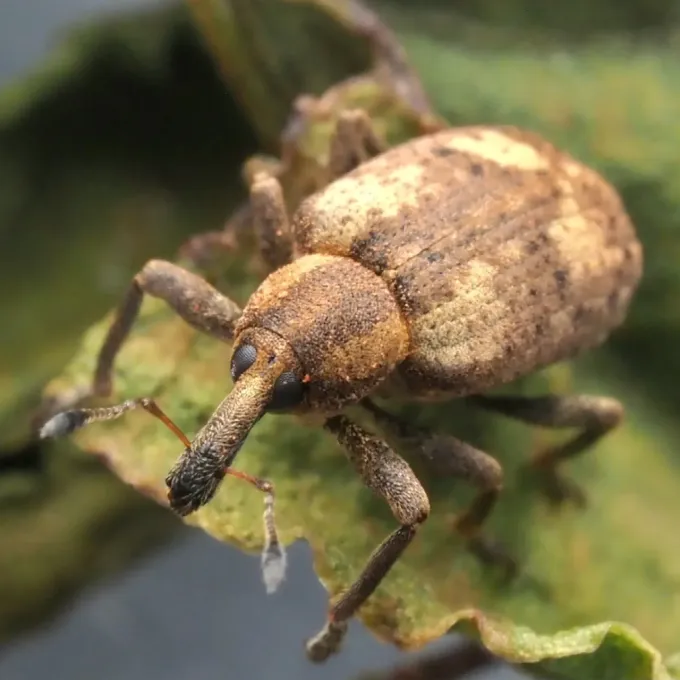
The sorrel weevil (Hypera rumicis) is a member of the Curculionidae family within the order Coleoptera. The adult insect features an elongated body, typically 5–6 mm long, covered with grey or brownish scales that form a mottled, cryptic pattern on the elytra.
The larvae are apodous (legless) and possess a C-shaped, yellowish-white body reaching up to 9 mm in length, with a distinct dark head capsule. Their entire life cycle is intimately associated with the growth of Polygonaceae plants.
What it damages
The primary host plants for this pest include species of the genus Rumex, most notably the common garden sorrel. Occasionally, these weevils may also be found feeding on rhubarb.
Both adults and larvae cause significant physiological stress to the host plant. Heavy infestations can lead to substantial biomass loss, rendering the crop unmarketable for commercial production.
When it appears
Typically, there is one generation per year. The insect overwinters as an adult in the soil, leaf litter, or under plant debris near the host plants.
Emergence from hibernation occurs in early spring as temperatures increase. Adults feed on young foliage before mating and laying eggs on the stems or leaves, initiating the cycle for the upcoming growing season.
Signs of infestation
Adult feeding results in small, round, shot-hole perforations in the leaf blades, often starting from the margins and moving toward the center of the leaf.
Larval feeding is more destructive; larvae skeletonize the leaf by consuming the mesophyll from the underside, leaving only the thin epidermis intact. This causes the leaves to skeletonize, turn yellow, and eventually shrivel.
Control measures
Cultural control is the first line of defense; regular harvesting and mowing of sorrel foliage help physically remove the larvae from the field before they reach maturity.
Sanitation practices, such as removing wild dock plants and other Polygonaceae weeds from surrounding areas, are essential to reduce local populations. In severe cases, approved insecticides may be used, provided that pre-harvest intervals are strictly observed.
Taxonomy
- Latin name
- Hypera rumicis
- Order
- Coleoptera (beetles)
- Family
- Curculionidae
- EPPO code
- HYPRRM
Discussion
No discussions yet — be the first.