
Alfalfa leaf weevil
Hypera pedestris
Description
How to identify
The Alfalfa leaf weevil (Hypera pedestris) is a beetle belonging to the Curculionidae family. Adult weevils are small, measuring approximately 3–4 mm in length, with a brownish-grey mottled appearance and a characteristic elongated snout.
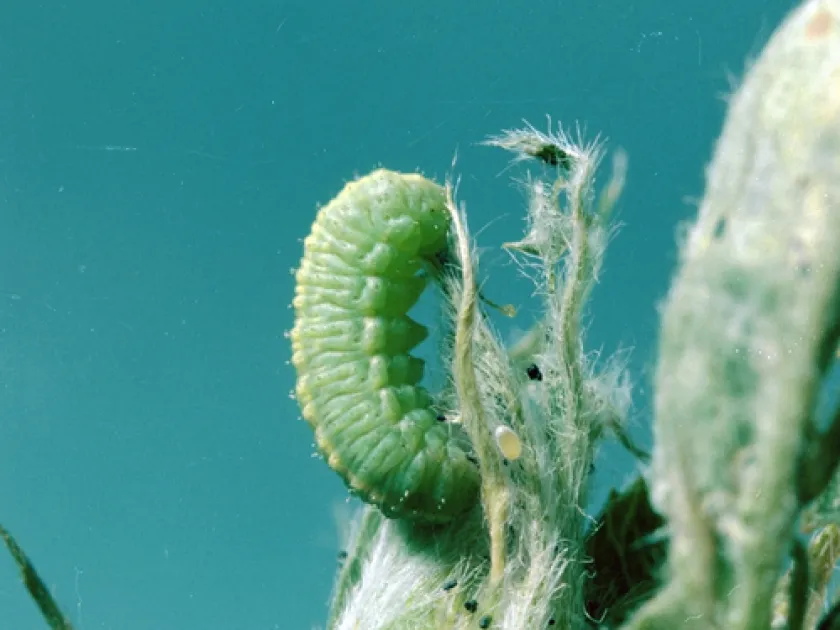
The larvae are legless, C-shaped, and creamy-yellow with a dark head capsule, growing up to 6 mm long. During the pupal stage, they construct distinctive, lacy white cocoons found on the leaves or within plant debris.
What it damages
The primary host for this pest is alfalfa (lucerne). Both adult beetles and larvae contribute to crop damage by feeding on the foliage and terminal buds of the plants.
Economic damage is typically associated with extensive defoliation, which reduces the photosynthetic capacity of the plants. This results in significant yield losses in both hay production and potential seed yields.
When it appears
Adult weevils overwinter in soil, plant litter, or haystacks. They become active in the spring as temperatures rise, moving to alfalfa fields to feed and mate.
Eggs are typically deposited inside the stems or petioles of the alfalfa. After hatching, the larvae go through several instars before pupating. The life cycle is tightly synchronized with the early growth stages of the alfalfa crop.
Signs of infestation
Early infestation signs include small pinholes or "windowpanes" in the leaves created by young larvae. As the larvae mature, they consume leaf tissue entirely, leading to severe skeletonization of the foliage.
Heavily infested fields appear bleached or frosted due to the destruction of the green leaf tissue. Stunted plant growth and reduced forage quality are common indicators of a high infestation level.
Control measures
Effective management includes timely harvesting of the first cut, which significantly reduces larval populations by removing their food source. Proper sanitation of field borders also helps limit overwintering sites.
When infestation levels exceed economic thresholds, insecticide application is necessary. It is crucial to select products safe for beneficial insects and to adhere to pre-harvest intervals for forage crops.
Taxonomy
- Latin name
- Hypera pedestris
- Order
- Coleoptera (beetles)
- Family
- Curculionidae
- EPPO code
- HYPRPE
Discussion
No discussions yet — be the first.