
Egyptian alfalfa weevil
Hypera brunneipennis
Description
How to identify
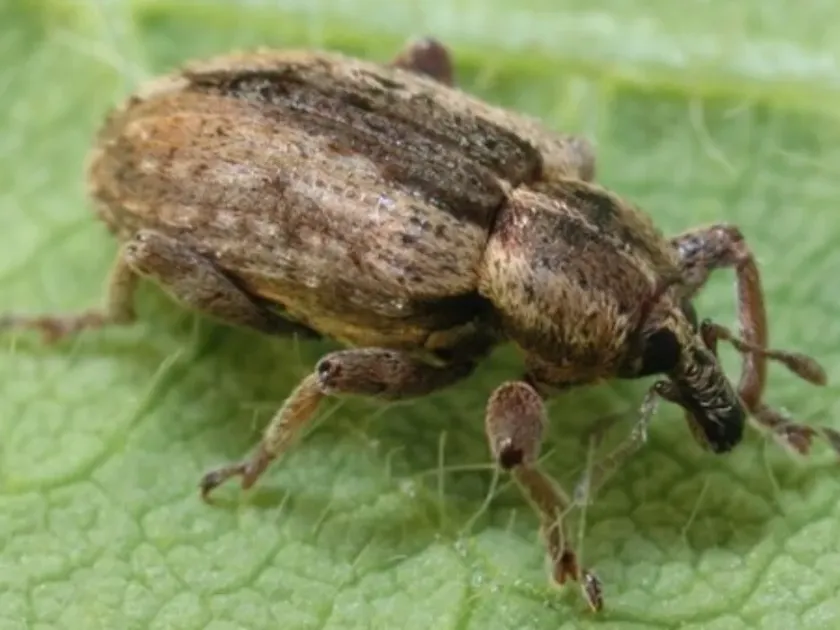
The Egyptian alfalfa weevil (Hypera brunneipennis) belongs to the Coleoptera order and the Curculionidae family. Adult beetles are small, typically measuring 4 to 5 mm in length, characterized by their elongated snouts.
Their bodies are covered in scales ranging from light brown to dark brown, often featuring indistinct patterns on the elytra that provide excellent camouflage against foliage.
Larvae are legless, C-shaped, and usually pale green or yellowish with a distinct dark head capsule, allowing them to blend into the alfalfa plant tissues.
This species is highly adapted to warm Mediterranean-like climates, which influences its reproductive timing and ability to thrive in managed agricultural landscapes.
Pupae develop inside delicate, lace-like cocoons woven from silk, which the insect attaches to leaves or debris on the soil surface.
What it damages
The primary host is alfalfa, although the weevil can infest other leguminous crops, causing significant economic damage if left unmanaged.
Both adults and larvae contribute to crop loss; larvae are particularly destructive, skeletonizing leaves and feeding on tender terminal buds.
Feeding damage significantly reduces the nutritional value of the forage and stunts the growth of the alfalfa stand, leading to lower yields of hay.
Severe infestations can lead to total defoliation of fields, which weakens the plant crowns and may necessitate early termination of the crop.
The cumulative effect of tissue removal reduces the plant's ability to photosynthesize, thereby diminishing the vigor of subsequent cuttings.
When it appears
Adult weevils overwinter in protected sites such as soil cracks, under leaf litter, or within field debris, emerging when temperatures rise in early spring.
Egg-laying begins shortly after emergence; females deposit clusters of eggs inside holes chewed into the succulent alfalfa stems.
Developmental cycles are temperature-dependent, with the insect capable of producing multiple generations depending on the regional climate conditions.
During peak summer heat, adults may enter a state of estivation (summer diapause), showing reduced activity before resuming feeding in the autumn.
The synchronization of the weevil's lifecycle with the alfalfa growth cycle makes early spring the most critical period for field monitoring.
Signs of infestation
The first indicator of an infestation is the presence of small, pin-sized holes in leaves, caused by adult feeding or early-instar larval activity.
Larvae often hide within the unfurled leaves at the top of the plant, so carefully opening these terminal clusters is essential for accurate scouting.
The appearance of whitish, net-like cocoons on the leaves or stems confirms that the larvae have pupated and a new generation of adults will soon emerge.
Heavily infested fields may appear yellowish or "frosted" from a distance due to the skeletonized leaf tissue drying out and losing green color.
Sweep netting in the early morning or evening is the most effective method to detect the presence of larvae before they cause widespread visible damage.
Control measures
Cultural control is a primary management strategy; harvesting alfalfa early during peak larval activity can remove a high percentage of the pest population.
Deep plowing or soil cultivation can disturb overwintering sites, significantly reducing the number of surviving adults for the following season.
Chemical control involving selective insecticides should be applied only when economic injury levels are reached, following recommended spray thresholds.
Biological control agents, including parasitic wasps that target larval stages, play a crucial role in maintaining balance and should be preserved whenever possible.
Integrated Pest Management (IPM) practices, such as crop rotation and maintaining healthy stand vigor, are essential for minimizing long-term reliance on insecticides.
Taxonomy
- Latin name
- Hypera brunneipennis
- Order
- Coleoptera (beetles)
- Family
- Curculionidae
- EPPO code
- HYPRBR
Discussion
No discussions yet — be the first.