
Hylurgops reticulatus
Hylurgops reticulatus
Description
How to identify
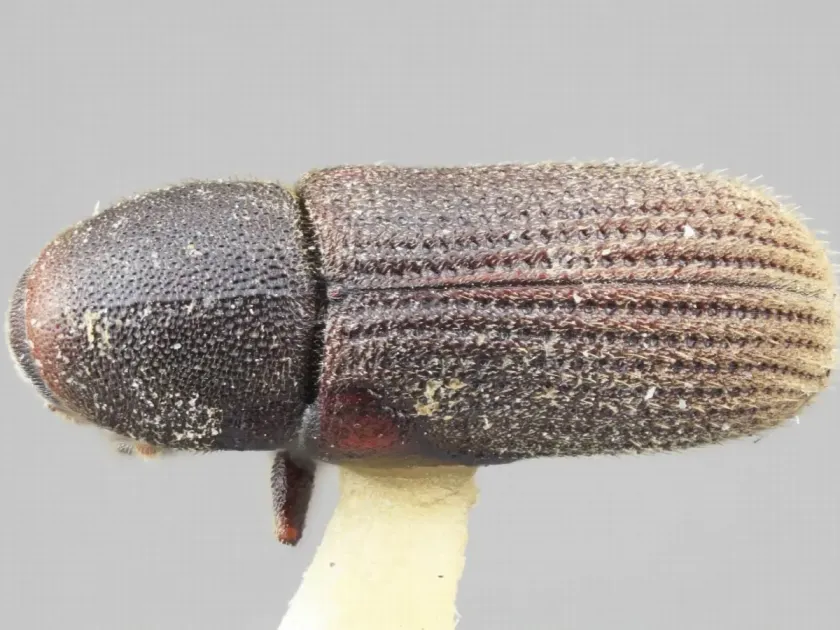
Hylurgops reticulatus belongs to the Curculionidae family, specifically the Scolytinae subfamily. Adult beetles typically reach 3.5 to 4.5 millimeters in length and are distinguished by a unique reticulated pattern on their elytra.
The beetle's body is elongated, with a coloration ranging from dark brown to almost black. The surface of the elytra is covered with dense, fine punctures that create a net-like appearance under magnification.
The larvae are legless, white-colored, and feature a yellow-brown head capsule. They develop beneath the bark, excavating tunnels that gradually widen as the larvae progress through their developmental stages.
The pupae have a typical bark beetle structure and a whitish appearance. They reside within specialized pupal chambers, which the larvae meticulously construct at the end of their maternal galleries.
Systematically, this species is classified within the order Coleoptera and the family Curculionidae. Morphological examination of the adult's characteristics is essential for accurate identification among other forest xylophagous insects.
What it damages
The primary hosts for Hylurgops reticulatus are coniferous tree species, most notably Norway spruce. Although less common, the pest can also be found on pine and fir, preferring weakened or fallen trees.
The beetle typically targets the lower portion of the tree trunk, particularly the side facing away from direct sunlight. The increased humidity in these shaded areas creates optimal conditions for oviposition.
Adult beetles are capable of infesting freshly felled timber, stumps, and logging residues, making them a significant factor in the secondary degradation of wood within forest ecosystems.
During periods of high population density, Hylurgops reticulatus may attack standing trees that are already under stress due to drought, root rot, or other environmental factors.
The economic impact of this pest in forestry involves not only direct bark damage but also the facilitation of secondary fungal infections, which accelerate the decay of the wood.
When it appears
The flight of adult beetles usually begins in the spring as soon as soil temperatures reach levels sufficient to trigger insect activity. The peak reproductive phase typically occurs during May and June.
Upon emergence, adults actively search for suitable substrates for colonization. During this period, they undergo supplemental feeding, damaging tender areas of the bark and phloem.
The egg-laying process is extended over time, as it is heavily influenced by the specific microclimate of the forest site. In warmer southern regions, the development cycle can be more rapid.
Larvae feed actively throughout the summer months. By late summer or early autumn, they complete their development, pupate, and prepare for the upcoming winter season.
Overwintering primarily occurs in the adult stage, typically within the forest floor litter or under the bark at the base of tree trunks, where they are protected from extreme cold by snow cover.
Signs of infestation
A primary indicator of Hylurgops reticulatus presence is the accumulation of boring dust at the base of spruce trunks. This fine bark debris is pushed out by the beetles as they excavate their tunnels.
When the bark is removed from an infested tree, a complex network of tunnels becomes visible. Unlike many other bark beetles, the tunnels of this species often display a chaotic, intricate pattern.
The presence of entry holes in the bark, especially on the lower trunk, serves as clear evidence that the tree has been colonized by the beetle.
While early stages of infestation may result in subtle changes, such as minor branch dieback or discoloration of needles, a careful inspection of the lower trunk remains the most reliable diagnostic method.
The characteristic reticulated pattern of the galleries under the bark serves as a definitive identification feature for forest pathologists to confirm the presence of this specific species.
Control measures
The primary strategy for controlling Hylurgops reticulatus involves the timely removal and sanitary disposal of infested trees before the next generation of beetles emerges.
Forest management practices should prioritize the removal of logging residues and fresh timber from the site, as these materials provide ideal breeding grounds for the pest.
The use of trap trees, prepared just before the main flight period, is an effective technique for gathering and destroying adult beetles before they can spread to healthy forest stands.
General forest hygiene, including the clearing of debris and the execution of timely sanitary logging operations, helps to suppress the overall population density of harmful xylophagous insects.
In nurseries and ornamental landscapes, targeted insecticidal treatments on tree trunks during the peak flight period can prevent beetles from successfully colonizing healthy trees.
Taxonomy
- Latin name
- Hylurgops reticulatus
- Order
- Coleoptera (beetles)
- Family
- Curculionidae
- EPPO code
- HYLURE
Discussion
No discussions yet — be the first.