
Araucaria bark beetle
Hylurdrectonus araucariae
Description
How to identify
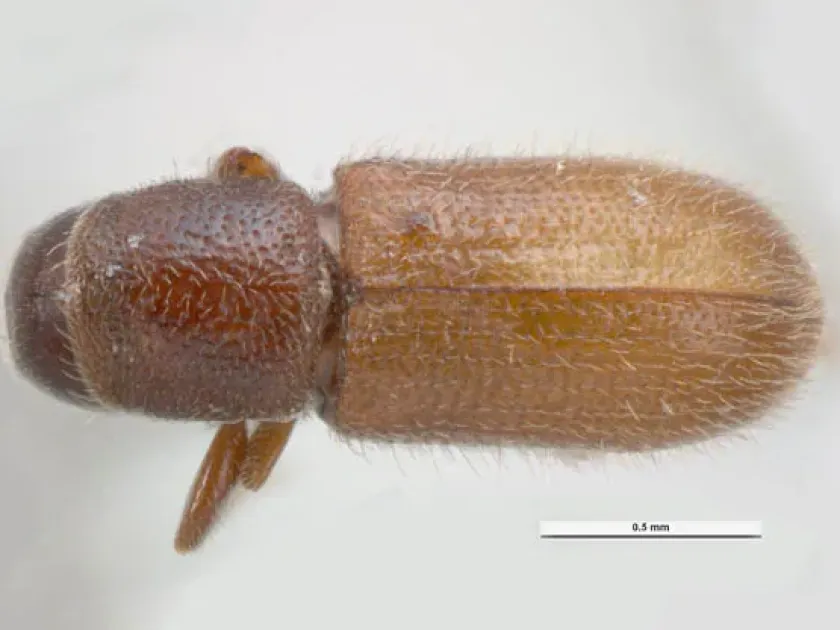
The Araucaria bark beetle (Hylurdrectonus araucariae) belongs to the Curculionidae family, specifically the subfamily Scolytinae. These insects are very small, typically measuring 2–3 mm in length.
The beetle has a cylindrical body shape typical of bark beetles, which allows it to thrive inside narrow galleries carved beneath the bark of its host tree.
The coloration of adults is generally dark brown or black, providing effective camouflage while they move along the bark surface to find sites for boring into the wood.
The larvae are white, legless, and possess a dark, sclerotized head capsule. Their entire development occurs inside the woody tissue, protected from environmental conditions and many predators.
Identifying this species requires professional expertise, often involving the microscopic examination of the pronotal and elytral features to distinguish it from other related scolytine beetles.
What it damages
The primary host for this pest is the Araucaria genus, particularly Araucaria cunninghamii. These trees are highly susceptible to infestation, leading to significant forest management challenges.
The beetles infest both young saplings and mature trees. In monoculture plantations, the presence of these beetles can lead to widespread damage, resulting in economic losses for the timber industry.
By boring into the phloem and cambium layers, the larvae disrupt the tree's vascular system, preventing the effective translocation of water and essential nutrients.
The damage often results in the wilting and subsequent necrosis of branches, eventually causing tree mortality if the infestation is severe and left unmanaged.
The hidden nature of the infestation makes it particularly damaging, as the internal wood can be extensively destroyed long before the outward symptoms of tree decline appear.
Signs of infestation
One of the earliest signs of activity is the appearance of tiny entry holes on the bark of branches or stems, often accompanied by resin exudation.
Visible decline in tree health, characterized by the yellowing and browning of needles, is a late but definitive sign of severe localized infestation.
Detection of "frass" or boring dust near the entry holes is a strong indicator of active gallery construction by the beetles or their larvae inside the wood.
Branch breakage and structural weakening are common in heavily infested trees, as the gallery network compromises the mechanical integrity of the wood tissues.
A sudden, unexplained drop in needle density or the presence of dead branches within the crown should trigger a closer inspection for bark beetle activity.
Control measures
Sanitary management, including the removal and destruction of infested branches or entire trees, is the most effective method for controlling and containing the pest population.
Maintaining high tree vigor through proper silvicultural practices is essential to minimize the risk of attack, as healthy trees are better equipped to resist initial infestation.
Systemic insecticides may be applied in nursery settings to provide protection, particularly during the active flight periods of adult beetles.
The use of pheromone-based monitoring traps is recommended for early detection, which allows for timely intervention before the pest reaches outbreak levels.
Integrating chemical control with biological measures, such as encouraging natural predators and managing site conditions, offers a sustainable strategy for long-term tree protection.
Taxonomy
- Latin name
- Hylurdrectonus araucariae
- Order
- Coleoptera (beetles)
- Family
- Curculionidae
- EPPO code
- HYLDAR
Discussion
No discussions yet — be the first.