
Hylurdrectonus
Hylurdrectonus
Description
How to identify
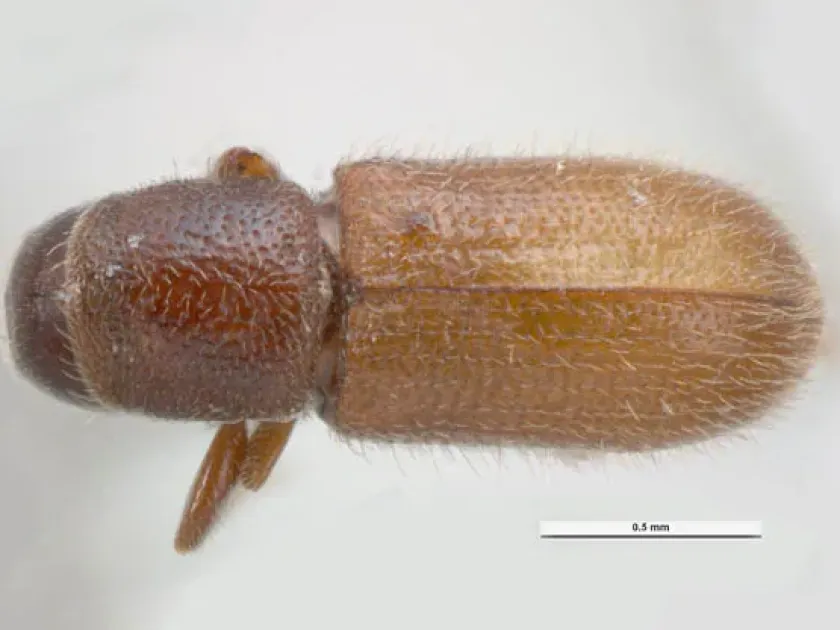
Hylurdrectonus is a genus of beetles belonging to the Curculionidae family, specifically within the Scolytinae subfamily, commonly known as bark beetles. These insects are specialized in developing within the woody tissues of tropical plants.
The adults exhibit a cylindrical body shape, which is a hallmark of most bark beetles. Their coloration typically ranges from brown to deep black, allowing them to blend into the tree bark effectively.
These beetles are equipped with powerful mandibles capable of boring tunnels deep into branches and stems. The larvae are legless, whitish in color, and complete their development entirely inside the host plant's wood.
Taxonomically, this pest belongs to a group of organisms that have evolved to exploit very specific ecological niches, making them a significant concern for coffee-growing regions.
Accurate identification of the species is often difficult without expert analysis, as these insects lead a highly cryptic lifestyle, spending most of their time hidden inside the tree.
What it damages
Coffee trees are the primary host for this pest. The beetles specifically target young shoots and branches, where they excavate elaborate tunnel systems.
Both adults and larvae contribute to the damage. Adults initiate the entry holes, while larvae feed on the cambium and wood, effectively disrupting the plant's vascular transport system.
The economic impact is most severe in young plantations, where extensive boring can kill off terminal shoots, leading to stunted growth or total plant loss.
In addition to physical destruction of the wood, these tunnels serve as entry points for various pathogenic fungi and bacteria, which cause further disease within the tree.
Severe infestations manifest as widespread wilting of the foliage on the affected branches, leading to a substantial decrease in coffee cherry production.
Signs of infestation
The earliest sign of infestation is the appearance of tiny entry holes on the bark of young branches, often accompanied by gum or sap exudation.
Sudden yellowing and drying of individual branches are frequent indicators that the tree's internal structures have been compromised by the beetle's tunneling activity.
When an infested branch is sliced open, one can clearly see the tunnels packed with frass (wood dust and larval waste), which shows a distinct structural pattern.
During peak activity periods, live adults may be spotted on the outer bark, especially during cooler hours of the day when they are most active.
A general loss of plant vigor and premature leaf drop across parts of the canopy are also key indicators of active colonization by this pest.
Control measures
Sanitary pruning and the immediate removal of infested branches are the most effective methods for managing this pest and reducing its population density.
All removed woody material should be promptly destroyed through burning or deep burial to ensure that emerging adults cannot migrate to healthy trees.
The use of systemic insecticides may be employed in severe outbreaks, provided that application follows strict safety guidelines to protect the local environment and pollinators.
Proactive plantation management, including adequate nutrition and balanced tree density, plays a crucial role in enhancing the natural resilience of coffee trees.
- Regular monitoring of plantation health.
- Prompt eradication of localized pest outbreaks.
- Integration of biological control agents where applicable.
Taxonomy
- Latin name
- Hylurdrectonus
- Order
- Coleoptera (beetles)
- Family
- Curculionidae
- EPPO code
- HYLDSP
Discussion
No discussions yet — be the first.