
Pine root collar weevil
Hylobius radicis
Description
How to identify
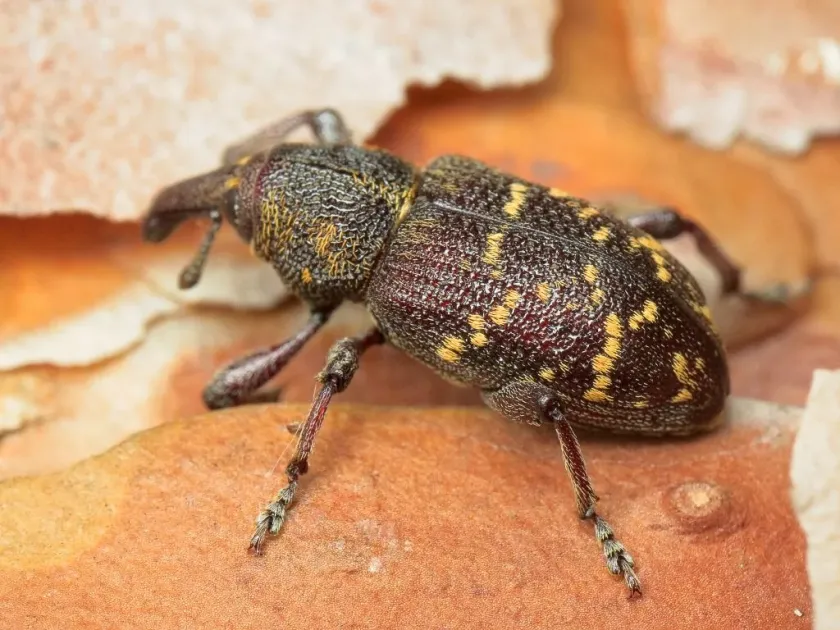
The Pine root collar weevil (Hylobius radicis) is a beetle belonging to the Curculionidae family. Adult beetles are 10–13 mm long and dark brown to black in color, often marked with irregular patches of light-colored scales on their wing covers.
The larvae are cream-colored with brown heads and a distinctive C-shaped body. They live in the root collar area, feeding on the inner bark and cambium, which makes them a silent but deadly threat to young pine trees.
What it damages
This pest primarily attacks various species of pine trees, particularly favoring young plantations and nursery stock ranging from 2 to 15 years old. The species involved include Scots pine and other related conifers.
Feeding larvae cause severe damage to the phloem and cambium layer near the ground line. This feeding activity disrupts the tree's vascular system, causing stunted growth, flagging of branches, and ultimately, tree mortality.
When it appears
Adult beetles are active from early spring through autumn. They are mostly nocturnal, performing flights to seek out healthy host trees where they will feed and eventually lay their eggs.
The life cycle typically spans two years. After hatching, the larvae spend their time feeding under the bark of the root collar, where they overwinter and continue development until they pupate in the following year.
Signs of infestation
Typical symptoms of infestation include heavy resin flow at the base of the trunk mixed with brown frass (larval waste). Foliage of infested trees often turns yellow or reddish-brown as the tree loses its ability to transport nutrients.
If you suspect an infestation, clearing the soil around the base of the tree will reveal scarred bark and winding feeding tunnels created by the larvae. In severe cases, the bark may detach completely from the wood.
Control measures
Cultural control is the most effective approach: removing stumps and old logging debris helps reduce the population density in new plantation areas. Proper site selection and maintaining healthy tree vigor are critical to preventing attacks.
Chemical control involves applying professional-grade insecticides specifically to the base of the tree and the immediate root zone to stop the beetles from laying eggs. Regular forest monitoring and timely interventions are recommended for high-value landscapes.
Taxonomy
- Latin name
- Hylobius radicis
- Order
- Coleoptera (beetles)
- Family
- Curculionidae
- EPPO code
- HYLORA
Discussion
No discussions yet — be the first.