
Okinawa pine weevil
Hylobius okinawanus
Description
How to identify
The Okinawa pine weevil (Hylobius okinawanus) is a member of the Coleoptera order and the Curculionidae family. It is a specialized pest species found primarily within specific regions of the Japanese archipelago.
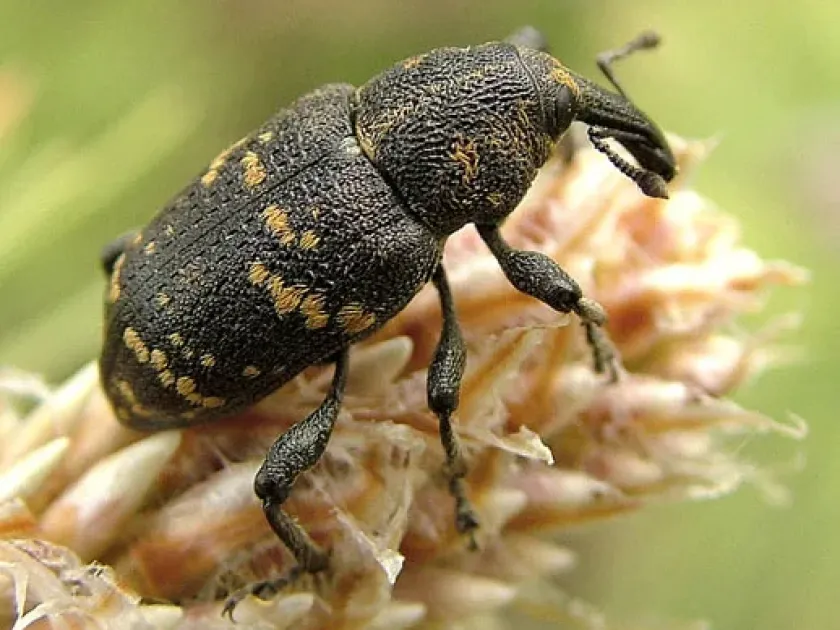
The adult insect is characterized by a prominent rostrum (snout) and robust mandibles, which are essential for feeding on the thick bark of coniferous hosts.
The body is typically dark-colored and robust, an adaptation that helps the weevil blend into the bark environment of its host trees.
The biological cycle of this species is intricately linked to pine trees, which provide the necessary nutrition for both adult insects and larvae.
Like many species in the genus Hylobius, it is known for being a resilient pest capable of exploiting vulnerable forest environments.
What it damages
The primary host plants for this weevil include several species of pines native to or introduced in its geographical range.
The damage is most severe in young plantations and trees that are experiencing physiological stress due to drought or soil conditions.
Larvae feed beneath the bark in the cambium layer, which disrupts the transport of water and nutrients, effectively girdling the tree.
Adult weevils cause supplementary damage by feeding on the bark of shoots, which can lead to crown dieback and the death of young seedlings.
Persistent infestations often result in the long-term decline of pine health, making trees susceptible to secondary pathogens and fungi.
When it appears
Adult weevils emerge from their overwintering sites in early spring as soon as local temperatures rise sufficiently for insect activity.
The peak period of feeding and reproductive activity occurs from late spring through the summer months, aligning with the growth cycle of the host trees.
Egg-laying activities are focused on the base of trees or in bark crevices, where conditions are favorable for larval development.
By autumn, the activity levels subside, and the insects transition into preparation for the winter period.
Winter is typically spent in the adult stage, often sheltered in soil or debris at the base of the tree to withstand lower temperatures.
Signs of infestation
Key indicators of an infestation include the appearance of small, distinct holes in the bark of the trunk or root collar.
The presence of resin exudation, often referred to as "pitching," indicates that the tree is attempting to defend itself against the boring larvae.
A noticeable yellowing or browning of the needles, starting from the top of the crown, is a classic symptom of internal tissue destruction.
Frass (sawdust-like excrement) found at the base of the tree is a strong indicator of larval boring activity within the wood.
If the bark is carefully peeled away in infested areas, the characteristic meandering galleries created by the larvae can be clearly observed.
Control measures
Sanitation of the forest area by removing infested trees is the most critical step in managing the population of the Okinawa pine weevil.
Proper disposal of slash and wood debris is essential to prevent the accumulation of breeding sites for the insects.
Pheromone-based traps can be used as a monitoring tool or a mass-trapping strategy to reduce adult population density in high-risk areas.
Biological control agents, such as entomopathogenic fungi or nematodes, are being researched as sustainable alternatives to synthetic chemical treatments.
Chemical applications should be limited to high-value areas or nursery stock, adhering strictly to environmental regulations to minimize ecological impact.
Taxonomy
- Latin name
- Hylobius okinawanus
- Order
- Coleoptera (beetles)
- Family
- Curculionidae
- EPPO code
- HYLOOK
Discussion
No discussions yet — be the first.