
Large pine weevil
Hylobius abietis
Description
How to identify
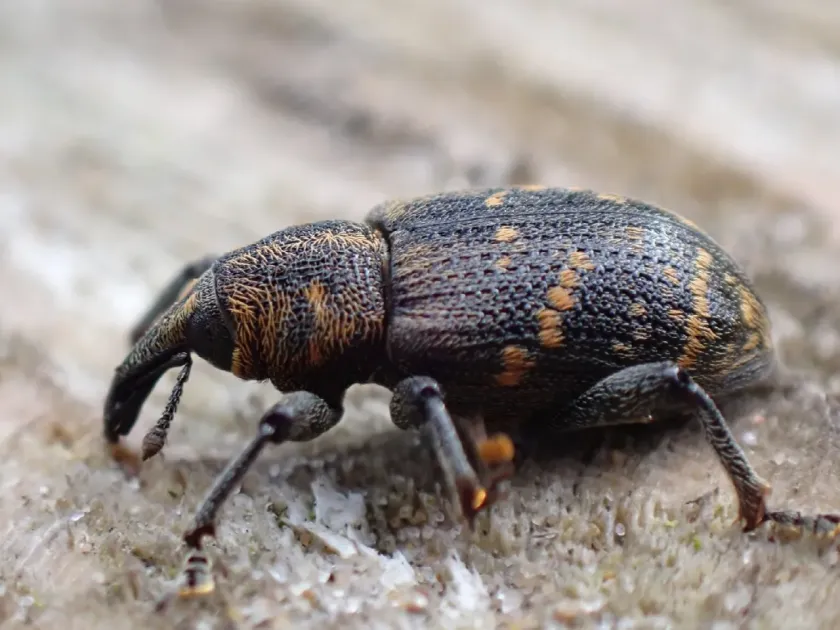
The adult weevil is 10–14 mm long, with an oval-shaped body that is dark brown to black in color, often decorated with patches of light-colored hairs.
A distinctive feature is the long, robust snout (rostrum) characteristic of the Curculionidae family, with geniculate antennae attached to its middle.
Larvae are legless, C-shaped, and creamy-white with a brown head, primarily developing in the roots and stumps of conifers below the soil surface.
Pupae are found in pupal chambers made of wood chips and frass, which the larvae create just under the bark of stumps or large roots.
These insects are strong fliers but often crawl long distances to reach susceptible young host plants, making them a persistent threat to new plantations.
What it damages
The large pine weevil is a primary economic pest for reforestation efforts, specifically targeting young pine, spruce, and fir seedlings.
Damage is typically caused by adults feeding on the thin bark of stems and root collars, which interrupts the nutrient flow within the sapling.
Young transplants on recently cleared land are at the highest risk, as the stumps left behind provide ideal breeding sites for the next generation.
Complete girdling of the stem by adult feeding can kill young trees very quickly, causing significant mortality in early plantation stages.
While mature trees are rarely killed by weevil feeding, the cumulative impact of adult damage can stunt growth and introduce secondary fungal pathogens.
When it appears
Adults emerge from hibernation in early spring when soil temperatures reach approximately 10–12°C, usually beginning in April.
Feeding activity peaks during the spring and early summer months, coinciding with the most sensitive growth period for young conifer seedlings.
There is often a secondary peak in late summer as newly emerged adults from the summer generation become active before entering winter dormancy.
Weevils overwinter as adults, finding shelter in the forest floor litter or protected crevices near host tree roots to survive the cold season.
The life cycle can range from one to two years depending on the regional climate, with warmer southern regions often experiencing faster generation turnover.
Signs of infestation
The most diagnostic sign is the presence of irregular, shallow, or deep feeding notches on the bark of seedlings, often leading to resin bleeding.
Wilted, yellowing needles are a common symptom of severe girdling at the root collar, indicating that the tree can no longer transport water or nutrients.
Visible feeding damage at the base of the plant, sometimes extending to the root crown, confirms the presence of weevils in the immediate area.
Finding frass or wood shavings under the bark of nearby stumps indicates active larval development and a high risk for local seedling populations.
- Characteristic bark notches
- Resin flow at the site of feeding
- Rapid seedling wilting and death
Control measures
Stump removal (stump pulling) is the most effective silvicultural method to destroy breeding habitats and reduce the long-term weevil population.
Insecticide treatment of seedlings prior to planting provides a crucial protective barrier during the critical first years of establishment.
Implementing pheromone-based monitoring systems helps forest managers track weevil activity and time their intervention strategies effectively.
Maintaining a delay between harvesting and replanting can significantly reduce weevil numbers as the stumps dry out and become less suitable.
Biological control, including the use of entomopathogenic nematodes or fungi, represents an evolving approach to integrated pest management in forestry.
Taxonomy
- Latin name
- Hylobius abietis
- Order
- Coleoptera (beetles)
- Family
- Curculionidae
- EPPO code
- HYLOAB
Discussion
No discussions yet — be the first.