
Ash bark beetle
Hylesinus varius
Description
How to identify
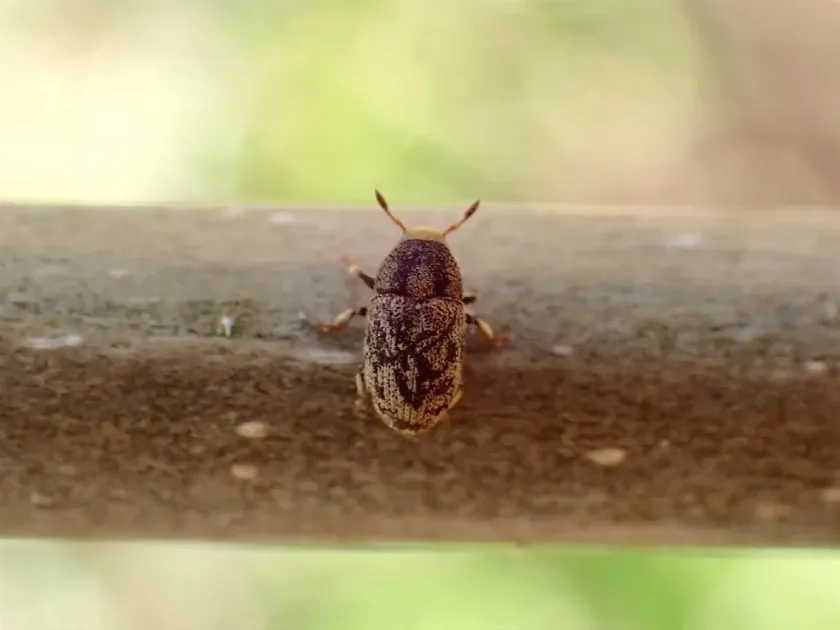
The ash bark beetle (Hylesinus varius) is a small wood-boring beetle, typically measuring between 3 to 4 millimeters in length. Its body is oval-shaped and covered with dense, variegated scales that provide excellent camouflage against tree bark.
It belongs to the order Coleoptera and the family Curculionidae (subfamily Scolytinae). The head is partially hidden under the pronotum, a common structural trait among bark beetles.
The larvae are legless, white to yellowish grubs with a distinct, darkened head capsule. They are exclusively found under the bark of host trees.
Identification often requires looking for specific gallery patterns under the bark, as the adult beetles themselves are elusive and well-adapted to their environment.
Sexing the beetles is generally only possible for specialists, though females are usually responsible for constructing the initial breeding galleries.
What it damages
The primary host for this species is the common ash (Fraxinus excelsior). The beetle attacks both weak, stressed trees and, under high population pressure, healthy specimens.
Adults and larvae destroy the phloem layer, effectively cutting off the tree's supply of nutrients and water, which leads to branch dieback and overall tree decline.
While the beetle shows a preference for ash trees, it can occasionally impact other deciduous species if environmental conditions favor its proliferation.
Severe infestations lead to extensive damage to the trunk, which can cause secondary infections from fungi and other pathogens, accelerating the death of the tree.
The loss of aesthetic value in urban and parkland ash trees is a significant economic and social impact caused by this pest.
When it appears
Adult beetle flight typically begins in late spring, usually in May or June, as temperatures consistently reach favorable levels for activity.
Once mated, the female bores into the bark to create a transverse egg gallery, where she deposits eggs on both sides of the tunnel.
The larval development stage spans several weeks throughout the summer, during which the larvae feed and expand their own galleries under the bark.
Pupation occurs within specialized pupal chambers fashioned by the larvae either in the inner bark or the outer sapwood layer.
New adults emerge by late summer, often engaging in maturation feeding on younger shoots before seeking overwintering sites under the bark.
Signs of infestation
A primary indicator of infestation is the appearance of bore dust (frass) at the entry holes in the bark of the ash tree.
Discoloration and premature wilting of foliage on individual branches are classic signs of the damage caused by the interruption of sap flow.
Closer inspection of the trunk often reveals characteristic "fan-shaped" or transverse galleries if the bark is carefully peeled away.
Loose or sloughing bark is a major sign of advanced infestation, indicating that the larvae have destroyed a significant portion of the protective outer layer.
Feeding marks on young shoots, which may cause them to droop or die, are additional symptoms of the adult beetle's maturation feeding period.
Control measures
Sanitation is the cornerstone of management; promptly removing and destroying infested or dead wood prevents the buildup of beetle populations.
Maintaining tree vigor through proper irrigation and soil management is essential, as healthy trees are better equipped to defend against beetle attacks.
The use of trap trees, which are cut and left strategically to attract beetles before being destroyed, is an effective traditional control method.
Chemical treatments, such as systemic insecticides or trunk sprays, may be used in high-value ornamental plantings to protect trees during the flight period.
Regular monitoring of ash populations is critical for the early detection of the pest, allowing for timely intervention before the infestation becomes widespread.
Taxonomy
- Latin name
- Hylesinus varius
- Order
- Coleoptera (beetles)
- Family
- Curculionidae
- EPPO code
- HYESFR
Discussion
No discussions yet — be the first.