
Ash bark beetle
Hylesinus aculeatus
Description
How to identify
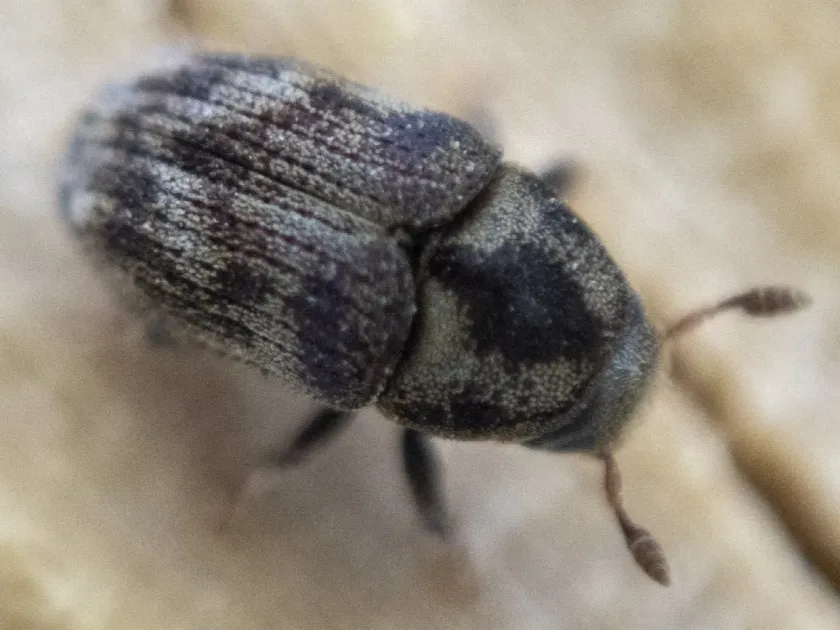
The Ash bark beetle (Hylesinus aculeatus) is a small wood-boring insect belonging to the Curculionidae family, subfamily Scolytinae. Adult beetles are typically 2.5–3.5 mm long, with a dark brown or blackish appearance.
The body is covered with dense scales, giving it a mottled or marbled look. The pronotum is wide, and the elytra are deeply punctured in rows, which serves as a key morphological feature for identification.
Larvae are legless, creamy-white in color, with a characteristic curled body shape and a brownish head capsule. They spend their entire developmental phase beneath the tree bark.
Females lay eggs in excavated gallery systems that they carve out within the cambium layer. These galleries are complex and provide a reliable diagnostic sign for pest presence in ash trees.
This species is widely distributed across Europe and parts of Asia, thriving in forest environments where ash tree hosts are abundant.
What it damages
The Ash bark beetle primarily targets the genus Fraxinus (ash trees). While it favors weakened or stressed trees, heavy infestations can occasionally affect seemingly healthy specimens.
Adult beetles engage in maturation feeding, consuming small patches of bark on young twigs, which can cause significant stress to the upper parts of the tree crown.
The most destructive phase is the larval stage. Larvae bore galleries between the bark and the wood, severing the vascular system, which disrupts the transport of water and essential nutrients.
Tree vitality declines as a result of these internal disruptions, making the host plant susceptible to secondary infections from fungi and other opportunistic pests.
In nurseries and forest plantations, the damage often results in deformed stems or total tree mortality, leading to economic losses for forest management.
When it appears
The emergence of overwintering adults usually occurs in the spring when temperatures rise, signaling the start of the breeding season as they seek new host trees.
The lifecycle generally involves two generations per year. The timing of each generation is highly dependent on local climatic conditions, specifically temperature and humidity levels.
Adults overwinter beneath the bark in the lower sections of the trunk or sometimes in the forest litter, surviving cold temperatures in a state of diapause.
Larval development is most intense during the summer months, coinciding with the active growth season of the tree, which provides the necessary nutrients for the larvae.
As autumn approaches, the population begins to prepare for winter, and adult beetle activity decreases as they move toward their overwintering sites.
Signs of infestation
The first external signs of infestation include small, circular entry holes on the bark, accompanied by wood dust or "frass" scattered at the base of the tree.
Crown symptoms are often the most noticeable: foliage turns yellow or brown, and terminal branches may die back, leading to a condition known as top-dieback.
- Presence of intricate maternal and larval galleries beneath the bark.
- Sap flow or gumosis appearing on the trunk in areas where the bark has been breached.
- Peeling bark exposing the wood surface marred by beetle tunnels.
On closer inspection, affected branches may show areas of sunken bark, indicating that the vascular cambium has been severed by feeding larvae.
An increased presence of woodpeckers on a single ash tree often points to an infestation of larvae, as birds locate the beetles by tapping on the bark.
Control measures
Sanitation is the most effective management strategy: identifying and removing infested or dying trees prevents the further spread of the beetle population.
Proper disposal of log material and slash is critical to ensure that emerging beetle broods do not have new host material to colonize in the immediate vicinity.
Pheromone traps are used in forestry and parks to monitor population density, allowing managers to time interventions before mass outbreaks occur.
In high-value areas such as nurseries, targeted insecticide applications may be used during the beetle's flight period to protect young or vulnerable ash trees.
Encouraging natural predators, such as insectivorous birds and parasitic wasps, remains a key component of an integrated pest management approach for forest ecosystems.
Taxonomy
- Latin name
- Hylesinus aculeatus
- Order
- Coleoptera (beetles)
- Family
- Curculionidae
- EPPO code
- LEPEAC
Discussion
No discussions yet — be the first.