
Bark beetle
Hylesinus
Description
How to identify
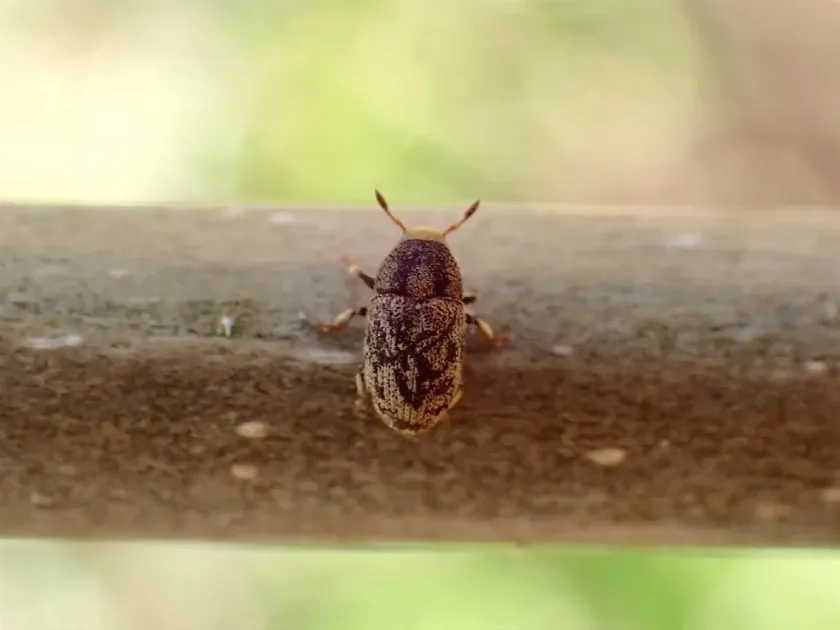
The bark beetle (Hylesinus) belongs to the Curculionidae family and the Scolytinae subfamily. These are small insects, usually 2 to 5 mm long, with a robust, cylindrical body.
Adult beetles are typically brown or black in color, often covered in minute scales that give them a dull appearance, helping them camouflage against the bark.
The biological cycle of this pest is entirely dependent on the host tree, where the entire metamorphosis from egg to adult beetle takes place under the bark.
The larvae are legless, white-colored with a distinct yellowish head capsule, equipped with strong mandibles to bore through the inner bark layer (phloem).
Identification of specific Hylesinus species often requires professional morphological analysis of the elytra patterns and the structure of the antennae.
What it damages
These beetles primarily target deciduous tree species, with ash trees being particularly susceptible to heavy infestations.
The pest tends to attack weakened, over-mature, or mechanically damaged trees, disrupting the essential flow of nutrients through the sapwood.
The feeding activity of adults and larvae creates extensive tunnel systems that destroy the cambium layer, which is vital for the tree's survival.
Severe infestations cause the gradual dieback of branches and, if left unchecked, can lead to the total mortality of the host tree within a few seasons.
Additionally, Hylesinus beetles often serve as vectors for various fungal pathogens that further compromise the health of the tree.
When it appears
Bark beetle activity typically begins in early spring when temperatures reach approximately 12–15 degrees Celsius, signaling the start of the sap flow.
The mass emergence of overwintering adults usually aligns with the warming period, as they seek new host trees to establish their breeding galleries.
Depending on regional climate conditions, the insect may complete one or two generations within a single growing season.
A secondary peak of activity is often observed in late summer as the insects prepare for their overwintering stage, often engaging in supplemental feeding.
Beetles generally overwinter in the bark of infested trees or within the leaf litter at the base of the trunk to survive colder temperatures.
Signs of infestation
The most common indicator of an infestation is the appearance of small, round entry holes on the bark, accompanied by "frass" (bore dust).
Closer inspection of the tree trunk reveals characteristic maternal galleries running perpendicular to the grain of the wood.
Larval galleries branch out from the maternal tunnels, increasing in size as the larvae develop, often causing the bark to loosen or detach from the trunk.
Visually, the tree begins to show signs of decline, such as yellowing foliage, premature leaf drop, and a thinning crown.
- Entry holes on the bark approximately 2 mm in diameter.
- Accumulation of bore dust at the tree base or in bark crevices.
- Thinning canopy and premature leaf drop.
- Detachment or sloughing of the outer bark.
Control measures
The primary control strategy involves rigorous sanitation, which includes the prompt removal and destruction of infested trees to stop the spread.
All logging debris or fallen branches must be cleared and burned or transported away from the site to prevent the buildup of beetle populations.
Systemic insecticides can be applied during the beetle flight phase to provide protection by ensuring the tree tissues are toxic to the boring insects.
Maintaining tree vigor through proper irrigation, fertilization, and protecting the trunk from direct sunlight helps prevent successful beetle colonization.
Integrated pest management, including the use of pheromone traps, is recommended to monitor beetle density and optimize the timing of pesticide applications.
Taxonomy
- Latin name
- Hylesinus
- Order
- Coleoptera (beetles)
- Family
- Curculionidae
- EPPO code
- HYESSP
Discussion
No discussions yet — be the first.