
Clover root borer
Hylastinus
Description
How to identify
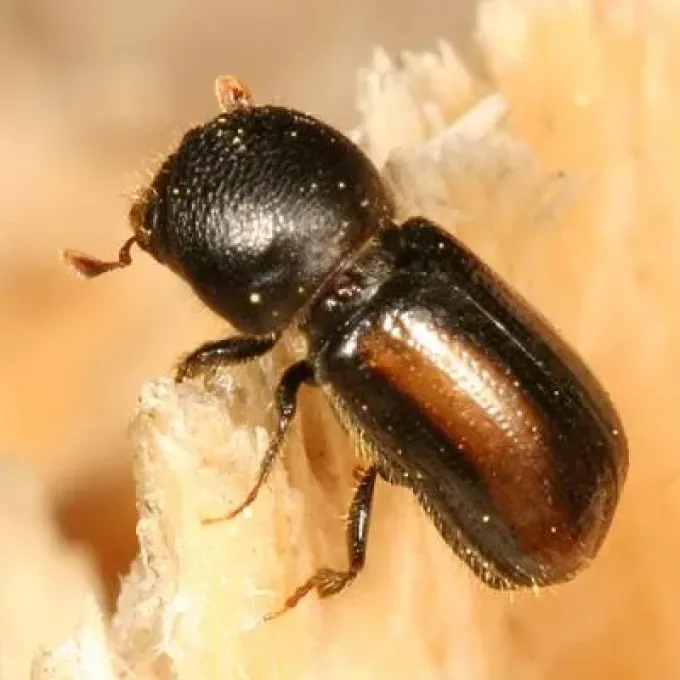
The clover root borer (Hylastinus obscurus) is a small beetle belonging to the Curculionidae family, specifically the Scolytinae subfamily, known for its destructive impact on clover crops.
Adult beetles are approximately 2–2.5 mm long, with a dark brown to black appearance and a cylindrical body shape covered with fine hairs.
The larvae are white, legless, and C-shaped, living entirely within the taproot of the host plant, which protects them from environmental factors and surface pesticides.
Pupation occurs within the root tissue, and the newly emerged adults often remain in the same root for a period before moving to infest adjacent plants.
The species is highly specialized, meaning its life cycle is intricately linked to the presence of specific leguminous host plants in the field.
What it damages
Red clover is the primary host, but the borer also attacks other legumes such as alfalfa and sweet clover, causing significant yield losses in agricultural settings.
The larvae tunnel through the taproot, creating galleries that disrupt the plant's vascular system, preventing the upward movement of water and essential nutrients.
Infested plants exhibit stunted growth and reduced vigor, eventually turning yellow or dying, which causes the crop stand to thin out dramatically.
The physical damage to the roots makes the plants highly susceptible to various fungal pathogens, leading to secondary root rot infections that kill the plants faster.
In mature stands, high infestation levels can destroy almost an entire field, significantly reducing both forage quality and seed production yields.
When it appears
The clover root borer typically overwinters as an adult or a mature larva inside the taproots of living or dead clover plants left in the soil.
As spring temperatures rise, overwintered adults emerge, usually starting in late April or May, to begin the cycle of colonizing new plants.
Mating and egg-laying occur in the spring and early summer, with females chewing small niches into the root crown to deposit their eggs.
Larval development proceeds through the summer months, with adults emerging later in the season to initiate subsequent generations or prepare for winter.
Monitoring for adults is most critical during the warm spring weather when they are active on the soil surface searching for new host plants.
Signs of infestation
Early symptoms include premature wilting of clover plants, particularly noticeable during periods of heat or drought when the impaired roots fail to supply water.
The most reliable sign of an infestation is the presence of small entrance holes near the root crown, often accompanied by dark frass or wood powder.
Infested plants become loose in the soil and can be pulled out easily, revealing a taproot that is hollowed out, dark, and filled with tunneling galleries.
Widespread yellowing and death of plant patches are indicative of advanced infestations that have moved across the field from an initial focal point.
Careful inspection of the taproot cross-section will expose the larvae or the distinct zigzag tunnels that are characteristic of this specific pest.
Control measures
Crop rotation is the most effective management strategy; avoiding planting clover in the same field for at least 4 to 5 years helps break the borer life cycle.
Plowing under old, infested clover stands immediately after the final harvest is crucial to destroy the roots that harbor the overwintering population.
Maintaining high fertility and proper soil moisture can help plants withstand minor infestations, although it does not provide full immunity against the pest.
Because the larvae reside inside the roots, foliar-applied insecticides are largely ineffective and are not recommended for routine management.
- Strict adherence to crop rotation intervals.
- Timely destruction of old clover stands.
- Use of certified, healthy seed to establish vigor.
- Isolation of new fields from existing infested clover.
Taxonomy
- Latin name
- Hylastinus
- Order
- Coleoptera (beetles)
- Family
- Curculionidae
- EPPO code
- HYATSP
Discussion
No discussions yet — be the first.