
Hylastes
Hylastes
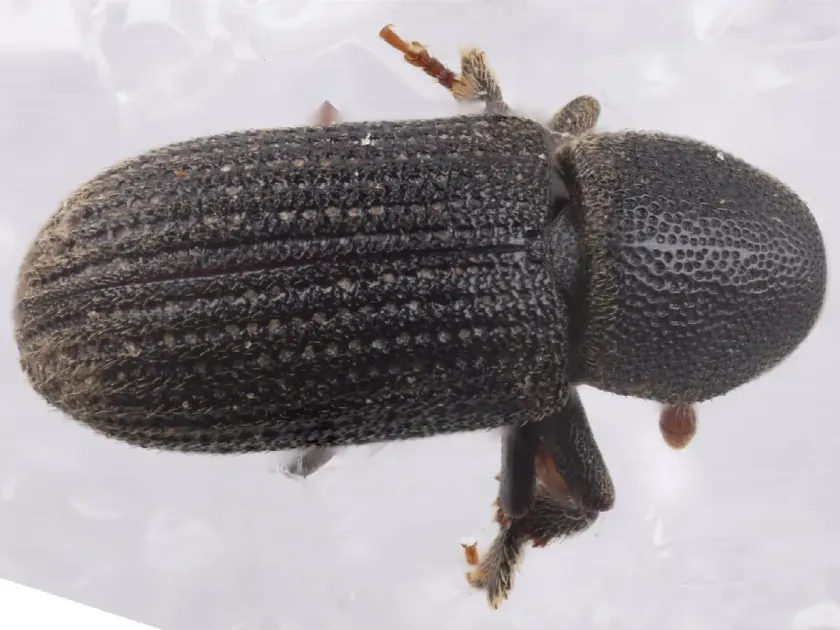
Description
How to identify
The genus Hylastes comprises small beetles belonging to the Curculionidae family, subfamily Scolytinae. These beetles are commonly known as root bark beetles due to their unique habitat preferences.
Adult beetles are dark brown to black, cylindrical, and typically measure between 3 and 5 mm in length. Their head is partially retracted under the pronotum, which is a characteristic feature of this genus.
The larvae are legless, C-shaped, and creamy-white in color, with a well-developed, chitinous head capsule. They possess strong mandibles adapted for boring into the woody tissues of tree roots.
These insects are elusive, spending the majority of their life cycle underground in the root collars or major roots of conifer trees. This cryptic behavior makes them difficult to monitor.
Hylastes species demonstrate a strong preference for weakened or freshly harvested conifer wood, but they can significantly impact healthy seedlings when their population density is high.
What it damages
Hylastes primarily infests conifer species, such as pines, spruces, and larches. They are considered major pests in forest nurseries and on reforested cut-over sites.
Adult beetles attack the root collars and roots of young trees. By boring extensive galleries through the bark, they disrupt the vascular system, preventing the flow of nutrients and water.
Infested seedlings quickly show signs of physiological stress. The needles fade from green to pale yellow and eventually turn reddish-brown, often leading to rapid tree death.
The danger is most severe in plantations established shortly after timber harvest. Stumps and remaining root systems act as primary breeding grounds, allowing the beetles to thrive before migrating to new seedlings.
Beyond mechanical damage, the galleries created by these beetles provide entry points for pathogenic root fungi. This symbiotic spread of disease often proves fatal to the trees even before the mechanical damage takes its full effect.
When it appears
The flight period for adult Hylastes usually commences in early spring, as soon as the soil temperatures rise to 10–12°C. April and May are typically the peak months for migration.
During the summer months, the beetles continue to feed and reproduce within the roots of host trees. The speed of their development is highly dependent on environmental warmth and moisture levels.
Typically, Hylastes completes one generation per year. However, in warmer climatic regions or during particularly hot summers, partial second generations may occur, escalating the pest pressure.
As autumn approaches, activity levels subside as the beetles prepare for overwintering. They usually remain in their larval or adult stages within the root systems or the top layer of the soil.
The ability to overwinter in roots provides the population with a protected environment, ensuring high survival rates during the winter and facilitating a robust emergence when spring returns.
Signs of infestation
Early symptoms of infestation include the wilting of tree tops and premature chlorosis (yellowing) of the needles. Affected seedlings are often loose in the soil because their root systems have been compromised.
Upon closer inspection, one can find entry holes on the root collar, often accompanied by piles of boring dust (frass). This sawdust-like material is a definitive indicator of bark beetle activity.
Removing the soil around the base of the seedling will reveal galleries under the bark of the root collar, where both the tunnels and the beetles themselves can be observed.
The presence of recently harvested stumps in the vicinity of new plantations is a primary risk factor. Continuous monitoring of these stumps is essential for early detection of potential outbreaks.
- Yellowing and browning of seedling needles.
- Visible boring dust around the root collar.
- Loose seedlings due to root system destruction.
- Tunnels and galleries present in root bark.
Control measures
The most effective management strategy is the timely removal and stump-grinding of freshly harvested timber. Eliminating breeding sites is crucial to suppressing the population.
Strategic timing of reforestation is vital; it is recommended to wait at least two to three years after timber harvest before planting new conifer seedlings to allow for the natural decay of old roots.
Trap logs or artificial pheromone lures can be utilized to concentrate and trap adult beetles during their peak flight period in the spring, reducing the number of pests colonizing the plantations.
In nursery settings, chemical control via systemic insecticides applied to the root zone may be necessary during periods of high pest density to ensure the survival of valuable stock.
Promoting diverse forest stands and avoiding monocultures can significantly increase forest resilience, making it harder for Hylastes populations to reach damaging levels across large areas.
Taxonomy
- Latin name
- Hylastes
- Order
- Coleoptera (beetles)
- Family
- Curculionidae
- EPPO code
- HYASSP
Discussion
No discussions yet — be the first.