
Hygrobia tarda
Hygrobia tarda
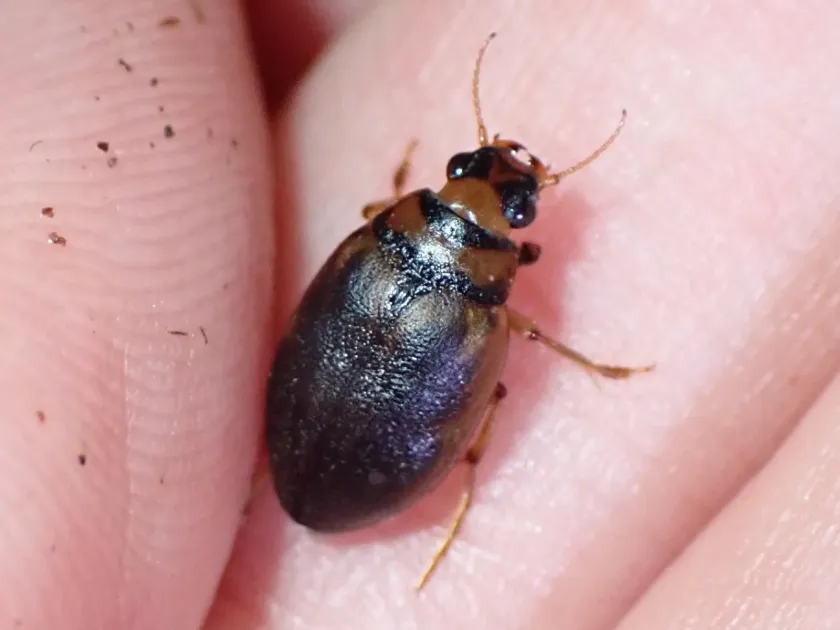
Description
How to identify
Hygrobia tarda is a unique species of aquatic beetle belonging to the family Hygrobiidae. Adult specimens are recognized by their rounded, convex body with a brownish-red coloration and dark spots on the elytra.
A distinctive feature of these beetles is their stridulatory organ, which produces a squeaky sound when the insect is removed from the water as a defensive mechanism against predators.
The larvae of Hygrobia tarda have an elongated body structure equipped with long appendages, which facilitates efficient movement through the water column and amongst bottom sediments.
As the only member of its family in Europe, this species is easily distinguished from other water beetles found in similar aquatic environments.
Taxonomically, the species is classified under the order Coleoptera. Despite its aquatic lifestyle, the beetle relies on atmospheric oxygen and must surface periodically to breathe.
What it damages
Direct damage to agricultural crops caused by this beetle is generally considered negligible, as its primary food sources are small aquatic invertebrates like chironomid larvae.
Potential economic impact arises mainly in specialized aquatic plant farming, where an unnaturally high population of these beetles could disrupt the balance of the ecosystem.
Although they do not feed on terrestrial plant parts, the larvae may indirectly affect aquatic root systems while foraging through bottom substrates.
In aquaculture and commercial fish farming, the species may compete for food resources with fish fry, potentially impacting growth rates in intensive systems.
Overall, the economic significance of the species is limited, and it is rarely targeted as a major pest requiring extensive intervention.
When it appears
The active life phase of adult Hygrobia tarda occurs during the spring and summer, when water temperatures are sufficient for mating and oviposition.
Adults overwinter within the silty bottom of water bodies, entering a state of dormancy until the water warms up after the winter season.
Peak larval abundance typically occurs in mid-summer, coinciding with the highest biological activity in the littoral zone of water bodies.
As autumn approaches, activity levels decrease, and beetles retreat to deeper areas to prepare for the overwintering period.
The life cycle is highly dependent on the hydrological stability and water temperature profiles of the specific habitat.
Signs of infestation
The most reliable way to confirm the presence of Hygrobia tarda in a water body is by listening for the characteristic squeak they produce when handled.
Larval presence can be verified through aquatic sampling using nets in areas with high debris accumulation, where the larvae typically hunt.
A reduction in the population of small aquatic insects within the pond can serve as a circumstantial indicator of a predatory larval presence.
Disruption of the benthic layer or unusual movement within the silt can also indicate the activity of the larvae in that area.
When managing aquatic crop systems, monitoring the roots for mechanical disturbance during periods of high beetle activity is recommended.
Control measures
Specific chemical control methods are rarely employed against Hygrobia tarda due to the low threat level it poses to most agricultural crops.
Maintaining ecological balance in ponds and artificial water systems is the most effective approach to preventing population surges.
Mechanical cleaning of water bodies to remove excess vegetation and organic silt during the autumn reduces available overwintering sites for the population.
Biological control, including the stocking of specific fish species that feed on aquatic larvae, can naturally maintain the beetle population at safe levels.
Regular monitoring of water quality and biological diversity allows for timely adjustments in pond management without the need for harmful chemical treatments.
Taxonomy
- Latin name
- Hygrobia tarda
- Order
- Coleoptera (beetles)
- Family
- Hygrobiidae
- EPPO code
- HYGBTA
Discussion
No discussions yet — be the first.