
Hygrobia hermanni
Hygrobia hermanni
Description
How to identify
Hygrobia hermanni, also known as the screech beetle, is the sole representative of the Hygrobiidae family in Europe, belonging to the order Coleoptera.
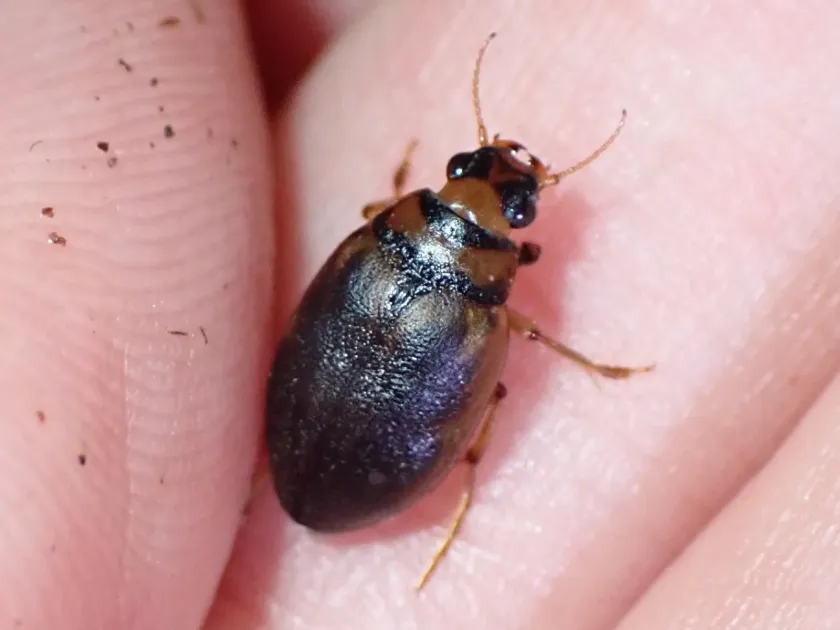
The adult beetle measures about 9–11 mm in length and features a distinctive convex, oval-shaped body with a reddish-brown to yellowish coloration and dark patterns on the elytra.
These insects possess highly specialized swimming legs covered in thick hairs, which make them very efficient swimmers in stagnant or slow-moving water bodies.
Their larvae are characterized by a flattened body with long appendages on the abdominal segments, which they use to navigate the bottom substrate of ponds.
One of the most fascinating features of this species is its ability to produce a stridulating sound by rubbing its abdomen against its elytra when feeling threatened.
What it damages
While not a major agricultural pest, Hygrobia hermanni can cause significant problems in private fisheries and ornamental pond installations.
The carnivorous larvae are known to feed on fish eggs, potentially harming the reproduction and overall population of fish species in managed ponds.
Adults and larvae may also cause cosmetic damage to aquatic vegetation, specifically by feeding on the soft stems of various pond plants.
Overpopulation of this species disrupts the local food web, creating competition for resources with other beneficial aquatic invertebrates.
In highly controlled aquatic environments, a dense population of these beetles can lead to a decline in water quality and general ecological stability.
When it appears
The activity cycle of Hygrobia hermanni is heavily dependent on water temperature and the presence of abundant prey during the warmer seasons.
Adults typically become active in the spring, emerging from their overwintering sites in the bottom mud to begin their mating and reproductive cycle.
The peak activity period for larvae occurs during the summer months, coinciding with the period when fish spawning usually takes place.
As water temperatures drop in the autumn, the beetles retreat to deeper, muddy parts of the pond to enter a dormant state for the winter.
This species generally completes one generation per year, although this can be influenced by local climatic conditions and food availability.
Signs of infestation
A primary indicator of their presence is the characteristic clicking or squeaking sound emitted by adults, which can be heard near the water surface.
Visual identification can be made by observing the beetles as they swim near the water surface to replenish their air supply.
The presence of larvae is usually confirmed through the use of a fine-mesh hydrobiological net to sample the bottom vegetation and substrate.
Signs of damage include missing or depleted fish eggs in spawning areas and visible gnawing marks on the stems of aquatic ornamental plants.
An abrupt decrease in the population of beneficial zooplankton or small invertebrates can also be a secondary sign of an expanding beetle population.
Control measures
Managing populations of Hygrobia hermanni primarily involves maintaining a healthy ecosystem balance within the pond environment.
Regular mechanical maintenance, such as removing excess silt and dense vegetation, helps reduce the habitat available for larvae to thrive.
Biological control methods, including the introduction of natural predators like larger predatory fish, are preferred over chemical interventions.
The use of chemical insecticides should be avoided entirely to prevent contamination of the water and harm to fish and other desirable species.
- Manual removal of adults using nets during peak activity periods.
- Monitoring spawning grounds to protect fish eggs.
- Installing filtration screens to prevent larval entry from natural water sources.
Taxonomy
- Latin name
- Hygrobia hermanni
- Order
- Coleoptera (beetles)
- Family
- Hygrobiidae
- EPPO code
- HYGBHE
Discussion
No discussions yet — be the first.