
Hybos femoratus
Hybos femoratus
Description
How to identify
Hybos femoratus belongs to the Hybotidae family within the order Diptera. These small insects are known for their distinct appearance and predatory nature in the adult stage.
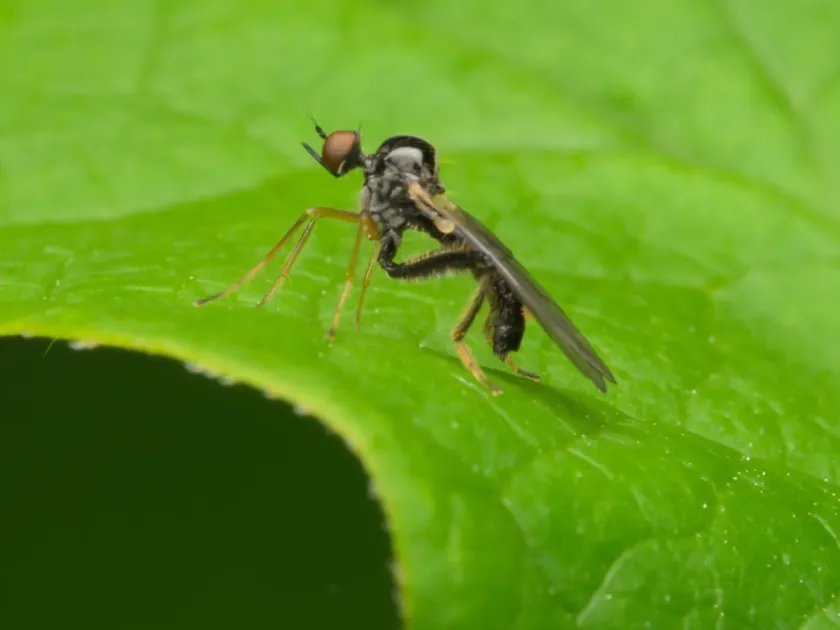
Adults typically measure between 4 to 6 mm in length. They are characterized by a glossy black body and significantly enlarged hind femora, which are armed with small spines.
The eyes are holoptic in both sexes, meeting at the top of the head, a common feature of this family that aids in their specialized aerial hunting and mating behaviors.
Larvae of this species are primarily soil-dwelling, possessing a pale, maggot-like appearance with a poorly developed head capsule, typical of dipteran larvae living in moist substrates.
They are generally found in decomposing organic matter or loose soil, where they scavenge or hunt for smaller prey items during their developmental stages.
What it damages
Although Hybos femoratus acts primarily as a beneficial predator, it can occasionally damage agricultural crops by feeding on floral tissues during the flowering season.
Adults use their piercing-sucking mouthparts to damage buds, flowers, and young fruits, resulting in necrosis and deformation of the plant's reproductive organs.
Feeding on nectar and plant sap can lead to the wilting of flower stalks and the premature shedding of blossoms, which directly reduces the overall crop yield.
Vegetable and fruit crops are most susceptible, particularly when high population densities occur in close proximity to flowering plants during dry weather conditions.
Secondary infections, such as bacterial or fungal pathogens, often colonize the puncture wounds created by the flies, exacerbating the overall damage to the crop.
When it appears
The activity of adult Hybos femoratus typically peaks in late spring and throughout the summer, aligning with the flowering period of many economically important plants.
The life cycle undergoes complete metamorphosis. Hibernation primarily occurs at the larval stage within the top layers of the soil, providing protection from winter elements.
Pupation takes place in early spring, and the emergence of adults is highly synchronized with temperature increases and moisture levels in the environment.
Most regions observe a single generation per year, though environmental conditions can occasionally influence the timing and duration of the adult emergence phase.
They are most active during warm, calm periods of the day, when they can be seen hovering around vegetation or resting on leaves and flowers.
Signs of infestation
Key symptoms of an infestation include the appearance of tiny puncture marks on petals and buds, which eventually brown and become necrotic.
Visible damage often manifests as flower bud abortion or the dropping of young fruit, as the tissue integrity has been compromised by the feeding activity.
Monitoring during the flowering stage may reveal the presence of numerous small, black flies actively moving across the blossoms or congregating on foliage.
In cases of severe infestation, the foliage surrounding the flowers may show signs of chlorosis or wilting due to the cumulative loss of plant fluids.
- Deformed or shriveled flower buds.
- Premature fruit or flower drop.
- Small necrotic lesions on tender tissues.
Control measures
Effective management of Hybos femoratus requires a multifaceted approach, focusing on cultural practices to minimize population buildup on susceptible crops.
Tillage and soil cultivation in the autumn or early spring help disturb pupation sites, significantly reducing the number of emerging adults in the subsequent season.
Maintaining a weed-free environment is critical, as many non-crop plants serve as alternative hosts or resting areas for these insects during their development.
Chemical control should be reserved for periods of high infestation, using selective insecticides that pose minimal risk to beneficial pollinators and natural enemies.
Integrated pest management strategies should emphasize monitoring and the use of physical barriers or biopesticides when possible to manage populations sustainably.
Taxonomy
- Latin name
- Hybos femoratus
- Order
- Diptera (flies)
- Family
- Hybotidae
- EPPO code
- HYBTFE
Discussion
No discussions yet — be the first.