
Hybos
Hybos
Description
How to identify
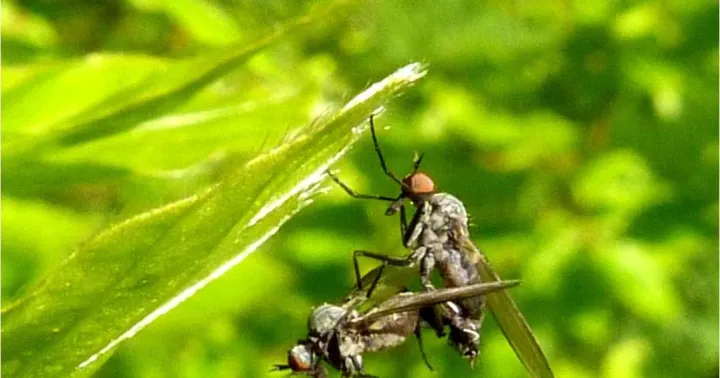
Hybos is a genus of dance flies belonging to the family Empididae within the order Diptera. These are small, typically dark-colored flies known for their peculiar, humped-backed appearance.
They are equipped with large, prominent eyes and a mobile head, which allows them to effectively navigate and hunt other small insects while in flight.
The wings of Hybos are usually transparent with distinctive venation patterns that help in identifying the species within the genus.
The larval stage of these insects occurs in the soil, where they develop in organic-rich environments, feeding on decaying matter or tiny invertebrates.
As adult flies, they are highly active, often hovering in small swarms, which is a classic behavior associated with the family Empididae.
What it damages
Hybos are primarily predatory insects, acting as beneficial agents that help regulate the population of various agricultural pests like aphids and gnats.
However, under specific circumstances, if their natural prey is scarce, adults may occasionally feed on plant sap or damage the tissues of young, tender shoots.
The actual economic damage caused by Hybos is generally negligible, and they are frequently viewed as allies rather than threats to crop health.
Soil-dwelling larvae do not typically attack the roots of healthy crops, making them neutral components of the agro-ecosystem soil biology.
Consequently, large-scale control measures against this genus are rarely required and could potentially harm other beneficial insect populations.
When it appears
The active flight season for Hybos begins in late spring, following the emergence of adults from overwintering pupae located in the soil layers.
Their peak activity is usually observed during the early to mid-summer months when the conditions for mating and oviposition are most favorable.
The life cycle is influenced heavily by environmental variables, including soil moisture and ambient temperature, which dictate the speed of metamorphosis.
By late summer and early autumn, adult populations tend to decline significantly as the life cycle completes and the next generation prepares for dormancy.
One generation per year is typical, though local climatic variations may lead to differences in the timing of their emergence and activity peaks.
Signs of infestation
One of the most obvious signs of their presence is the observation of small, hovering swarms of flies above plants on calm, sunny days.
Signs of minor feeding damage might include tiny punctures or superficial marks on young foliage, though this is rarely extensive.
The presence of insect remains near flower heads can sometimes indicate the predatory activity of Hybos, reflecting a balanced ecosystem.
Monitoring the soil surface may reveal little, as the larvae are cryptic and typically hidden within the upper soil horizons.
Identifying the adults is the most reliable way to confirm their presence, as they are distinct from many other flies in garden environments.
Control measures
Targeted chemical control for Hybos is generally discouraged, as these flies play a constructive role in the biological control of other pests.
If management is required to reduce their numbers, cultural practices such as soil cultivation are the most effective way to disturb their habitat.
Avoiding the overuse of non-selective pesticides is crucial to maintaining a healthy balance of natural predators within the farm or garden.
- Regular weeding to reduce cover for larvae.
- Maintaining appropriate soil moisture levels.
- Encouraging biodiversity by protecting natural habitats.
- Using IPM (Integrated Pest Management) strategies.
Always perform a pest assessment before applying any control measures, ensuring that the target is truly causing economic damage.
Taxonomy
- Latin name
- Hybos
- Order
- Diptera (flies)
- Family
- Hybotidae
- EPPO code
- HYBTSP
Discussion
No discussions yet — be the first.