
Hoshinoa
Hoshinoa
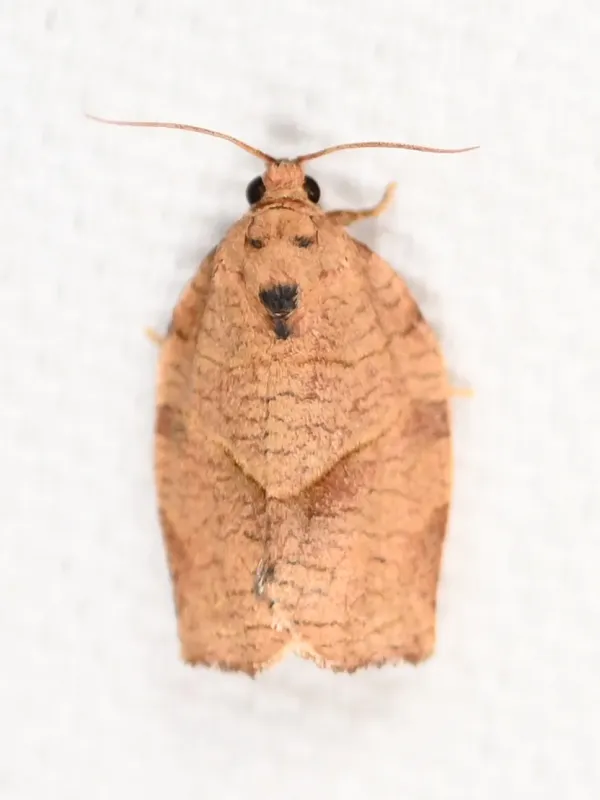
Description
How to identify
Hoshinoa is a genus of moths belonging to the family Tortricidae. These insects are commonly referred to as leafrollers due to the behavior of their larvae, which roll leaves to create protective shelters.
Adult moths typically have a wingspan ranging from 15 to 25 millimeters. Their forewings feature various shades of grey, brown, or ochre, providing camouflage against tree bark during the daylight hours.
The larvae, or caterpillars, are characterized by a spindle-shaped body that transitions from light green to olive-green as they mature. The head capsule is often darker, serving as a key identification mark.
Taxonomically, this genus falls under the subfamily Tortricinae. Identifying specific species within this group often requires microscopic examination of genitalia structures for precise classification.
Pheromone traps are widely used by agronomists to identify the presence and density of Hoshinoa populations in commercial orchards during the flight season.
What it damages
The primary hosts for Hoshinoa species include members of the Rosaceae family. Fruit trees such as apples, pears, peaches, and plums are frequently targeted by these pests.
While primarily orchard pests, they are also polyphagous, meaning they may feed on various ornamental trees and shrubs if suitable hosts are present in the surrounding environment.
Larvae feed voraciously on young leaves, flower buds, and developing fruit. High populations can lead to significant economic losses for fruit producers due to quality degradation.
As generalists, these insects can adapt to different environmental conditions, making them a consistent challenge in intensive fruit-growing regions across Asia.
The destruction of foliage reduces the photosynthetic capacity of the host tree, leading to weakened growth and increased susceptibility to secondary diseases and environmental stress.
When it appears
The life cycle of Hoshinoa is highly synchronized with the phenological development of their host plants. Depending on the climate, they may complete one or two generations per year.
The overwintering stage is typically the larval stage, where they remain dormant within cocoons constructed in bark crevices or beneath bud scales until spring temperatures rise.
When daily temperatures consistently exceed 10 degrees Celsius, the larvae emerge from their winter refuges to begin feeding on the emerging spring buds.
The flight of the first generation of adults usually occurs in late spring. Females deposit eggs in clusters on the upper leaf surfaces, often covered by a protective substance.
The summer generation of larvae is particularly destructive, as they feed during the period when fruit is developing, often scarring the surface of the produce.
Signs of infestation
The most prominent sign of infestation is the presence of rolled or folded leaves, bound together by silk threads. These nests protect the larvae from predators and pesticide applications.
- Accumulation of frass (larval droppings) on leaves.
- Irregular holes and scalloped edges on the leaf blades.
- Deformation or scarring of young fruit skin.
- Visible silk webbing between foliage and developing fruit.
- Premature abscission (dropping) of damaged fruit and leaves.
During a field inspection, yellowing or stunted branches often indicate high larval activity within the leaf clusters, requiring immediate intervention.
If left unmanaged, the infestation can spread rapidly throughout the canopy, potentially stripping the tree of its foliage and causing significant developmental delays.
Secondary signs include the presence of ants, which may be attracted to the site by sugary secretions or plant sap released from the wounds caused by larval feeding.
Control measures
Effective management of Hoshinoa requires an Integrated Pest Management (IPM) approach that incorporates cultural, biological, and chemical methods.
Cultural practices include the removal of dead bark, pruning of infested branches, and the cleaning of orchard floors to eliminate overwintering sites for the larvae.
Biological control methods involve the release of beneficial insects, such as Trichogramma wasps, which parasitize the eggs of the leafroller, preventing larval emergence.
When threshold levels are exceeded, the application of selective insecticides or microbial agents is necessary, preferably timed with the peak of adult flight or egg hatching.
Pheromone-based mating disruption and monitoring traps are essential tools for precision timing, ensuring that interventions are both effective and environmentally responsible.
Taxonomy
- Latin name
- Hoshinoa
- Order
- Lepidoptera (butterflies)
- Family
- Tortricidae
- EPPO code
- HOSHSP
Discussion
No discussions yet — be the first.