
Tea tortrix
Homona magnanima
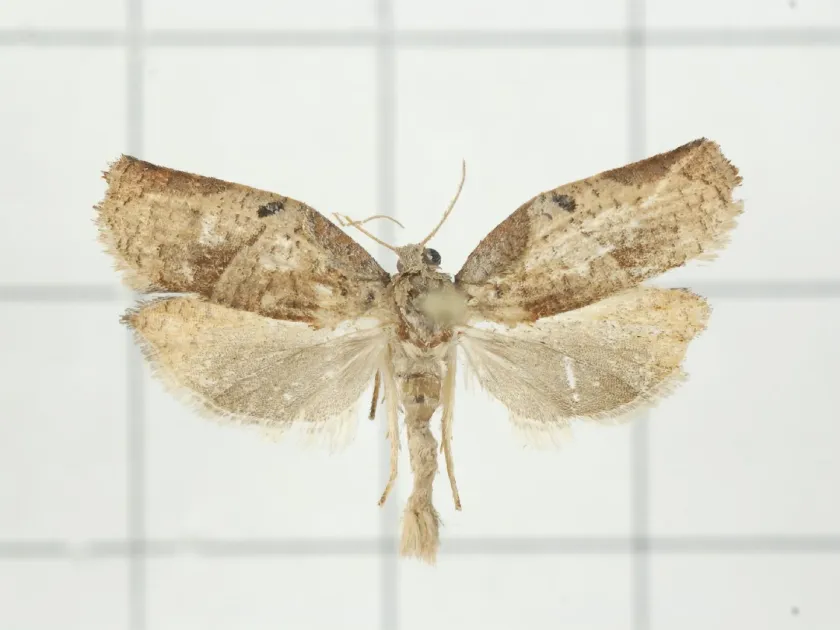
Description
How to identify
The tea tortrix (Homona magnanima) is a member of the Tortricidae family, known for its significant impact on tea plantations and various horticultural crops.
Adult moths have a wingspan ranging from 20 to 30 mm, with forewings displaying a brownish, sometimes mottled pattern that serves as excellent camouflage on tree bark.
The larvae, or caterpillars, exhibit a yellowish-green to brownish body with a distinctive dark head, allowing them to remain hidden while feeding on plant tissues.
Eggs are typically deposited in clusters on the upper surface of leaves, covered by a protective coating that resembles overlapping scales, aiding in their concealment.
Accurate identification is often achieved by observing the unique leaf-rolling behavior and monitoring adult populations using specific pheromone traps designed for this species.
What it damages
This pest is highly polyphagous, attacking not only tea bushes but also a wide variety of fruit trees, including citrus, apple, peach, and various ornamental plants.
Larvae primarily feed on tender leaves, flower buds, and young shoots, which are essential for the plant's structural development and fruit production.
By webbing leaves together, the larvae create protected environments where they feed extensively, leading to defoliation and severe growth stunting of young shoots.
Economic damage occurs due to the reduction of marketable leaves and the potential for secondary infections in the wounded areas of the plants.
Left unchecked, heavy infestations can cause substantial yield losses, significantly impacting the productivity of affected plantations and commercial gardens.
When it appears
The life cycle of Homona magnanima is largely determined by environmental temperatures, with the pest capable of producing multiple generations annually in warm climates.
Overwintering typically occurs in the larval stage, with individuals remaining tucked inside rolled leaves or bark crevices until spring conditions trigger renewed activity.
Adult flight periods correlate with the availability of suitable host foliage, making spring and early summer critical windows for observing and treating populations.
Each generation takes approximately one to two months to develop, often resulting in overlapping cohorts of larvae that necessitate sustained monitoring throughout the growing season.
As temperatures begin to decline in autumn, the pest prepares for hibernation, completing its final larval cycles before entering a period of metabolic dormancy.
Signs of infestation
The most prominent sign of infestation is the presence of leaves tightly rolled and secured with silk webbing, often referred to as leaf nests.
Feeding damage manifests as irregularly shaped holes or skeletonized leaf edges, indicating the presence of active larvae within the foliage.
Accumulated frass (larval excrement) found within the webs is a definitive indicator of ongoing feeding activity in specific parts of the plant canopy.
Wilting of terminal buds and the failure of new leaves to unfurl properly are common symptoms of internal larval damage within the growing point.
Visible silk strands bridging between leaves are telltale signs of the larvae's movement and habitat construction during their development stages.
Control measures
Integrated Pest Management (IPM) is essential for controlling the tea tortrix, balancing biological, cultural, and chemical tactics to maintain healthy yields.
Cultural practices include regular pruning and the removal of webbed leaves, which effectively reduces the local population density of larvae and egg masses.
Biological control relies on the introduction or conservation of natural predators and parasitoids, such as Trichogramma wasps, to manage pest numbers sustainably.
Chemical control should be applied judiciously, targeting young larvae before they securely seal themselves inside rolled leaves, thereby increasing insecticide efficacy.
- Monitor adult flight using species-specific pheromone lures.
- Practice regular sanitation by pruning and destroying infested growth.
- Promote the presence of beneficial insects and natural parasitoids.
- Apply biorational insecticides at the onset of larval emergence.
- Rotate chemical classes to prevent the development of pesticide resistance.
Taxonomy
- Latin name
- Homona magnanima
- Order
- Lepidoptera (butterflies)
- Family
- Tortricidae
- EPPO code
- HOMOMA
Discussion
No discussions yet — be the first.