
Tea tortrix
Homona coffearia
Description
How to identify
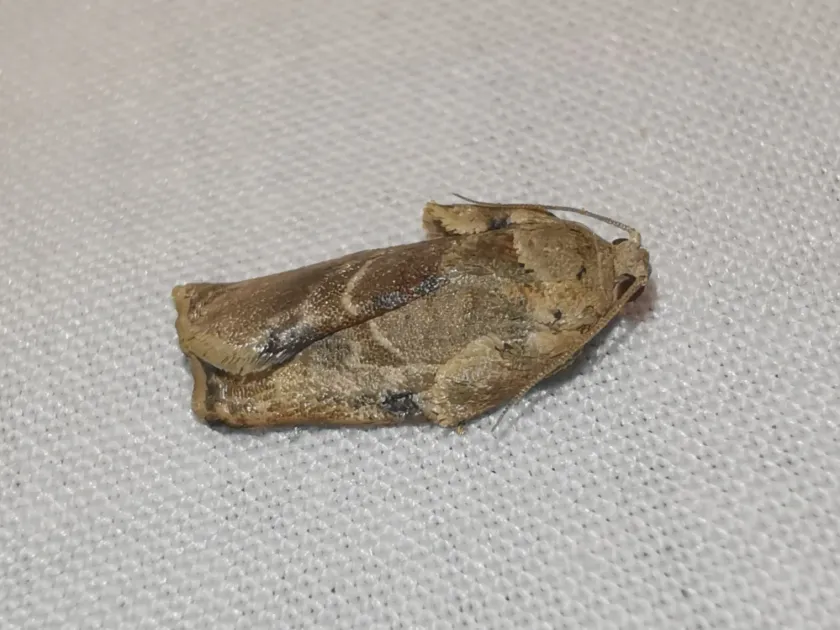
The tea tortrix (Homona coffearia) belongs to the order Lepidoptera, family Tortricidae. It is a small moth with a wingspan of 20-25 mm, featuring brown to dark-brown forewings adorned with dark transverse bands.
The larvae of this pest go through several developmental stages (instars) and can reach 20-25 mm in length. They possess a smooth body ranging in color from pale green to olive, with a dark head and thoracic shield, which aids in camouflage among the tea foliage.
The pupa is brown and develops inside a rolled leaf, which the larva secures with silk webbing. The pupal stage typically lasts about 10–14 days, depending on ambient temperature and humidity levels.
Eggs are deposited by females in dense clusters, covered with a protective secretion, on the upper surface of leaves. A single egg mass may contain 100 to 300 eggs, which hatch within about a week under favorable conditions.
The species biology is characterized by high fecundity and the ability to produce multiple generations per year in tropical or subtropical climates, making it a persistent threat to tea cultivation.
What it damages
The primary host plant is the tea bush (Camellia sinensis), but this species is a polyphage. It is also known to infest coffee, cocoa, cinchona, citrus, legumes, and various ornamental plants.
Early-stage larvae feed primarily on tender terminal leaves, skeletonizing them or eating small holes. As they mature, they consume tougher leaf tissues, leading to significant foliage loss and reduced photosynthetic area.
Damage results in direct yield losses, as young tea leaves are the primary raw material for processing. During outbreaks, the tortrix can reduce plantation productivity by 30-50% in a single season.
Feeding on buds and growth points is particularly dangerous, causing deformation of new shoots and stunting the overall growth of the bush. This negatively impacts the quality of the harvest and the longevity of the plantation.
In large plantations, the pest spreads rapidly, especially during periods of high humidity, necessitating continuous monitoring of plant health.
Signs of infestation
The main visual indicator of tea tortrix infestation is the presence of leaves rolled or glued together with silk webbing at the shoot tips. A larva or its frass can always be found inside these "nests."
Initial damage is visible as leaf mining or shallow ulcers, which eventually progress into holes or the complete destruction of the leaf blade.
The presence of egg masses on the upper leaf surface confirms the onset of active reproduction. These masses appear as flat, shiny spots, resembling fish scales, which are difficult to spot during routine inspections.
Heavy shedding of damaged leaves and a reduction in the overall turgor pressure of terminal shoots are secondary signs of high pest population density in the field.
Inspecting bushes often reveals an abundance of webbing that binds damaged plant parts, forming a protective cocoon for the pupation of larvae.
Control measures
The primary control method is the cultural approach, involving regular pruning and the manual collection of damaged leaves. This helps reduce the population at the early stages of an outbreak.
Natural enemies, such as entomophagous insects, play a crucial role. Parasitic wasps (e.g., members of the Braconidae and Ichneumonidae families) effectively keep tortrix populations in check under natural conditions.
The application of biological agents based on Bacillus thuringiensis has shown high efficacy against early-instar larvae while remaining safe for the environment and beneficial insect populations.
Chemical control is employed only when the economic threshold is exceeded. Contact and stomach insecticides are used, provided that pre-harvest intervals are strictly observed to ensure product safety.
Pheromone traps are highly recommended for population monitoring, as they allow growers to accurately determine the timing of moth flights and implement preventative or eradicative measures in a timely manner.
Taxonomy
- Latin name
- Homona coffearia
- Order
- Lepidoptera (butterflies)
- Family
- Tortricidae
- EPPO code
- HOMOCO
Discussion
No discussions yet — be the first.