
Homona
Homona
Description
How to identify
The genus Homona belongs to the family Tortricidae (leafrollers) in the order Lepidoptera. The most prominent species is Homona coffearia, commonly known as the tea tortrix.
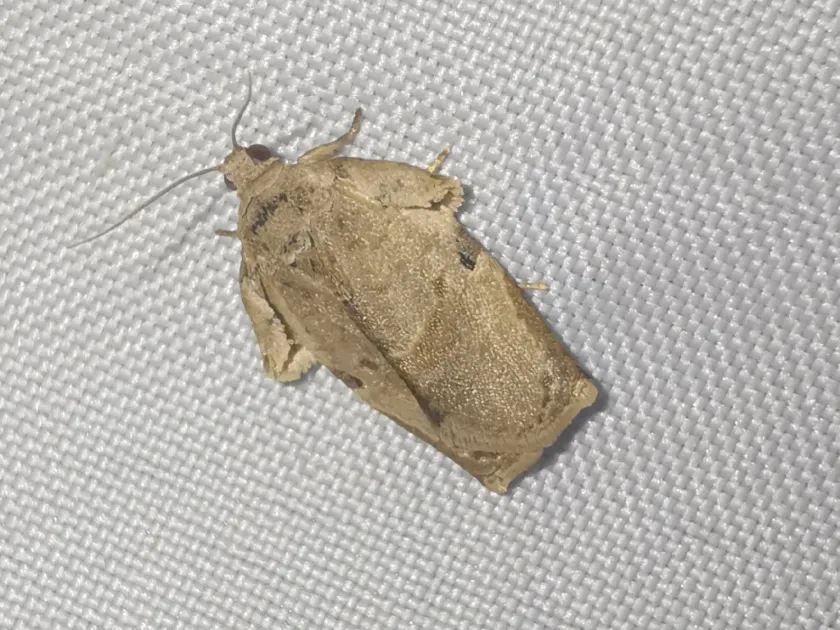
Adult moths have a wingspan of approximately 20–25 mm. Their forewings typically exhibit shades of ochre and brown with complex darker markings, providing camouflage.
Larvae (caterpillars) go through several instars. They are generally green to yellowish-brown with a distinct, often darker-colored head capsule.
Eggs are laid in batches, typically on the upper surface of leaves, covered by a protective substance that makes them appear as flat, translucent clusters.
Pupation occurs within leaf rolls or webbed nests, which provide protection from predators and environmental stressors.
What it damages
Homona is a polyphagous pest. It causes severe damage to tea plants, specifically attacking young flush and terminal buds.
The list of host plants is extensive, including citrus, coffee, cocoa, and various tropical fruit trees in the surrounding agroecosystems.
Larvae spin silken webs to bind leaves together, creating a shelter where they feed, which hinders normal leaf expansion and photosynthesis.
Heavy infestations lead to significant leaf loss (defoliation) and stunted growth, directly impacting the quality and quantity of the harvest.
In nursery settings, damage to young seedlings can cause severe developmental abnormalities, leading to economic losses for growers.
When it appears
In tropical and subtropical regions, the life cycle is continuous, allowing for breeding throughout the entire year if conditions remain favorable.
Population peaks are generally observed during periods of active plant growth, coinciding with the flush of succulent new leaves.
The developmental period from egg to adult is rapid, often completed within 30 to 50 days, depending on local humidity and temperature levels.
Multiple generations (up to 8-10 per year) can occur, requiring continuous surveillance and management of the moth populations.
High humidity and rainfall often facilitate the survival and reproduction of the pest, making it a persistent challenge for farmers.
Signs of infestation
The most reliable sign of a Homona infestation is the presence of webbed or tightly rolled leaves at the terminal tips of stems.
Closer inspection of the leaves will reveal the presence of flat, scale-like egg masses, often located on the upper surface.
Accumulation of larval frass (excrement) within the webbed leaf structures is a clear indicator of active feeding by the larvae.
Affected shoots may appear stunted or deformed, with visible damage to the leaf margins and surface areas.
Observation of moths in the evening, particularly near light sources or pheromone traps, signals the onset of a new pest generation.
Control measures
Biological control using parasitoids and entomopathogenic bacteria is a cornerstone of managing Homona populations sustainably.
Manual removal and destruction of infested shoots during routine pruning can significantly reduce the local larval population.
Chemical intervention should prioritize the use of selective insecticides that do not disrupt the natural balance of beneficial insects.
- Deployment of pheromone traps to monitor and disrupt mating cycles.
- Conservation of natural predators like parasitic wasps and spiders.
- Adherence to IPM protocols to minimize environmental impact.
An integrated approach combining cultural practices, biological agents, and targeted monitoring is most effective for long-term control.
Taxonomy
- Latin name
- Homona
- Order
- Lepidoptera (butterflies)
- Family
- Tortricidae
- EPPO code
- HOMOSP
Discussion
No discussions yet — be the first.