
Hindola striata
Hindola striata
Description
How to identify
Hindola striata belongs to the Machaerotidae family within the order Hemiptera. These insects are characterized by a distinct projection on their pronotum, which gives them a unique appearance compared to other similar bugs.
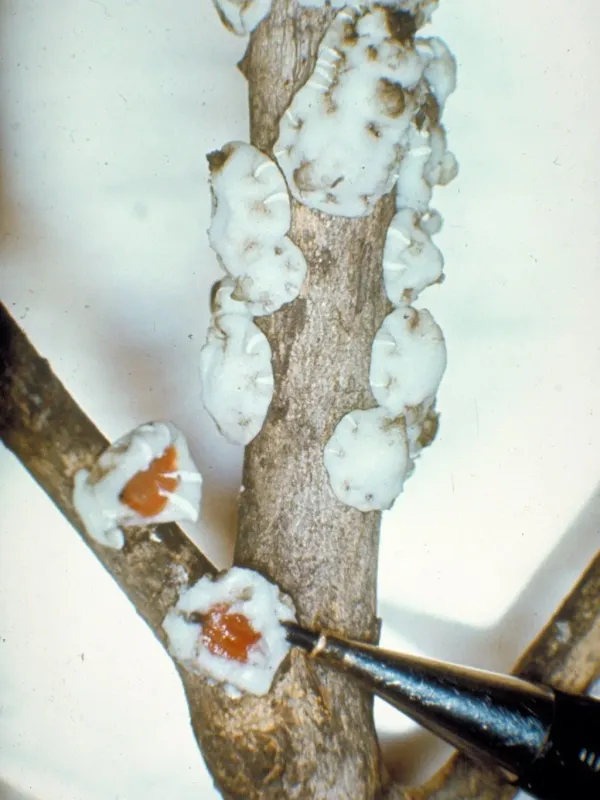
The adult insects are relatively small and often possess dark coloration with striped wings, providing excellent camouflage against tree bark. A key biological feature is the ability of their nymphs to construct protective calcareous tubes on the host plant's shoots.
What it damages
The damage is caused by both nymphs and adults as they feed on the sap of the host plants. They primarily target young shoots and buds, which can lead to significant physiological stress for the tree.
Infestations typically result in stunted growth, leaf yellowing, and decreased vitality. Persistent feeding can make the trees highly susceptible to secondary pathogens and further environmental stresses.
When it appears
The pest's life cycle is synchronized with the tree's growing season. Adult activity generally peaks during the warm months, facilitating mating and oviposition on young twigs and branches.
The eggs serve as the primary overwintering stage, protected within the bark or buds of the host tree. Once temperatures rise in spring, the eggs hatch and nymphs begin their developmental stages inside their limestone-like homes.
Signs of infestation
The presence of Hindola striata is most easily identified by the small, calcified tube-like structures on the branches. These structures act as protective shelters for the nymphs and are clearly visible upon close inspection.
Other signs include twisted or stunted shoots and the presence of honeydew secretions, which often attract ants and promote the growth of sooty mold on the leaf surfaces.
Control measures
Cultural control is a primary method for managing this pest, involving the pruning and destruction of infested branches. By removing the twigs with visible calcareous tubes, growers can effectively reduce the local population.
For more severe infestations, the application of systemic insecticides during the nymphal emergence phase is recommended. It is essential to ensure that selected chemicals are compatible with the specific crop species and local agricultural regulations.
Taxonomy
- Latin name
- Hindola striata
- Order
- Hemiptera (bugs, aphids, leafhoppers)
- Family
- Machaerotidae
- EPPO code
- HINDST
Discussion
No discussions yet — be the first.