
Hindola
Hindola
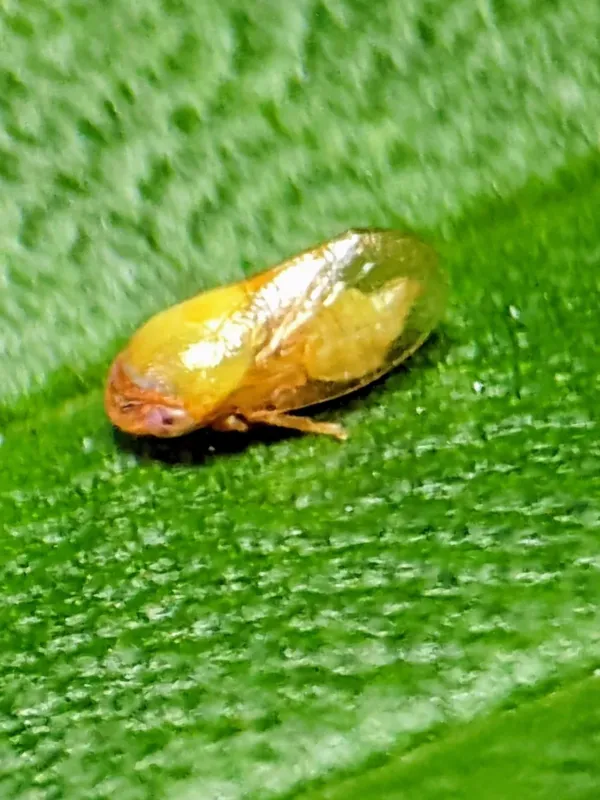
Description
How to identify
The genus Hindola belongs to the order Hemiptera, family Machaerotidae. These are small insects characterized by a distinctive projection on the pronotum, which may resemble a thorn or a horn.
Adult specimens usually have a stout physique. The coloration is often camouflaging, ranging from brown to grayish tones, allowing them to effectively hide on plant branches.
The wings are transparent with a clearly defined venation structure. The head is broad, with well-developed compound eyes directed to the sides.
A distinctive feature of adults is their ability to perform sudden jumps when threatened, which makes them difficult to catch physically.
The larval stages develop inside protective structures that resemble calcareous tubes or foamy masses, which is a typical sign for members of this family.
What it damages
The primary hosts for members of the Hindola genus are plants of the Myrtaceae family, including economically significant crops.
In particular, the insect causes significant damage to cocoa (Theobroma cacao) plantations in tropical regions, where it has become a serious phytosanitary issue.
The damage manifests as a weakening of the host plant's vascular system, which leads to a decrease in overall immunity and resistance to other pathogens.
The pest poses a particular threat to young seedlings and nurseries, where damage can lead to mass mortality of the planting material.
In addition to direct physical damage to tissues, they can act as vectors for phytoplasma and viral diseases, causing severe shoot deformities.
Signs of infestation
One of the main indicators of the pest's presence is the existence of calcareous casings or growths on the stems and branches of young shoots.
On the leaves of affected plants, chlorosis, yellowing, and premature leaf drop are observed, which is associated with impaired tissue nutrition.
The surface of the bark at the feeding sites of the insects is often covered with small necrotic spots, which can subsequently turn into open ulcers.
Stunted growth of the plant and twisting of shoots are typical secondary signs of high population density of Hindola in an area.
Visual inspection of leaf axils and young bark in the morning hours allows for spotting clusters of larvae hiding under their protective structures.
Control measures
The main control method is an agrotechnical approach, including regular pruning and destruction of damaged shoots where the pest populations are localized.
The use of biological control agents, such as entomopathogenic fungi, shows high efficiency in humid tropical climate conditions.
Chemical control should focus on the application of systemic insecticides capable of penetrating plant tissues where the larvae feed.
It is necessary to maintain high standards of agricultural practices, ensuring balanced plant nutrition, which increases their natural resistance to insect attacks.
Monitoring the pest population using pheromone traps allows for timely decision-making regarding the need for localized treatments.
Taxonomy
- Latin name
- Hindola
- Order
- Hemiptera (bugs, aphids, leafhoppers)
- Family
- Machaerotidae
- EPPO code
- HINDSP
Discussion
No discussions yet — be the first.