
Heterocerus flexuosus
Heterocerus flexuosus
Description
How to identify
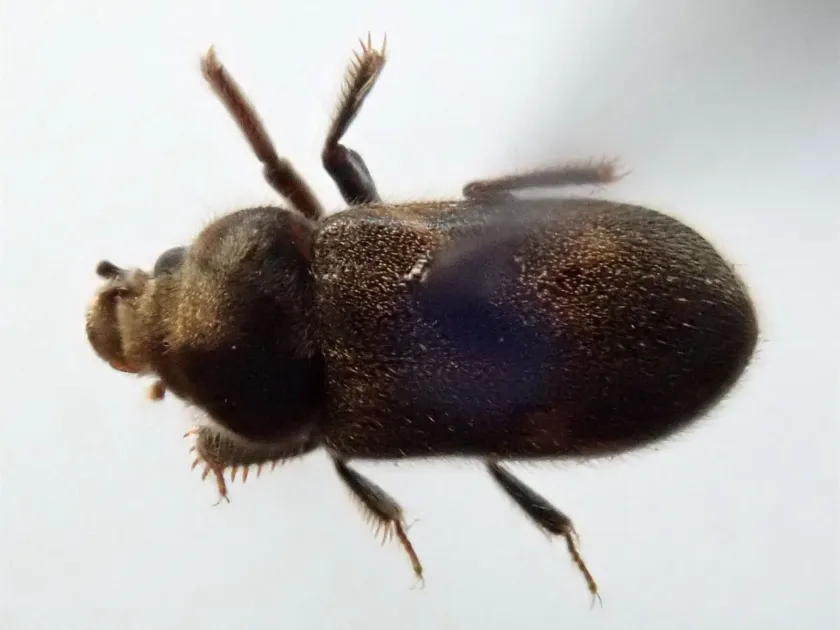
Heterocerus flexuosus, commonly known as a type of variegated mud-loving beetle, belongs to the Heteroceridae family within the Coleoptera order. These beetles are relatively small, typically measuring between 4 and 6 millimeters in length.
The insect possesses an elongated and slightly flattened body, which is perfectly adapted for life in subterranean galleries. The coloration is generally dark brown to black, featuring a distinctive light or yellowish wavy pattern on the elytra.
Equipped with powerful mandibles and specialized fossorial front legs, these beetles are highly efficient at burrowing through damp soil, sand, and mud near water bodies or in moist fields.
They lead a predominantly cryptic lifestyle, often staying hidden within the soil profile, and exhibit activity patterns closely tied to the moisture levels of their habitat.
Identification is confirmed by examining the characteristic elytral markings and the specific micro-morphology of the pronotum, which distinguishes them from other related species.
What it damages
The damage caused by Heterocerus flexuosus is most prominent during the early vegetative stages of crops, particularly in fields characterized by high soil moisture or poor drainage.
While the larvae and adults primarily feed on organic detritus, they may switch to feeding on the underground portions of young seedlings of cereals and vegetables when other food sources are scarce.
The pest attacks the roots and the root collar of young plants. This feeding activity disrupts nutrient uptake and causes the plants to weaken or fail to establish properly.
Extensive burrowing activity around the roots significantly alters the soil structure, leading to premature drying of the root zone, which can be fatal for developing seedlings.
Severe infestations result in uneven crop stands, reduced plant density, and significant yield losses if left unmanaged during the critical early growth period.
When it appears
The life cycle of this beetle begins in early spring as soil temperatures rise, facilitating the emergence of adults from their overwintering sites.
The peak flight and reproduction period typically occurs in late spring and early summer, when environmental conditions are optimal for oviposition in damp soil substrates.
Larvae undergo their development throughout the summer months, strictly remaining in moist soil environments. During periods of extreme heat and soil dryness, they may migrate deeper into the soil profile.
As autumn approaches, the adults seek suitable environments for hibernation, often burying themselves in the soil or hiding under protective layers of plant debris to survive the winter cold.
Population density is heavily dependent on the hydrological regime of the agricultural land, meaning infestations are more common in low-lying areas or after periods of heavy rain.
Signs of infestation
The primary visual indicator of the pest's presence is the emergence of small, distinct holes on the soil surface, which serve as tunnel entrances and exits for the beetles.
Examination of the root system of affected plants reveals superficial injuries, appearing as small lesions or furrows created by the feeding larvae in the plant tissue.
Affected plants may exhibit sudden wilting without clear signs of foliar disease, which is often a symptom of damage occurring at the root level.
- Presence of adult beetles found when digging into moist soil or organic-rich substrate.
- Stunted patches within the field that appear in areas with high moisture retention.
- Seedlings that are easily pulled from the soil due to damaged and underdeveloped root systems.
In cases of significant root damage, seedlings show slowed development and are prone to secondary infections, as the wounds provide entry points for soil-borne pathogens.
Control measures
Effective management begins with proper agronomic practices, such as improving field drainage systems to reduce excessive soil moisture where these beetles thrive.
Regular and thorough tillage during the early spring helps destroy the tunnel networks, disrupts the beetle's habitat, and exposes them to natural predators.
Crop rotation is an essential strategy to prevent the buildup of pest populations, as maintaining a diverse cropping sequence limits the availability of constant food sources for the larvae.
Applying systemic insecticide seed treatments is a highly effective method to protect crops during the vulnerable germination and early establishment phases.
Chemical control measures should be applied strategically based on economic threshold levels, ensuring that intervention is targeted specifically when larval activity threatens the stand density.
Taxonomy
- Latin name
- Heterocerus flexuosus
- Order
- Coleoptera (beetles)
- Family
- Heteroceridae
- EPPO code
- HTRKFL
Discussion
No discussions yet — be the first.