
Hersiliola simoni
Hersiliola simoni
Description
How to identify
Hersiliola simoni is a species of spider within the family Hersiliidae, recognized for its specialized hunting strategy and camouflage capabilities in natural and agricultural environments.
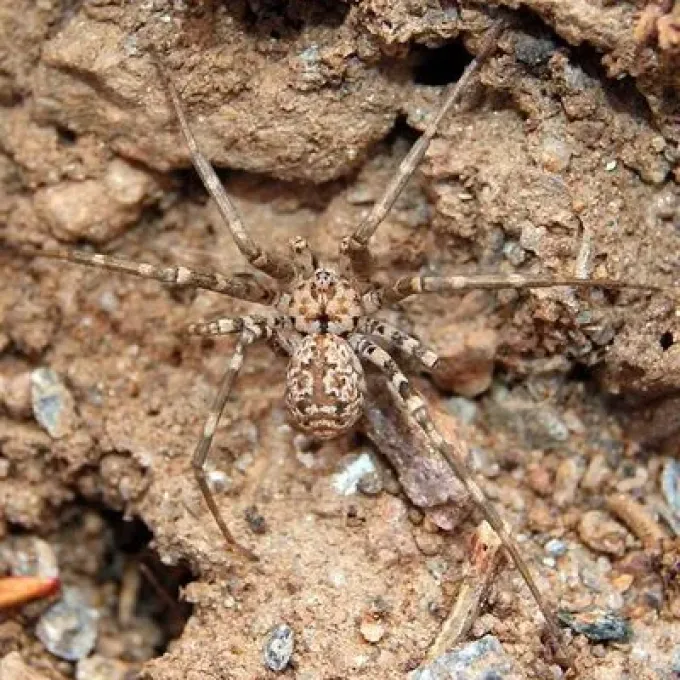
These spiders are distinguished by their flattened body shape and significantly elongated posterior spinnerets, which are characteristic of the Hersiliidae family.
Their coloration is typically cryptic, blending seamlessly with tree bark, dry wood, or soil surfaces, making them highly inconspicuous predators in field conditions.
Systematically, this species belongs to the order Araneae and is known for its ability to run rapidly across surfaces to capture prey rather than relying solely on large webs.
Identifying Hersiliola simoni often requires close observation in the field, as they are primarily nocturnal or crepuscular and tend to remain motionless during daylight hours.
What it damages
Hersiliola simoni is not a direct plant pest because it does not consume vegetative parts of crops; however, it plays a complex role in the agroecosystem.
The primary concern regarding this species is its impact on beneficial insects, including pollinators such as bees and syrphid flies, which can become trapped in their silk.
By preying on natural enemies of agricultural pests, they can disrupt biological control mechanisms, potentially leading to an increase in harmful insect populations.
In high-density scenarios, the silk produced by these spiders can occasionally cover young shoots or buds, creating a nuisance that may affect the aesthetic quality of nursery stock.
While not a major economic threat, their presence necessitates careful monitoring to ensure they do not outweigh the benefits of insect control provided by other predators.
When it appears
The life cycle of Hersiliola simoni is heavily influenced by regional climate conditions, with peak activity occurring during the warm, vegetation-heavy months.
Development begins in early spring, as temperatures rise, signaling the emergence of spiders from their overwintering sites in bark crevices or plant debris.
During the summer, reproductive success is linked to the availability of prey, allowing for rapid population growth in areas with high insect density.
Winter dormancy is a critical phase for survival; individuals seek shelter in protected environments, including deep cracks in trees or buried under soil mulch.
The number of annual generations varies significantly based on local temperature profiles, with warmer, arid climates often supporting more frequent reproductive cycles.
Signs of infestation
Indications of a Hersiliola simoni presence include fine, specialized silk patterns found along trunks or near the soil base rather than traditional orb-webs.
Small, empty insect exoskeletons found near surface cracks or crevices often serve as evidence of recent feeding activity by the spiders.
Visual identification can be confirmed by observing their distinctive flattened shape and rapid, scurrying movement when they are disturbed on bark surfaces.
A noticeable decrease in the activity of beneficial pollinating insects in a specific zone can sometimes point to high spider predator pressure.
During spring scouting, finding juveniles in nursery settings indicates that the population has successfully overwintered in the immediate vicinity.
Control measures
Management of Hersiliola simoni should focus on cultural practices that maintain ecosystem balance rather than total eradication, which can be counterproductive.
Sanitation practices that remove excessive plant debris and old tree bark are highly effective in limiting the number of suitable shelters available for these spiders.
Implementing a crop rotation strategy and managing edge habitats can help stabilize the predator-prey dynamics within the agricultural plot.
- Regular pruning and cleaning of orchard trees.
- Mechanical incorporation of crop residues into the soil.
- Promotion of natural predatory bird populations to control spider density.
Chemical intervention should be restricted to cases where pest thresholds are exceeded, ensuring that pesticides are applied in a manner that minimizes harm to the general arthropod population.
Taxonomy
- Latin name
- Hersiliola simoni
- Family
- Hersiliidae
- EPPO code
- HRSOSI
Discussion
No discussions yet — be the first.