
Eastern Parson Spider
Herpyllus ecclesiasticus
Description
How to identify
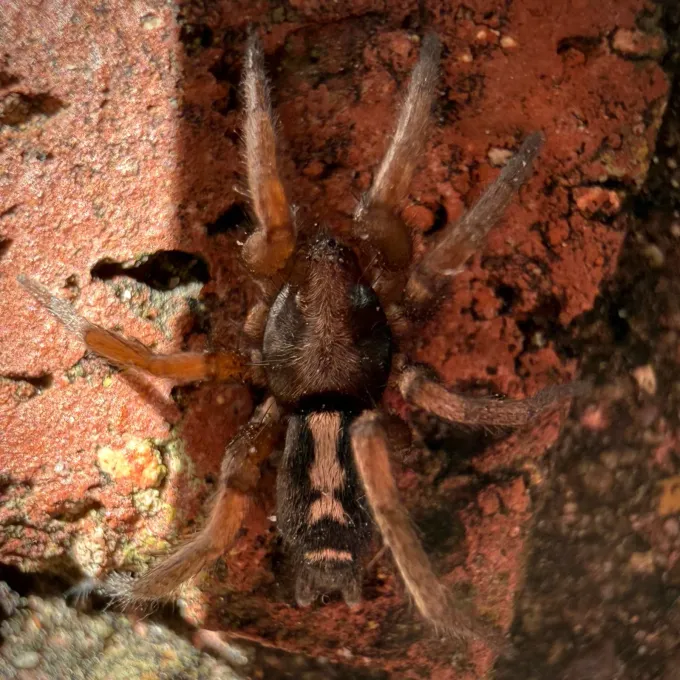
The Eastern Parson Spider (Herpyllus ecclesiasticus) belongs to the family Gnaphosidae. It is named for the distinctive white pattern on its dorsal surface, which resembles the traditional attire of a parson.
Adult specimens grow to approximately 10–13 mm in length. They display a dark brown or black coloration, with the key identifying feature being the white, jagged patch on the carapace that stands out against their dark body.
These spiders are primarily nocturnal, spending their daylight hours hidden under bark, stones, or thick garden debris. Because they are not web-weavers, they are frequently encountered by gardeners while performing routine maintenance.
Gnaphosidae are characterized by large, prominent anterior spinnerets. Unlike web-building spiders, they are cursorial hunters, meaning they actively roam to find prey rather than waiting in a stationary trap.
They are incredibly agile and capable of climbing smooth vertical surfaces, which allows them to migrate easily between soil levels and the canopy of various ornamental and vegetable crops.
What it damages
While primarily insectivorous, the Eastern Parson Spider can be considered a nuisance pest in agricultural settings. During their nocturnal hunting activities, they may cause mechanical damage to plant tissues.
The primary agricultural impact arises from small bite wounds left on leaves and tender stems. These lesions serve as entry points for bacterial and fungal pathogens, which often result in significant secondary infections.
Ornamental crops often suffer from aesthetic damage, as the spiders may bite into developing flower buds or petals. This results in disfigurement or premature browning of blossoms, reducing the value of the plant.
In greenhouses, these spiders can negatively impact young seedlings. By traversing across growing tips, they may inadvertently crush or damage developing tissues, leading to stunted or irregular growth patterns.
Though they do not consume plant material directly, their predatory behavior in high-density populations can disrupt the fragile physiology of young crops, necessitating intervention in intensive production environments.
When it appears
Activity levels for the Eastern Parson Spider typically increase during late spring as temperatures rise, signaling the emergence of overwintering adults from their sheltered sites.
The peak activity period occurs throughout mid-to-late summer. During this time, high temperatures and humidity support successful reproduction and the maturation of egg sacs hidden in protected garden areas.
As autumn approaches and temperatures drop, these spiders begin to seek out overwintering quarters. They move deeper into leaf litter or structural gaps in greenhouses and outbuildings to survive the winter months.
The lifecycle is strictly regulated by climate; in temperate regions, they typically complete one generation per year, although favorable warm conditions can occasionally allow for extended activity.
Environmental factors such as sudden frost or prolonged drought act as natural limiters for the population, keeping numbers in check during most growing seasons in well-maintained garden environments.
Signs of infestation
The most common sign of infestation includes the presence of small, irregular necrotic spots on leaves, which occur as a result of spider bites during their search for small insect prey.
Scattered, thin silk draglines left behind as the spiders traverse foliage indicate their recent presence. These are most visible on the underside of leaves or within the dense foliage of ornamental plants.
The presence of exuviae (shed skins) near the base of plants or inside crevices is a strong indicator that the spider has successfully completed a growth stage in that immediate location.
Deformation of plant terminal buds often suggests that the area served as a temporary hunting ground, leading to mechanical tissue trauma that prevents the bud from opening normally.
Observing high activity of dark, fast-moving spiders on the plant surface during evening inspections is the definitive sign that the population has reached levels requiring monitoring and management.
Control measures
Cultural control remains the most effective management strategy. This includes the removal of organic debris, leaf litter, and wood piles near growing areas to eliminate their preferred daytime hiding spots.
Applying sticky bands around the trunks of trees and shrubs can create a physical barrier that prevents these mobile spiders from ascending into the canopy to hunt near vulnerable blossoms.
Regular soil cultivation around the base of plants is highly recommended, as it disrupts overwintering sites and exposes egg sacs to desiccation and natural predators.
If population numbers exceed economic thresholds, the use of targeted biological insecticides or acaricides during the evening (when the spiders are most active) provides the best results.
- Maintaining a clean and weed-free garden perimeter.
- Using row covers to protect young seedlings in greenhouse settings.
- Encouraging natural predators like ground beetles and insectivorous birds.
- Manual removal of spiders during evening inspection rounds.
Taxonomy
- Latin name
- Herpyllus ecclesiasticus
- Family
- Gnaphosidae
- EPPO code
- HERYEC
Discussion
No discussions yet — be the first.