
Hercinothrips dimidiatus
Hercinothrips dimidiatus
Description
How to identify
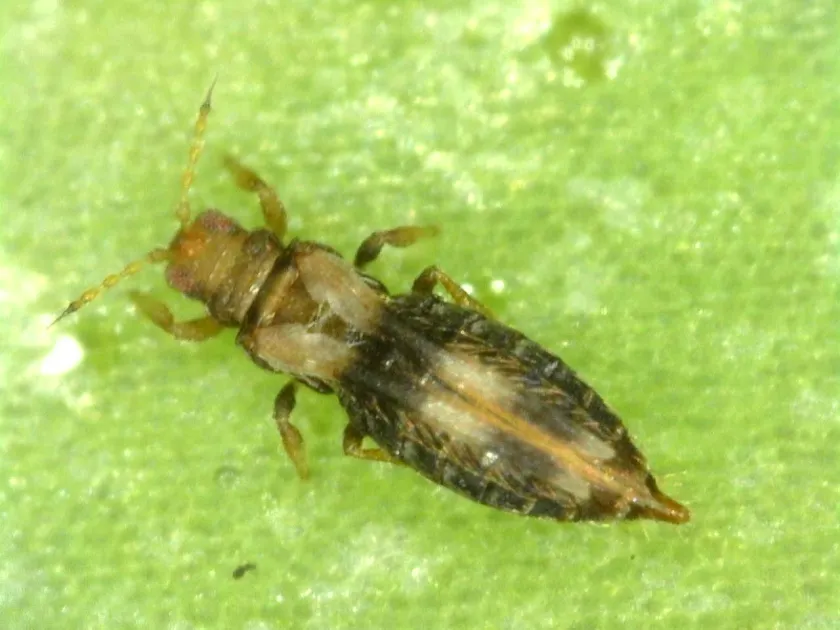
Hercinothrips dimidiatus is a species of thrips belonging to the order Thysanoptera and the family Thripidae. These are minute insects, often dark brown or black in color, typically measuring around 1 to 1.5 mm in length.
The adults are characterized by their narrow, slender bodies and two pairs of wings fringed with long hairs, which give the order its common name of "fringe-winged" insects.
The developmental stages include eggs, two larval instars, prepupa, pupa, and adult. The larval stages are generally pale yellow or whitish and are highly mobile on the plant foliage.
Their microscopic size and tendency to hide in secluded areas such as leaf axils, veins, or flower buds make them difficult to detect during the initial stages of an infestation.
Identification often requires careful inspection under magnification to distinguish them from other common thrips species based on specific morphological features of their wings and body structure.
What it damages
Both adults and larvae feed by piercing the plant epidermis and sucking out the cell contents, which leads to the collapse of cells and the death of plant tissue.
This pest attacks a wide range of plants, including ornamental species, fruit trees, and various vegetable crops, causing substantial economic loss if left uncontrolled.
Feeding damage interrupts the plant's photosynthetic process, resulting in chlorosis, silvering of the foliage, and eventually necrosis if the infestation persists over time.
The mechanical damage caused by the feeding process also provides entry points for various phytopathogens, including fungi and viruses, which further exacerbate crop decline.
When the population density is high, the overall vigor of the plant is significantly reduced, leading to stunted growth, distorted foliage, and reduced flower or fruit production.
Signs of infestation
A primary indicator of a Hercinothrips dimidiatus infestation is the presence of silvery, stippled patterns on the upper surface of leaves, often accompanied by small black spots.
These black spots are in fact the fecal droppings of the thrips, which are a characteristic sign used by agronomists to confirm the presence of an active infestation.
Leaf curling, deformation of growing tips, and premature leaf drop are common symptoms in heavily infested plants that can no longer support their usual growth patterns.
Plants may show reduced turgor pressure and a sickly, yellowed appearance as the insect population drains the essential fluids from the plant tissues.
Close examination of the underside of the leaves, especially near the veins, will usually reveal colonies of larvae and adults feeding actively in the shaded parts of the plant.
Control measures
Managing Hercinothrips dimidiatus effectively requires a multifaceted Integrated Pest Management (IPM) approach that targets multiple life stages of the insect.
Cultural practices are essential, including the removal of weeds that can host thrips and the maintenance of optimal environmental conditions to discourage population growth.
Chemical control should be applied using selective insecticides that minimize harm to beneficial organisms, ensuring that spray applications cover both sides of the foliage.
- Utilizing blue or yellow sticky traps to monitor adult thrips activity and reduce their overall numbers.
- Introducing biological control agents such as predatory mites (e.g., Amblyseius spp.) or predatory bugs like Orius species.
- Sanitation efforts after the harvest to eliminate plant debris where the pupal stages often hide or hibernate.
Regular monitoring of the crops is crucial, as early detection allows for faster intervention and prevents the population from reaching levels that are difficult to manage.
Taxonomy
- Latin name
- Hercinothrips dimidiatus
- Order
- Thrips
- Family
- Thripidae
- EPPO code
- HERCDI
Discussion
No discussions yet — be the first.